Loading...
Done


In addition to the publication of «146 West End Stars Hold A Flashmob In Trafalgar Square». Good people have sent us exclusive photos of the event (and to prepare for it). Many thanks to Christopher Voodhams, and the author of these wonderful photos – photographer Eduardo Carrasco! (Photos by medialabs.net).
Details
13 Apr 2011 12:08:00
Cologne Zoo

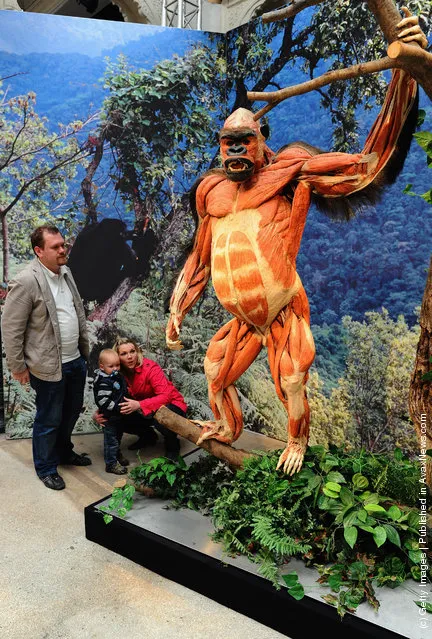
Visitors look at a plastinated gorilla on the opening day at the Body World Animals exhibition at the Cologne Zoo on April 15, 2011 in Cologne, Germany. The exhibition is by Gunther von Hagens, who uses a special process to preserve real bodies, whether animal or human, in order to display the inner organs, muscles and other physical elements. The exhibition will be open to the public until September 30.
Details
15 Apr 2011 17:16:00


Alexander Nerozya and Ilya Mihaylov make the dream of many “Street Fighter” fans come true and bring the characters of the classic video game into reality. Specifically for this purpose they found a few body-builders to express the epic struggle between Ken and Ryu and other famous characters including beautiful Chun Li. While Nerozya took care of the raw image Mihaylov used his post-production skills to portray finishing touches.
Details
05 May 2012 08:33:00
Dancers perform as human sculptures during an exhibition in Hong Kong, China, 26 March 2019. (Photo by Jerome Favre/EPA/EFE)

Dancers perform as human sculptures during an exhibition in Hong Kong, China, 26 March 2019. The exhibition entitled “Multisensory Exhibition Urban Playgrounds” shows how Austrian artist Willi Dorner uses urban spaces to interpret the relationship between bodies and objects. (Photo by Jerome Favre/EPA/EFE)
Details
30 Mar 2019 00:01:00
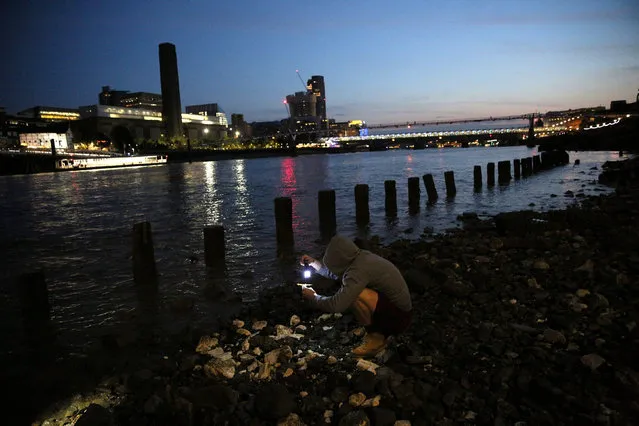
A mudlark uses a torch to look for items on the bank of the River Thames in London, Britain June 06, 2016. Mudlarking is believed to trace its origins to the 18th and 19th century, when scavengers searched the Thames' shores for items to sell. These days, history and archaeology fans are the ones hoping to find old relics such as coins, ceramics, artifacts or everyday items from across centuries. They wait for the low tide and then scour specific areas of exposed shores. "If you're in a field you could be out all day long, with the river you're restricted to about two or three hours," mudlark Nick Stevens said. While many just use the naked eye for their searches, others rely on metal detectors for which a permit from the Port of London Authority is needed. Digging also requires consent. (Photo by Neil Hall/Reuters)

A mudlark uses a torch to look for items on the bank of the River Thames in London, Britain June 06, 2016. Mudlarking is believed to trace its origins to the 18th and 19th century, when scavengers searched the Thames' shores for items to sell. These days, history and archaeology fans are the ones hoping to find old relics such as coins, ceramics, artifacts or everyday items from across centuries. their finds with the Portable Antiquities Scheme. Any item over 300 years old must be recorded. (Photo by Neil Hall/Reuters)
Details
27 Aug 2016 10:43:00
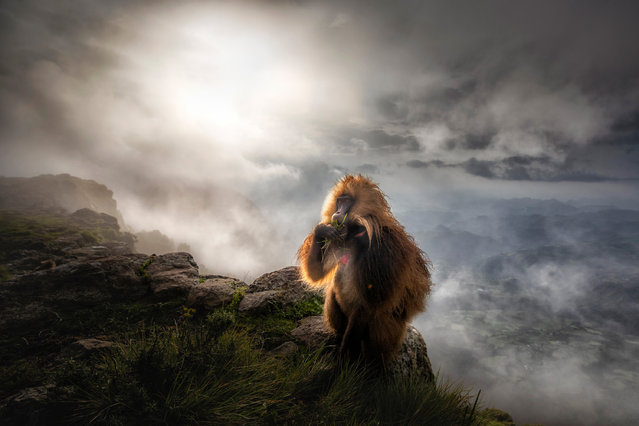
Highly commended, mammals: Gelada after the storm – Marco Gaiotti (Italy). “Gelada baboons are the only monkey species in the world that feed on grasses. They are native to the tableland of Ethiopia. Every morning large family groups wander from their sleeping places in the steep rock face, up to 1,000 metres high, to the feeding grounds at the tablelands. This image clearly depicts their feeding strategy: they pull out bunches of grass, sort the stalks and then lift them to their mouth. This shot was taken towards the end of the rainy season after a heavy storm”. (Photo by Marco Gaiotti/2019 GDT European Wildlife Photographer of the Year)

Highly commended, mammals: Gelada after the storm – Marco Gaiotti (Italy). “Gelada baboons are the only monkey species in the world that feed on grasses. They are native to the tableland of Ethiopia. Every morning large family groups wander from their sleeping places in the steep rock face, up to 1,000 metres high, to the feeding grounds at the tablelands. This image clearly depicts their feeding strategy: they pull out bunches of grass, sort the stalks and then lift them to their mouth. This shot was taken towards the end of the rainy season after a heavy storm”. (Photo by Marco Gaiotti/2019 GDT European Wildlife Photographer of the Year)
Details
31 Oct 2019 00:03:00
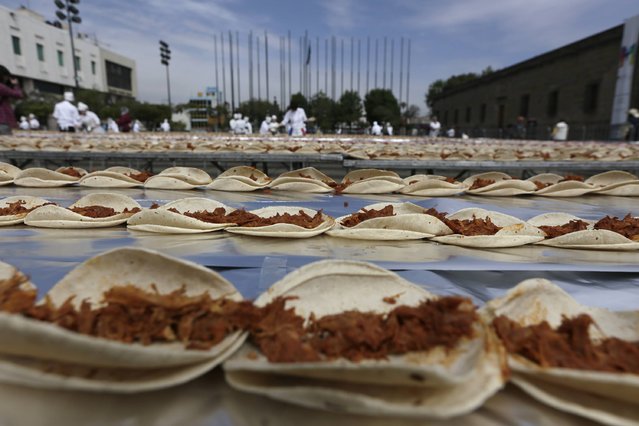
Tacos of Cochinita Pibil, a popular dish from Yucatan, are seen during an attempt to break the Guinness World Record for the world's longest taco in Guadalajara February 15, 2015. (Photo by Alejandro Acosta/Reuters)

Tacos of Cochinita Pibil, a popular dish from Yucatan, are seen during an attempt to break the Guinness World Record for the world's longest taco in Guadalajara February 15, 2015. Guadalajara broke the Guinness record for the longest taco of cochinita pibil, with a length of 2.5 kilometers, as part of the COME gastronomy festival, local media reported. For the preparation of the traditional dish, the chefs used 4 tons of pork, 36,000 tortillas and spices for 325 taco servings. (Photo by Alejandro Acosta/Reuters)
Details
17 Feb 2015 11:54:00
“Small World”. (Photo by Joe Lurato)

New Jersey based artist, Joe Iurato creates art using hand-cut paper and spray paint to make small wood cutout figures and placed in public spaces. According to Iurato, “a puddle can become a lake, a small crack in a cement wall can become a magnificent climb, a planter box can become a place for a child to play, and a shadow might be a tangible space for a few seconds a day”. Photo: “Small World”. (Photo by Joe Lurato)
Details
22 Mar 2014 23:50:00