Loading...
Done

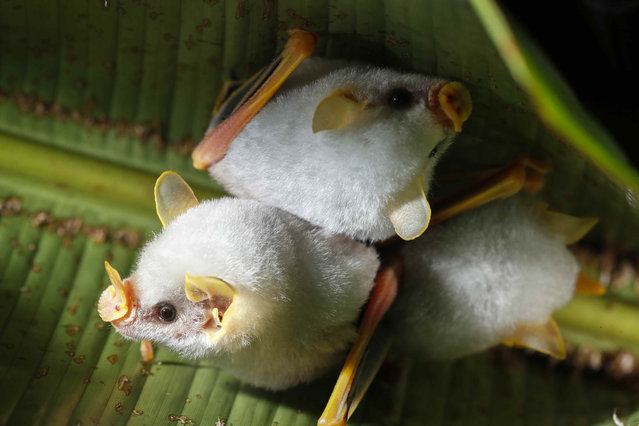
Some bats in the forested area of Guapiles, Costa Rica, 21 April 2020. (Photo by Jeffrey Arguedas/EPA/EFE)

Some bats in the forested area of Guapiles, Costa Rica, 21 April 2020. (Photo by Jeffrey Arguedas/EPA/EFE)
Details
03 May 2020 00:05:00
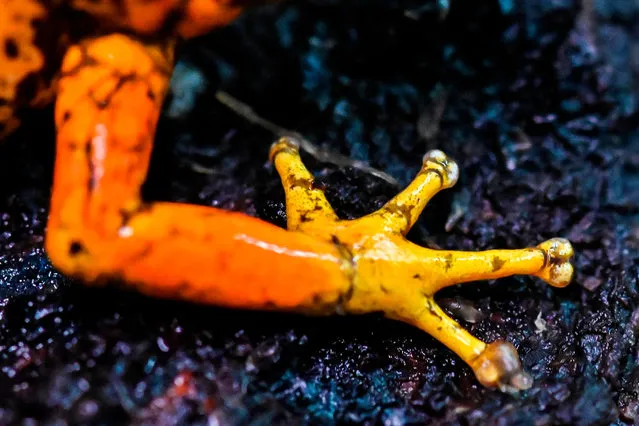
A leg of a “diablito” frog (Oophaga sylvatica) is photographed in a laboratory at a laboratory in the zoo of Cali, Colombia, on July 19, 2019. Colombia is the second country with the largest number of amphibians in the world after Brazil. More than 40% of amphibian species worldwide are in danger of extinction. (Photo by Luis Robayo/AFP Photo)

A leg of a “diablito” frog (Oophaga sylvatica) is photographed in a laboratory at a laboratory in the zoo of Cali, Colombia, on July 19, 2019. Colombia is the second country with the largest number of amphibians in the world after Brazil. More than 40% of amphibian species worldwide are in danger of extinction. (Photo by Luis Robayo/AFP Photo)
Details
28 Nov 2020 00:03:00
A woman looks at the honour guard soldiers marching at the Tomb of the Unknown Soldier by the Kremlin wall, in downtown Moscow, on June 28, 2021. (Photo by Alexander Nemenov/AFP Photo)

A woman looks at the honour guard soldiers marching at the Tomb of the Unknown Soldier by the Kremlin wall, in downtown Moscow, on June 28, 2021. (Photo by Alexander Nemenov/AFP Photo)
Details
29 Jun 2021 09:57:00
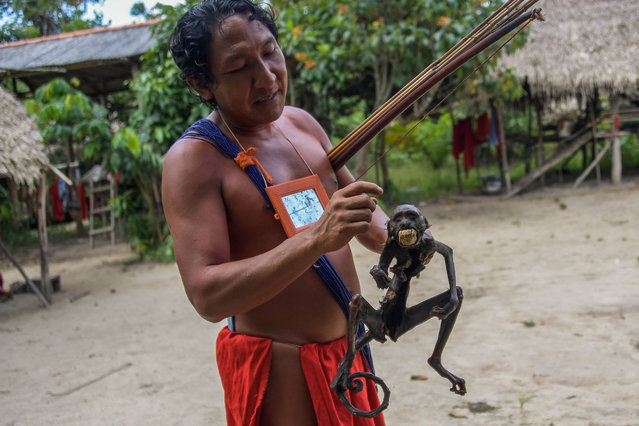
Chieftain Japarupi Waiapi shows a roasted monkey -part of Waiapi's diet, also based in Manioc and fruits- at the reserve in Amapa state in Brazil on October 13, 2017. When Waiapis walks into the Amazon forest surrounding their village, they do not see trees, but a kind of shopping mall providing medicine, food, shelter, tools and weapons  all under the eye of multiple spirits. (Photo by Apu Gomes/AFP Photo)

Chieftain Japarupi Waiapi shows a roasted monkey -part of Waiapi's diet, also based in Manioc and fruits- at the reserve in Amapa state in Brazil on October 13, 2017. When Waiapis walks into the Amazon forest surrounding their village, they do not see trees, but a kind of shopping mall providing medicine, food, shelter, tools and weapons all under the eye of multiple spirits. (Photo by Apu Gomes/AFP Photo)
Details
27 Oct 2017 08:39:00
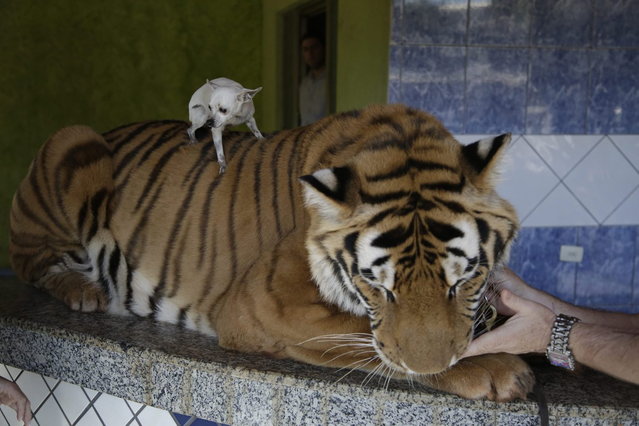
The Borges' family pet dog, Little, is placed on the back of Tom, their tiger, for a photo to be taken, in Maringa, Brazil, Friday, September 27, 2013. The Brazilian family is now locked in a legal dispute for the big cats, they have eight tigers and two lions, with federal wildlife officials working to take them away. While Borges does have a license to raise the animals, Brazilian wildlife officials say he illegally bred the cats, creating a public danger. (Photo by Renata Brito/AP Photo)

“Ary Borges and his family live in southern Brazil like most families the Borges' love animals and have an array of cats living in their home. The only difference between the cats owned by the Borges family and the cat that is cuddled up on your lap as you read this is the Borges' cats weigh over 700 pounds and could kill you just as soon as look at you. The Borges family shares their home with nine tigers, two lionesses, a chimp and a Chihuahua”. – Amanda Schiavo via Latin Times. Photo: The Borges' family pet dog, Little, is placed on the back of Tom, their tiger, for a photo to be taken, in Maringa, Brazil, Friday, September 27, 2013. (Photo by Renata Brito/AP Photo)
Details
04 Oct 2013 11:51:00
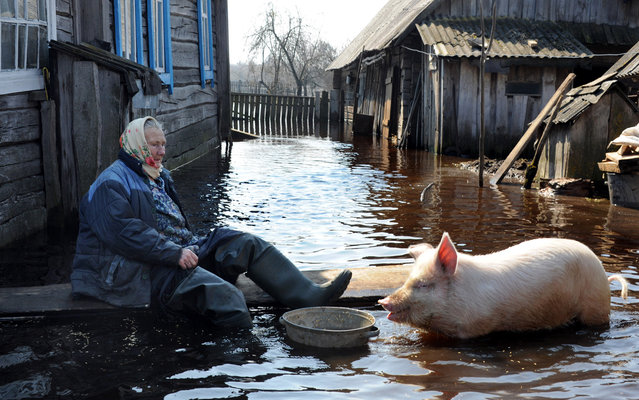
A woman feeds a pig in her yard during spring flood in the Belarus village of Snyadin near Pripyat river, some 300 km south of Minsk, on April 16, 2013. (Photo by Viktor Drachev/AFP Photo)

A woman feeds a pig in her yard during spring flood in the Belarus village of Snyadin near Pripyat river, some 300 km south of Minsk, on April 16, 2013. (Photo by Viktor Drachev/AFP Photo)
Details
20 Apr 2013 12:12:00
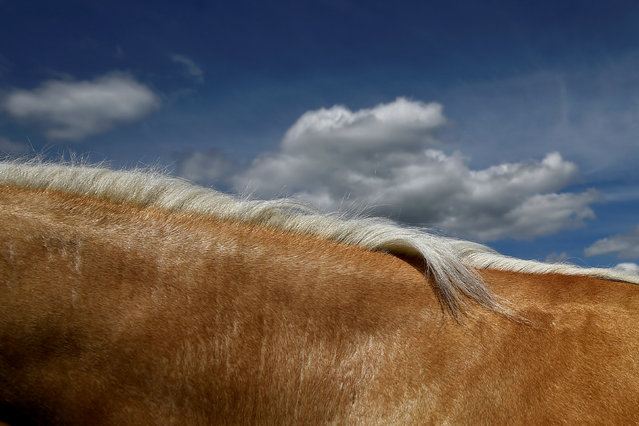
A palomino horse's mane is seen against the sky at Spancil Hill horse fair in Spancil Hill, Ireland June 23, 2018. (Photo by Clodagh Kilcoyne/Reuters)

A palomino horse's mane is seen against the sky at Spancil Hill horse fair in Spancil Hill, Ireland June 23, 2018. (Photo by Clodagh Kilcoyne/Reuters)
Details
01 Jul 2018 00:03:00
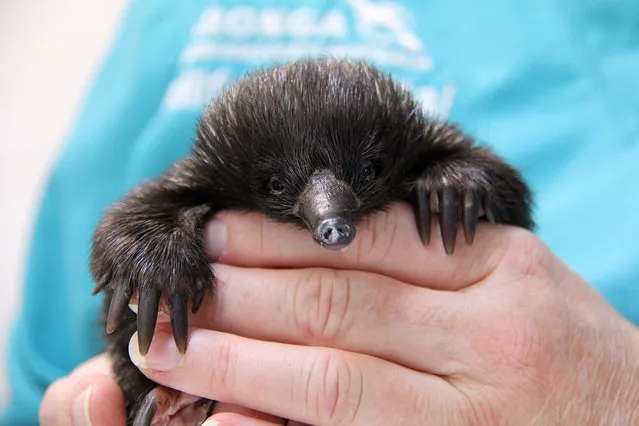
An undated handout picture made available on 29 April 2016 by the Toronga Zoo shows a baby echidna making a remarkable recovery after being attacked by chickens in a family's backyard at the Taronga Zoo in Sydney, Australia. (Photo by EPA/Taronga Zoo)

An undated handout picture made available on 29 April 2016 by the Toronga Zoo shows a baby echidna making a remarkable recovery after being attacked by chickens in a family's backyard at the Taronga Zoo in Sydney, Australia. (Photo by EPA/Taronga Zoo)
Details
01 May 2016 10:56:00