Loading...
Done
A couple is walking hand-held up Kronsberg, just outside Hanover, Germany on April 7, 2020, when the moon rises on the horizon as the so-called supermoon. The moon reaches its perigee, i.e. the point closest to the Earth's orbit, on the night of 7-8 April as a full moon and therefore appears particularly large to the human observer. (Photo by Julian Stratenschulte/dpa via ZUMA Press)

A couple is walking hand-held up Kronsberg, just outside Hanover, Germany on April 7, 2020, when the moon rises on the horizon as the so-called supermoon. The moon reaches its perigee, i.e. the point closest to the Earth's orbit, on the night of 7-8 April as a full moon and therefore appears particularly large to the human observer. (Photo by Julian Stratenschulte/dpa via ZUMA Press)
Details
09 Apr 2020 00:07:00
Models present creations “2033 (teens)” by Belarusian designer Anastasiya Kutepova during a show at the festival and contest Fashion Mill, amid the coronavirus disease (COVID-19) outbreak, in Minsk, Belarus on June 30, 2020. (Photo by Vasily Fedosenko/Reuters)

Models present creations “2033 (teens)” by Belarusian designer Anastasiya Kutepova during a show at the festival and contest Fashion Mill, amid the coronavirus disease (COVID-19) outbreak, in Minsk, Belarus on June 30, 2020. (Photo by Vasily Fedosenko/Reuters)
Details
02 Jul 2020 00:07:00
A commuter holding his shoes rides on a tricyle through a flooded street, caused by a heavy downpour brought about by the southwest moonson, in Manila on August 2, 2019. (Photo by Ted Aljibe/AFP Photo)

A commuter holding his shoes rides on a tricyle through a flooded street, caused by a heavy downpour brought about by the southwest moonson, in Manila, Philippines on August 2, 2019. (Photo by Ted Aljibe/AFP Photo)
Details
27 Aug 2019 00:03:00
“Sokolica”. Sokolica, Poland. (Photo and caption by Marcin Kęsek/National Geographic Traveler Photo Contest)

“Sokolica”. Sokolica, Poland. (Photo and caption by Marcin Kęsek/National Geographic Traveler Photo Contest)

ATTENTION! All pictures are presented in high resolution. To see Hi-Res images – just TWICE click on any picture. In other words, click small picture – opens the BIG picture. Click BIG picture – opens VERY BIG picture.
Details
25 Jun 2013 09:13:00
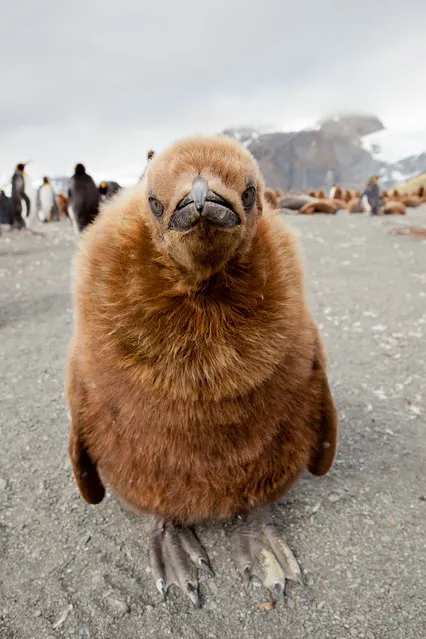
“Cub”. In the colony of penguins in South Georgia. (Photo and caption by Ondrej Zaruba/National Geographic Traveler Photo Contest)

“Cub”. In the colony of penguins in South Georgia. (Photo and caption by Ondrej Zaruba/National Geographic Traveler Photo Contest)

ATTENTION! All pictures are presented in high resolution. To see Hi-Res images – just TWICE click on any picture. In other words, click small picture – opens the BIG picture. Click BIG picture – opens VERY BIG picture.
Details
28 Jun 2013 12:32:00
The Wood Art Of Mark Doolittle

Mantle Or Desk Clock “Ancient Sea Form”

A large Mantle or Desk Clock featuring a fossil ammonite at its center, carved from the South American wood Keolbra with radiating Walnut spines. The clock hangs on a round, Plexiglass back supported by a wood base (Bubinga). The clockworks is a quartz, high-torque movement that runs on a single AA battery.
Details
21 Nov 2013 11:49:00


A nurse consoles herself with a box of chocolates as she reads a paper-back thriller. (Photo by Hulton Archive/Getty Images). Circa 1955
Details
30 Mar 2011 09:49:00
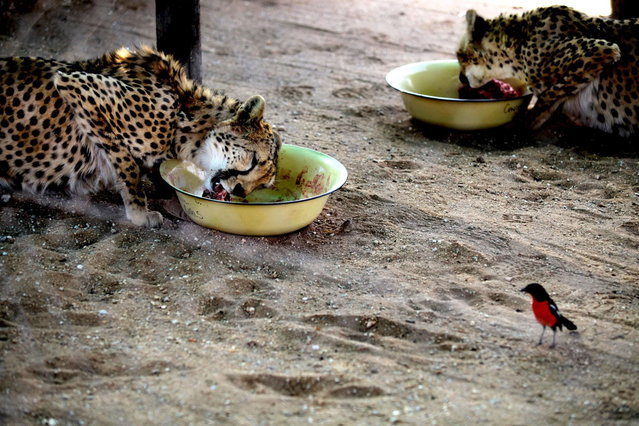
Young cheetahs eat meat at The Cheetah Conservation Fund (CCF) center in Otjiwarongo, Namibia, on August 13, 2013. The CCF started breeding Anatolian livestock dogs to promote cheetah-friendly farming after some 10,000 big cats – the current total worldwide population – were killed or moved off farms in the 1980s.  Up to 1,000 cheetahs were being killed a year, mostly by farmers who saw them as livestock killers. But the use of dogs has slashed losses for sheep and goat farmers and led to less retaliation against the vulnerable cheetah. (Photo by Jennifer Bruce/AFP Photo)

Young cheetahs eat meat at The Cheetah Conservation Fund (CCF) center in Otjiwarongo, Namibia, on August 13, 2013. The CCF started breeding Anatolian livestock dogs to promote cheetah-friendly farming after some 10,000 big cats – the current total worldwide population – were killed or moved off farms in the 1980s. Up to 1,000 cheetahs were being killed a year, mostly by farmers who saw them as livestock killers. But the use of dogs has slashed losses for sheep and goat farmers and led to less retaliation against the vulnerable cheetah. (Photo by Jennifer Bruce/AFP Photo)
Details
29 Aug 2013 10:56:00