Loading...
Done
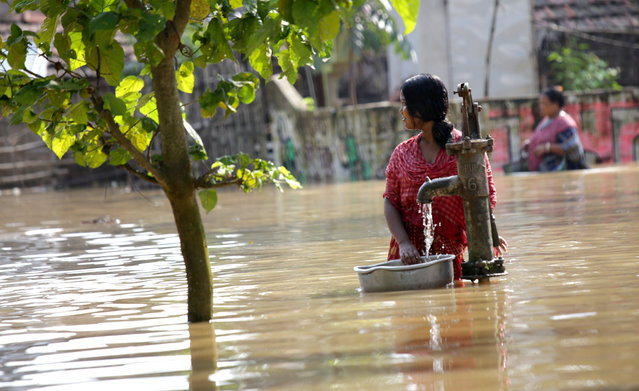
A photo made avialable on 05 August 2015 shows an Indian woman collecting drinking water from a water pump in the submerged village of Sreerampur, some 150 kilometers north of Calcutta, India, on 04 August 2015. At least 215 people have died in floods and a landslide following monsoon rains in India over the past week, 83 deaths were reported from the western state of Gujarat and 69 from eastern West Bengal. The worst-affected states were West Bengal, Gujarat and Rajasthan, the Home Ministry said. (Photo by Piyal Adhikary/EPA)

A photo made avialable on 05 August 2015 shows an Indian woman collecting drinking water from a water pump in the submerged village of Sreerampur, some 150 kilometers north of Calcutta, India, on 04 August 2015. At least 215 people have died in floods and a landslide following monsoon rains in India over the past week, 83 deaths were reported from the western state of Gujarat and 69 from eastern West Bengal. The worst-affected states were West Bengal, Gujarat and Rajasthan, the Home Ministry said. (Photo by Piyal Adhikary/EPA)
Details
08 Aug 2015 12:04:00
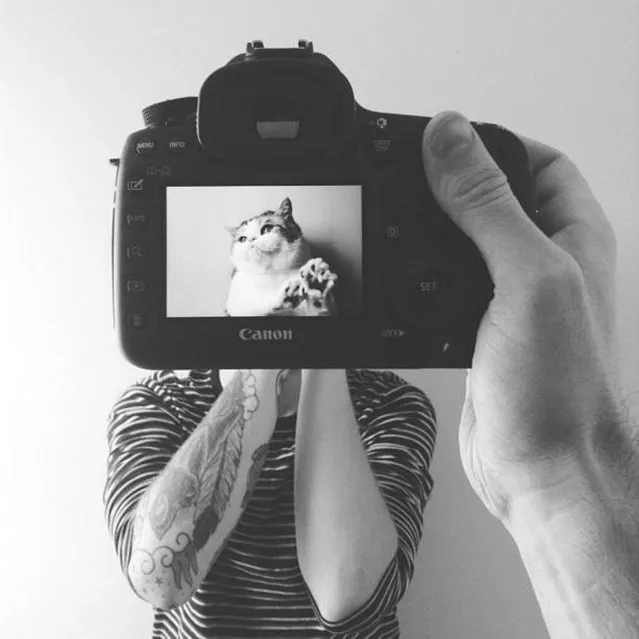
#Petheadz  – is an Instagram series by Zach Rose, a 23 year old photographer/filmmaker from Toronto

#Petheadz – is an Instagram series by Zach Rose, a 23 year old photographer/filmmaker from Toronto. (Photo by Zach Rose)
Details
10 Mar 2015 14:06:00
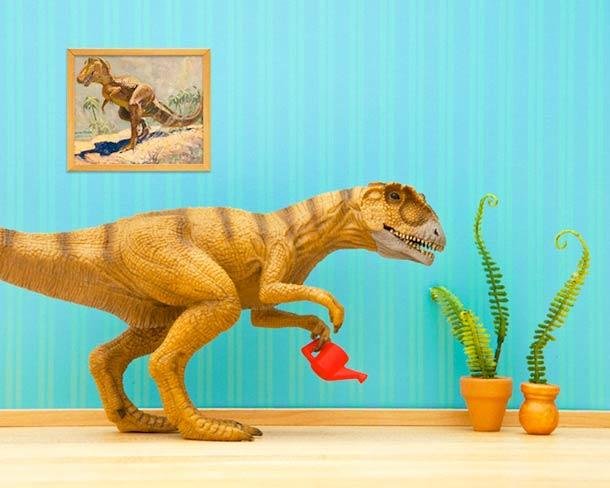
Wild Life By Jeff Friesen: Animals Meet Interiors

Canadian photographer Jeff Friesen has created an adorable photo series that depicts the imaginary lives of plastic toy animals.
Details
24 Jun 2013 10:38:00


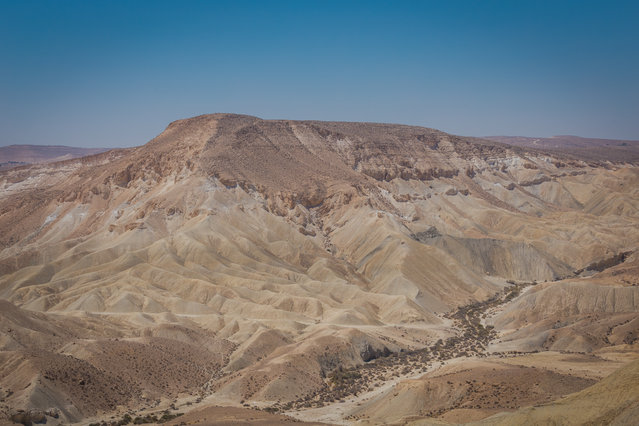
The Negev (Hebrew: הַנֶּגֶב‎, Tiberian vocalization: han-Néḡeḇ ) or Naqab (Arabic: النقب‎‎ an-Naqab) is a desert and semidesert region of southern Israel. (Photo by Torai)


Details
27 Jan 2017 12:50:00
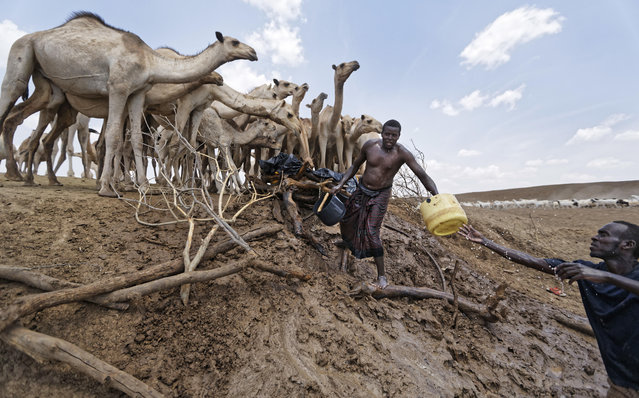
Camel herders scoop up water in plastic buckets from one of the few watering holes in the area, to water their animals near the drought-affected village of Bandarero, near Moyale town on the Ethiopian border, in northern Kenya, Friday, March 3, 2017. The U.N. humanitarian chief, Stephen O'Brien, toured Bandarero village on Friday and called on the international community to act to “avert the very worst of the effects of drought and to avert a famine to make sure we don't go from what is deep suffering to a catastrophe”. (Photo by Ben Curtis/AP Photo)

Camel herders scoop up water in plastic buckets from one of the few watering holes in the area, to water their animals near the drought-affected village of Bandarero, near Moyale town on the Ethiopian border, in northern Kenya, Friday, March 3, 2017. The U.N. humanitarian chief, Stephen O'Brien, toured Bandarero village on Friday and called on the international community to act to “avert the very worst of the effects of drought and to avert a famine to make sure we don't go from what is deep suffering to a catastrophe”. (Photo by Ben Curtis/AP Photo)
Details
05 Mar 2017 00:03:00
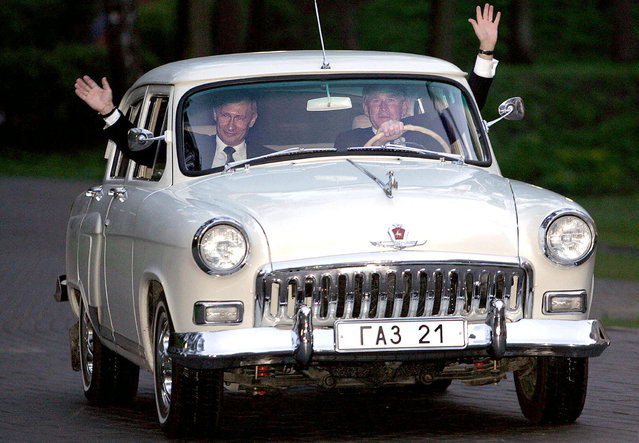
US President George W. Bush (R) and Russian President Vladimir Putin wave as the two presidents go for a ride in Putin's 1956 Volga before dinner 08 May 2005 at the his residence outside of Moscow. Bush hailed Russia's “bravery and sacrifice” in defeating Nazism, as he met Putin ahead of ceremonies marking the 60th anniversary of the end of World War II. Bush, who the previous day criticized the decades-long Soviet occupation of central Europe, said he was looking forward to the 09 May ceremony on Moscow's Red Square, to be attended by over 50 national leaders. (Photo by Tim Sloan/AFP Photo)

US President George W. Bush (R) and Russian President Vladimir Putin wave as the two presidents go for a ride in Putin's 1956 Volga before dinner 08 May 2005 at the his residence outside of Moscow. Bush hailed Russia's “bravery and sacrifice” in defeating Nazism, as he met Putin ahead of ceremonies marking the 60th anniversary of the end of World War II. Bush, who the previous day criticized the decades-long Soviet occupation of central Europe, said he was looking forward to the 09 May ceremony on Moscow's Red Square, to be attended by over 50 national leaders. (Photo by Tim Sloan/AFP Photo)
Details
24 Jun 2017 08:10:00
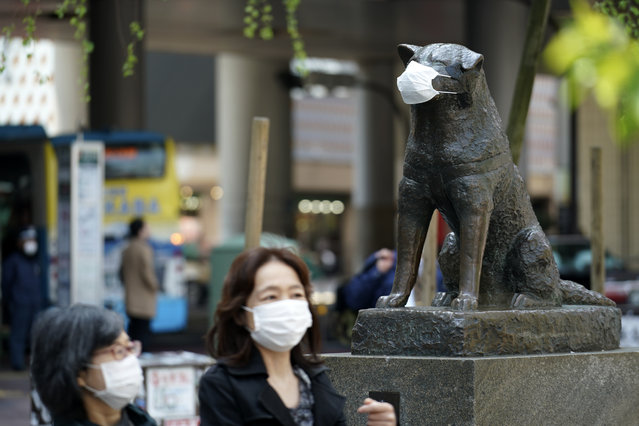
A statue of a Japanese Akita dog named “Hachiko” wearing a face mask is seen near Shibuya Station Wednesday, April 8, 2020, in Tokyo. Japanese Prime Minister Shinzo Abe declared a state of emergency on Tuesday for Tokyo and six other prefectures to ramp up defenses against the spread of the new coronavirus. Hachiko has waited for his owner University of Tokyo Prof. Eizaburo Ueno at the same place by the station every afternoon, expecting him to return home for nearly 11 years even after Ueno's death at work. (Photo by Eugene Hoshiko/AP Photo)

A statue of a Japanese Akita dog named “Hachiko” wearing a face mask is seen near Shibuya Station Wednesday, April 8, 2020, in Tokyo. Japanese Prime Minister Shinzo Abe declared a state of emergency on Tuesday for Tokyo and six other prefectures to ramp up defenses against the spread of the new coronavirus. Hachiko has waited for his owner University of Tokyo Prof. Eizaburo Ueno at the same place by the station every afternoon, expecting him to return home for nearly 11 years even after Ueno's death at work. (Photo by Eugene Hoshiko/AP Photo)
Details
15 Apr 2020 00:05:00
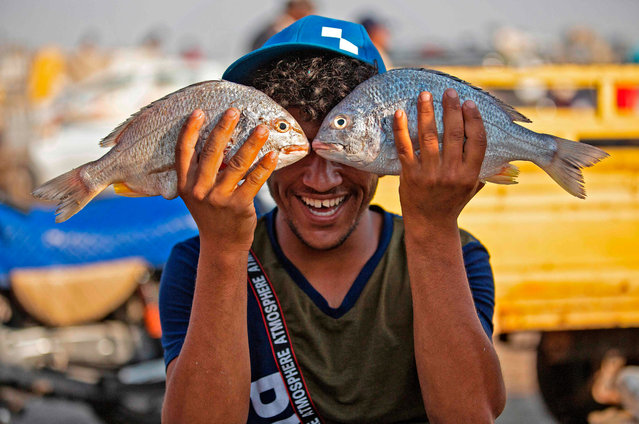
A youth poses while holding two fishes before his face in Iraq's southern port city of al-Faw, 90 kilometres south of Basra near the Shatt al-Arab and the Gulf, on May 18, 2020. In Iraq, a national lockdown to halt the COVID-19 coronavirus pandemic has found some unexpected fans: local businesses who no longer have to compete with Turkish, Iranian or Chinese imports. Those countries, as well as Saudi Arabia, Jordan and Kuwait, typically flood Iraqi markets with inexpensive products at prices local producers can't compete with. (Photo by Hussein Faleh/AFP Photo)

A youth poses while holding two fishes before his face in Iraq's southern port city of al-Faw, 90 kilometres south of Basra near the Shatt al-Arab and the Gulf, on May 18, 2020. In Iraq, a national lockdown to halt the COVID-19 coronavirus pandemic has found some unexpected fans: local businesses who no longer have to compete with Turkish, Iranian or Chinese imports. Those countries, as well as Saudi Arabia, Jordan and Kuwait, typically flood Iraqi markets with inexpensive products at prices local producers can't compete with. (Photo by Hussein Faleh/AFP Photo)
Details
02 Jul 2020 00:01:00