Loading...
Done
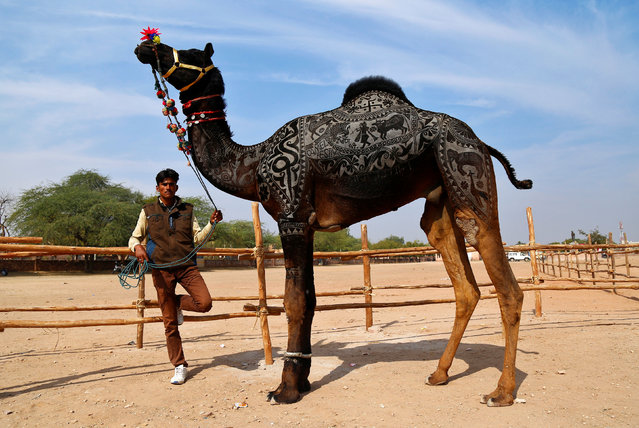
A man waits with his camel to take part in a camel decoration competition at the Nagaur Cattle Fair, where animals like camels, cows, horses, and bulls are brought to be sold or traded, in Nagaur, in the desert state of Rajasthan, India February 2, 2017. (Photo by Himanshu Sharma/Reuters)

A man waits with his camel to take part in a camel decoration competition at the Nagaur Cattle Fair, where animals like camels, cows, horses, and bulls are brought to be sold or traded, in Nagaur, in the desert state of Rajasthan, India February 2, 2017. (Photo by Himanshu Sharma/Reuters)
Details
08 Feb 2017 00:06:00
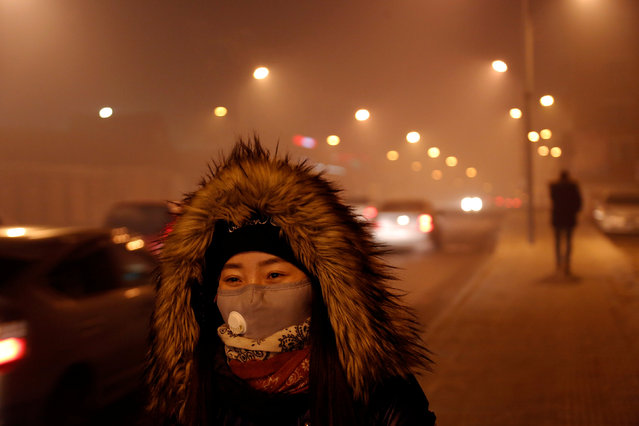
A woman wears a face mask in the part of the city near neighbourhoods known for burning coal for heating in Ulaanbaatar, Mongolia January 26, 2017. Not many people in Ulaanbaatar wear masks to protect themselves against pollution. (Photo by B. Rentsendorj/Reuters)

A woman wears a face mask in the part of the city near neighbourhoods known for burning coal for heating in Ulaanbaatar, Mongolia January 26, 2017. Not many people in Ulaanbaatar wear masks to protect themselves against pollution. (Photo by B. Rentsendorj/Reuters)
Details
09 Feb 2017 00:00:00
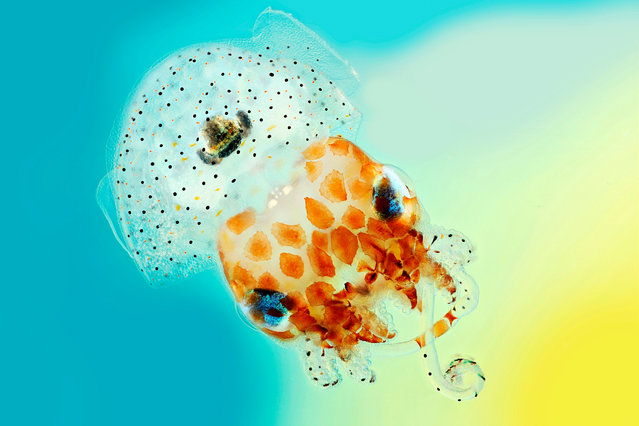
With its huge eyes, comical name and diminutive size, Mark R. Smith’s image of a baby Hawaiian bobtail squid can’t help but raise a smile. A curiously endearing creature, the cephalopod is just 1.5cm across, its mantle cavity bearing more than a passing resemblance to a rather natty shower cap. But it is also a beautiful example of symbiosis – nature’s version of “I’ll scratch your back if you scratch mine” – for on the underside of the squid is a light organ which houses bioluminescent bacteria. The squid offers the bacteria protection and food, while the bacteria emit a glow – a handy trait that the squid uses to offset its silhouette, helping it to evade predators in the depths below. Mark R. Smith’s entry combines several images of a Hawaiian bobtail squid with different focus lengths to create a final picture with greater depth of field than normal. (Photo by Mark R. Smith/Wellcome Images/Macroscopic Solutions)

With its huge eyes, comical name and diminutive size, Mark R. Smith’s image of a baby Hawaiian bobtail squid can’t help but raise a smile. A curiously endearing creature, the cephalopod is just 1.5cm across, its mantle cavity bearing more than a passing resemblance to a rather natty shower cap. But it is also a beautiful example of symbiosis – nature’s version of “I’ll scratch your back if you scratch mine” – for on the underside of the squid is a light organ which houses bioluminescent bacteria. The squid offers the bacteria protection and food, while the bacteria emit a glow – a handy trait that the squid uses to offset its silhouette, helping it to evade predators in the depths below. Mark R. Smith’s entry combines several images of a Hawaiian bobtail squid with different focus lengths to create a final picture with greater depth of field than normal. (Photo by Mark R. Smith/Wellcome Images/Macroscopic Solutions)
Details
08 Mar 2017 00:05:00
In this Saturday, April 8, 2017 photo, a keeper walks camels to the Al Marmoom Camel Racetrack, in al-Lisaili about 40 km (25  miles) southeast of Dubai, United Arab Emirates. (Photo by Kamran Jebreili/AP Photo)

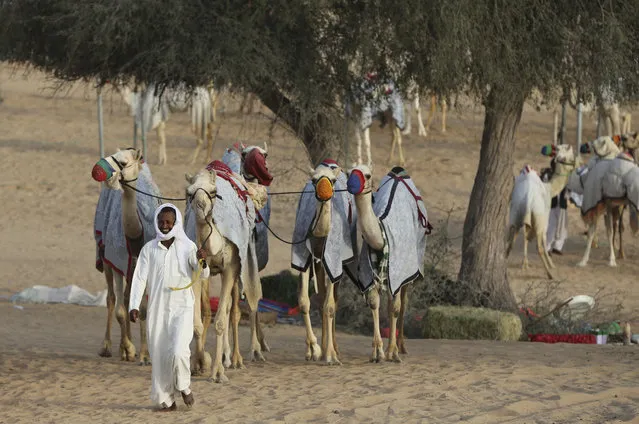
In this Saturday, April 8, 2017 photo, a keeper walks camels to the Al Marmoom Camel Racetrack, in al-Lisaili about 40 km (25 miles) southeast of Dubai, United Arab Emirates. Camel racing is a big-money sport and fast thoroughbreds can fetch well over a million dollars. As rising temperatures across Gulf Arab countries signal the end of the winter camel racing season, Dubai is wrapping up its races with the annual Al Marmoom Heritage Festival that has drawn thousands of camels from across the oil-rich Gulf. (Photo by Kamran Jebreili/AP Photo)
Details
19 Apr 2017 08:44:00
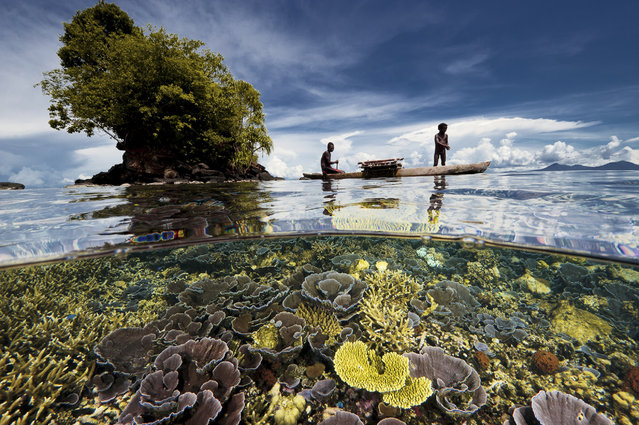
From the “Paradise Revisited” story in the November 2013 issue of National Geographic magazine, this image is a beautiful vision of father and son fishermen as they move through the multicolored coral gardens of Kembe Bay, Papua New Guinea, in a traditional outrigger canoe. (Photo by David Doubilet/National Geographic Creative)

From the “Paradise Revisited” story in the November 2013 issue of National Geographic magazine, this image is a beautiful vision of father and son fishermen as they move through the multicolored coral gardens of Kembe Bay, Papua New Guinea, in a traditional outrigger canoe. (Photo by David Doubilet/National Geographic Creative)
Details
29 Apr 2017 07:28:00
A riot policeman punches Greek photojournalist Tatiana Bolari during a demonstration in Athens' Syntagma (Constitution) square October 5, 2011. Police officers attacked several members of the press covering  protests, injuring at least two members of the media. (Photo by Yannis Behrakis/Reuters)

A riot policeman punches Greek photojournalist Tatiana Bolari during a demonstration in Athens' Syntagma (Constitution) square October 5, 2011. Police officers attacked several members of the press covering protests, injuring at least two members of the media. (Photo by Yannis Behrakis/Reuters)
Details
25 Aug 2014 11:17:00
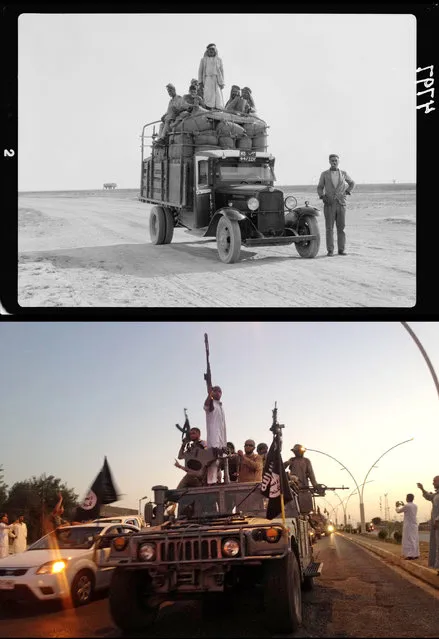
This combination of two photographs shows a 1932 image of men on a lorry on the road to Mosul, northern Iraq, from the Library of Congress, top, and fighters from the Islamic State group parading in a commandeered Iraqi security forces armored vehicle down a main road in Mosul on Monday, June 23, 2014. (Photo by AP Photo)


Iraq's second largest city, Mosul, is locked under the rule of extremists from the Islamic State group trying to purge it of everything they see as contradicting their stark vision of Islam. A trove of photographs now housed at the Library of Congress offers a glimpse of a different Mosul – before wars, insurgency, sectarian strife and now radicals' rule. The scenes were taken in the autumn of 1932 by staff from the American Colony Photo Department during a visit to Iraq at the end of the British mandate. (Photo by AP Photo)
Details
21 Sep 2014 11:13:00
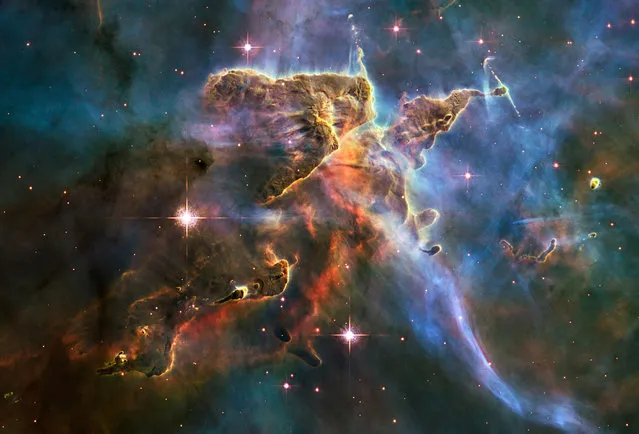
The tempestuous stellar nursery called the Carina Nebula, located 7,500 light-years away from Earth in the southern constellation Carina. (Photo by Reuters/NASA)

The tempestuous stellar nursery called the Carina Nebula, located 7,500 light-years away from Earth in the southern constellation Carina. (Photo by Reuters/NASA)
Details
22 Oct 2014 13:34:00