Loading...
Done
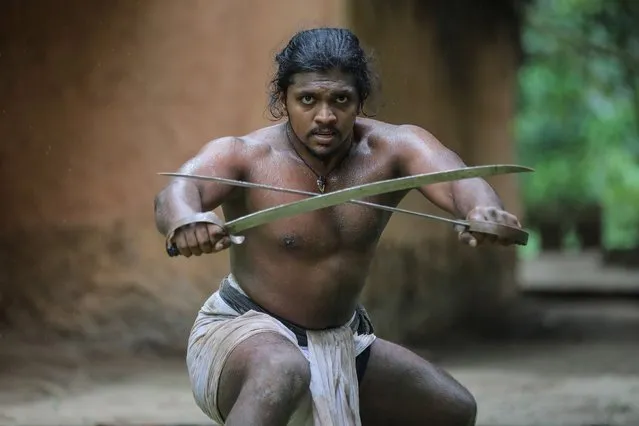
A student of the Sri Lankan ancient martial art “Angampora” performs during a practice session at the angam maduwa or fighting field, in Korathota, a suburb of Colombo, Sri Lanka, 07 September 2022. Sri Lanka's ancient martial art, Angampora, is thought to be thousands of years old. Anga translates to “body parts” and Angampora is a fighting art that uses body parts. Martial arts practitioners in Angampora were mostly in the king's service, and they were tasked with protecting the king and his kingdom. Angampora was practiced in secret for most centuries because the British, who colonized Sri Lanka, banned it in 1818 after seeing it as a threat. (Photo by Chamila Karunarathne/EPA/EFE)

A student of the Sri Lankan ancient martial art “Angampora” performs during a practice session at the angam maduwa or fighting field, in Korathota, a suburb of Colombo, Sri Lanka, 07 September 2022. Sri Lanka's ancient martial art, Angampora, is thought to be thousands of years old. Anga translates to “body parts” and Angampora is a fighting art that uses body parts. Martial arts practitioners in Angampora were mostly in the king's service, and they were tasked with protecting the king and his kingdom. Angampora was practiced in secret for most centuries because the British, who colonized Sri Lanka, banned it in 1818 after seeing it as a threat. (Photo by Chamila Karunarathne/EPA/EFE)
Details
14 Oct 2022 04:47:00
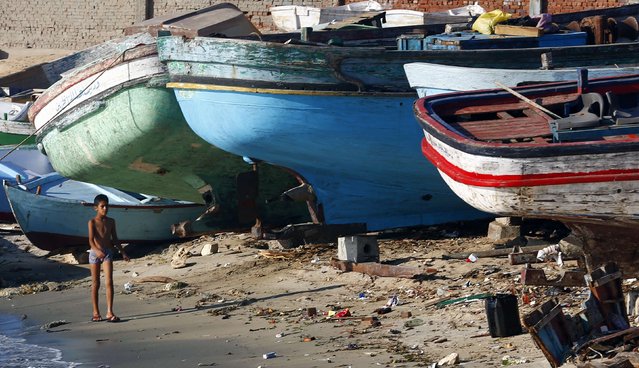
A boy walks past boats docked at the entrance gate of the fishermen's village in the El Max area of the Mediterranean city of Alexandria September 12, 2014.  El Max, where hundreds of boats dart through the canals, has been called the “Venice of Egypt” for its waterways and relaxed atmosphere. Its fishermen, however, worry about how they will make ends meet on meagre earnings they  say are being reduced further by polluted waters that are making fishing more difficult. (Photo by Amr Abdallah Dalsh/Reuters)

A boy walks past boats docked at the entrance gate of the fishermen's village in the El Max area of the Mediterranean city of Alexandria September 12, 2014. El Max, where hundreds of boats dart through the canals, has been called the “Venice of Egypt” for its waterways and relaxed atmosphere. Its fishermen, however, worry about how they will make ends meet on meagre earnings they say are being reduced further by polluted waters that are making fishing more difficult. While the government has tried to fix the state's bloated finances by cutting subsidies and reining in spending, some argue the reforms hurt Egypt's most vulnerable who have long relied on a generous system of fuel and food subsidies to supplement low incomes. (Photo by Amr Abdallah Dalsh/Reuters)
Details
12 Dec 2014 12:42:00
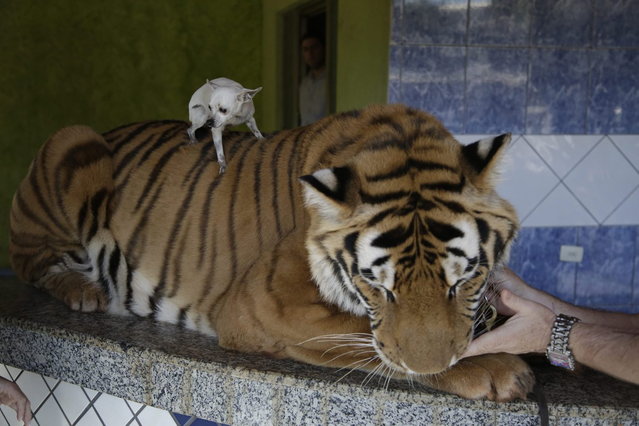
The Borges' family pet dog, Little, is placed on the back of Tom, their tiger, for a photo to be taken, in Maringa, Brazil, Friday, September 27, 2013. The Brazilian family is now locked in a legal dispute for the big cats, they have eight tigers and two lions, with federal wildlife officials working to take them away. While Borges does have a license to raise the animals, Brazilian wildlife officials say he illegally bred the cats, creating a public danger. (Photo by Renata Brito/AP Photo)

“Ary Borges and his family live in southern Brazil like most families the Borges' love animals and have an array of cats living in their home. The only difference between the cats owned by the Borges family and the cat that is cuddled up on your lap as you read this is the Borges' cats weigh over 700 pounds and could kill you just as soon as look at you. The Borges family shares their home with nine tigers, two lionesses, a chimp and a Chihuahua”. – Amanda Schiavo via Latin Times. Photo: The Borges' family pet dog, Little, is placed on the back of Tom, their tiger, for a photo to be taken, in Maringa, Brazil, Friday, September 27, 2013. (Photo by Renata Brito/AP Photo)
Details
04 Oct 2013 11:51:00
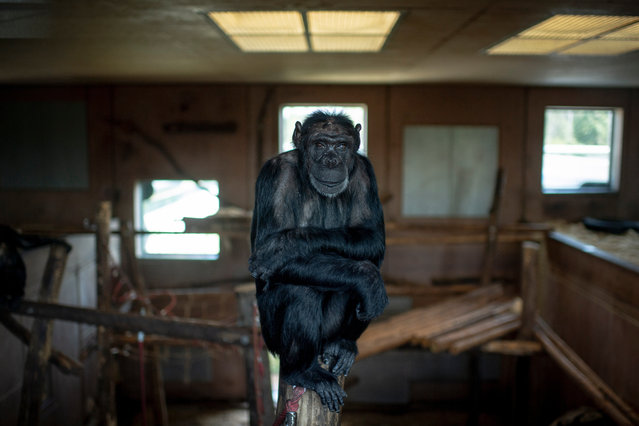
A chimpanzee looks in the direction of a camera at the Gut Aiderbichl Sanctuary for Traumatized Chimpanzees and other Primates in Gaenserndorf, near Vienna, 17 September 2018. 34 former laboratory chimpanzees of former Austrian pharmaceutical company Immuno AG spend their lives at the Gut Aiderbichl Sanctuary for Traumatized Chimpanzees and other Primates since 2009. U.S.-based Baxter International Inc. took over the Immuno AG in 1996, banned experiments with primates and rebuilt a former safari park for the Gut Aiderbichl Sanctuary for Traumatized Chimpanzees and other Primates. After three decades in captivity in too small cages, the chimpanzees, most of them came from Sierra Leone as cubs, have species-appropriate indoor and outdoor enclosures. The financial support by Baxter International Inc. and Austrian officials will end by 2019. (Photo by Christian Bruna/EPA/EFE)

A chimpanzee looks in the direction of a camera at the Gut Aiderbichl Sanctuary for Traumatized Chimpanzees and other Primates in Gaenserndorf, near Vienna, 17 September 2018. 34 former laboratory chimpanzees of former Austrian pharmaceutical company Immuno AG spend their lives at the Gut Aiderbichl Sanctuary for Traumatized Chimpanzees and other Primates since 2009. (Photo by Christian Bruna/EPA/EFE)
Details
23 Sep 2018 00:03:00
Models in lingerie are seen walking the streets of Sydney during a marketing campaign in support of marriage equality in Sydney, Australia on August 14, 2017. On Monday, 60 Honey Birdette employees took to the streets of the Sydney CBD in support for marriage equality ahead of the federal government’s controversial postal plebiscite on the topic, with forms slated to arrive in Australians’ mailboxes on September 12. Australians will vote on whether to legalise gay marriage via a voluntary postal vote and need to register by August 24. According to Honey Birdette’s Facebook page, the aim of the demonstration was to empower women and celebrate equality. The founder and CEO of the brand Eloise Monaghan is a “proud member of the community” and married to another woman. (Photo by PA Wire)

Models in lingerie are seen walking the streets of Sydney during a marketing campaign in support of marriage equality in Sydney, Australia on August 14, 2017. On Monday, 60 Honey Birdette employees took to the streets of the Sydney CBD in support for marriage equality ahead of the federal government’s controversial postal plebiscite on the topic, with forms slated to arrive in Australians’ mailboxes on September 12. Australians will vote on whether to legalise gay marriage via a voluntary postal vote and need to register by August 24. According to Honey Birdette’s Facebook page, the aim of the demonstration was to empower women and celebrate equality. The founder and CEO of the brand Eloise Monaghan is a “proud member of the community” and married to another woman. (Photo by PA Wire)
Details
15 Aug 2017 07:32:00
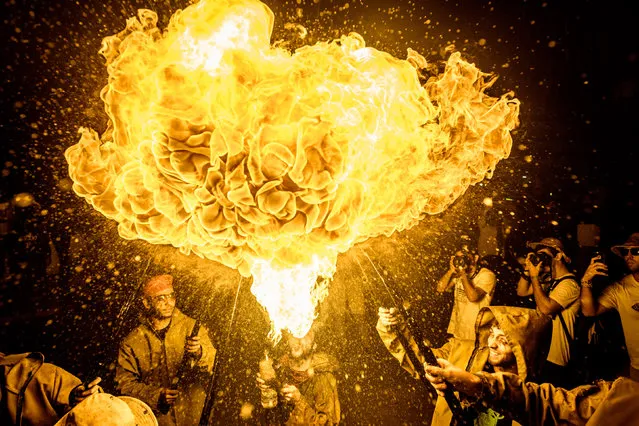
A fire-eater of the “Diables de Terrassa” performs during Sitges' little “Festa Major”, “Santa Tecla” in Sitges, Spain on September 19, 2016. This celebration brings together some of Catalonia’s most emblematic festive traditions. The central axis of the celebrations is the traditional parade, made up of “big-head” carnival figures and characters who dance to music played on different traditional instruments. One of the most popular events is the Correfoc or fire-running, which is also the closing event of the fiesta. The people run and jump over characters dressed up as devils and dragons, carrying fire. (Photo by Matthias Oesterle/ZUMA Press/Splash News)

A fire-eater of the “Diables de Terrassa” performs during Sitges' little “Festa Major”, “Santa Tecla” in Sitges, Spain on September 19, 2016. This celebration brings together some of Catalonia’s most emblematic festive traditions. The central axis of the celebrations is the traditional parade, made up of “big-head” carnival figures and characters who dance to music played on different traditional instruments. One of the most popular events is the Correfoc or fire-running, which is also the closing event of the fiesta. The people run and jump over characters dressed up as devils and dragons, carrying fire. (Photo by Matthias Oesterle/ZUMA Press/Splash News)
Details
20 Sep 2016 09:28:00
Nino, a ten-year-old toreador apprentice of the French Tauromachy Centre, nicknamed El Nino, touches a practice bull at the bullring of Garons, near Nimes, September 25, 2013. (Photo by Jean-Paul Pelissier/Reuters)

Nino, a ten-year-old toreador apprentice of the French Tauromachy Centre, nicknamed El Nino, touches a practice bull at the bullring of Garons, near Nimes, September 25, 2013. Since 1983, the French Tauromachy Centre in Nimes has trained some 1,000 youths in the art of bullfighting. Twenty of them have gone on to become professional matadors, facing fighting bulls in the arena. Twice a week, students take courses with a matador to learn the movements and gestures of the bullfighter in the ring, but without an animal present. Students train with calves in the surrounding fields during spring, and regularly participate in beginner's bullfights (becerradas) without killing calves. Solal has been taking courses for three years and Nino, for just a year now. Both are normally enrolled in French public schools, but have one thought in mind – bullfighting. They share a passion linked to the city of Nimes, famous for its ferias and bullring. (Photo by Jean-Paul Pelissier/Reuters)
Details
06 Nov 2013 10:12:00
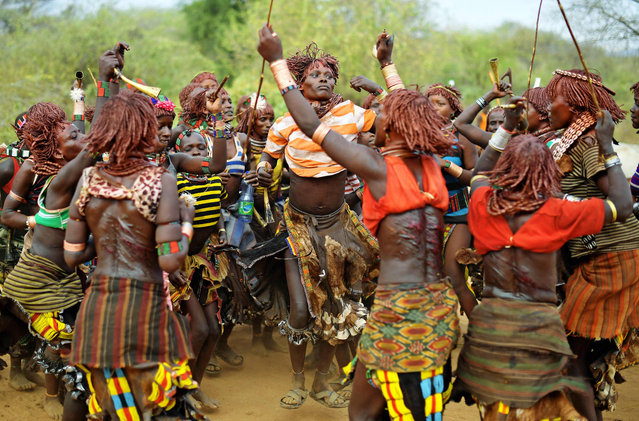
Hamar women dance before a bull jumping ceremony in Ethiopia's southern Omo Valley region near Turmi on September 19, 2016. The Hamar are a Nilotic ethnic group in Ethiopia. The construction of the Gibe III dam, the third largest hydroelectric plant in Africa, and large areas of very “thirsty” cotton and sugar plantations and factories along the Omo river are impacting heavily on the lives of tribes living in the Omo Valley who depend on the river for their survival and way of life. Human rights groups fear for the future of the tribes if they are forced to scatter, give up traditional ways through loss of land or ability to keep cattle as globalisation and development increases. (Photo by Carl De Souza/AFP Photo)

Hamar women dance before a bull jumping ceremony in Ethiopia's southern Omo Valley region near Turmi on September 19, 2016. The Hamar are a Nilotic ethnic group in Ethiopia. The construction of the Gibe III dam, the third largest hydroelectric plant in Africa, and large areas of very “thirsty” cotton and sugar plantations and factories along the Omo river are impacting heavily on the lives of tribes living in the Omo Valley who depend on the river for their survival and way of life. (Photo by Carl De Souza/AFP Photo)
Details
02 Oct 2016 08:45:00