Loading...
Done
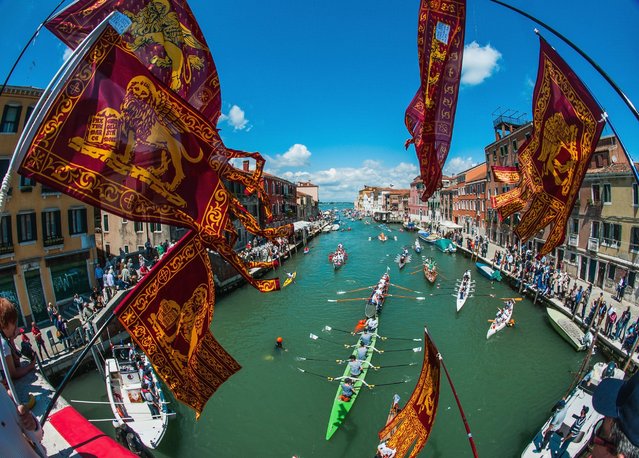
Rowers enter in Canaregio river during the 42nd Venice Vogalonga on May 15, 2016 in Venice, Italy. 42 years ago a group of Venetians, both amateur and professional rowers, came up with an idea of non-competitive race in which any kind of rowing boat can take part. The first Vogalonga began with the message to protest against the growing use of powerboats in Venice and the swell damage they do to the historic city. (Photo by Awakening/Getty Images)

Rowers enter in Canaregio river during the 42nd Venice Vogalonga on May 15, 2016 in Venice, Italy. 42 years ago a group of Venetians, both amateur and professional rowers, came up with an idea of non-competitive race in which any kind of rowing boat can take part. The first Vogalonga began with the message to protest against the growing use of powerboats in Venice and the swell damage they do to the historic city. (Photo by Awakening/Getty Images)
Details
18 May 2016 14:41:00
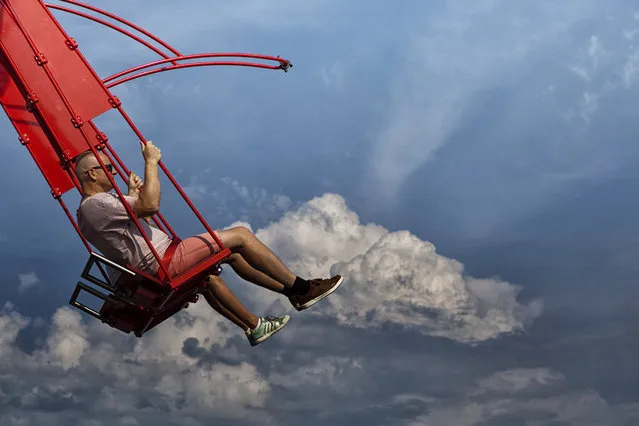
The giant metal structure sits 330ft above the ground on the roof of a 22 storey office block in Dutch capital Amsterdam on September 6, 2016. Tourists sit in a playground-style chair as they propel themselves them over the edge of the building with only thin-air between them and the ground below. Engineers spent several years designing and building the breathtaking swing. By being fixed to the top of a building it reaches new heights – dwarfing other swings around Europe but trailing behind the 1,150ft high mechanical rides at the Stratosphere Hotel in Las Vegas, Nevada. (Photo by Huub Zeeman/SWNS.com)

The giant metal structure sits 330ft above the ground on the roof of a 22 storey office block in Dutch capital Amsterdam on September 6, 2016. Tourists sit in a playground-style chair as they propel themselves them over the edge of the building with only thin-air between them and the ground below. Engineers spent several years designing and building the breathtaking swing. By being fixed to the top of a building it reaches new heights – dwarfing other swings around Europe but trailing behind the 1,150ft high mechanical rides at the Stratosphere Hotel in Las Vegas, Nevada. (Photo by Huub Zeeman/SWNS.com)
Details
07 Sep 2016 10:31:00
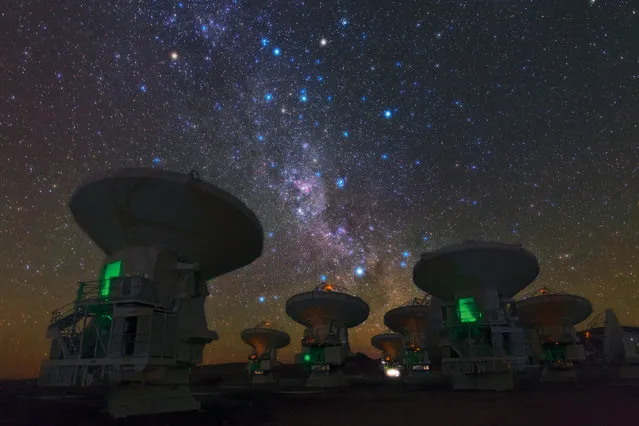
The antennas of the European Southern Observatory's Atacama Large Millimeter/Submillimeter Array, also known as ALMA, are set against the splendor of the Milky Way in this picture by Babak Tafreshi

The antennas of the European Southern Observatory's Atacama Large Millimeter/Submillimeter Array, also known as ALMA, are set against the splendor of the Milky Way in this picture by Babak Tafreshi. Construction of the full ALMA array is due to be completed in Chile's Atacama Desert in 2013, but the facility is already making scientific observations with a partial array of antennas. (Photo by ESO/B. Tafreshi/TWAN)
Details
03 Jun 2012 11:57:00


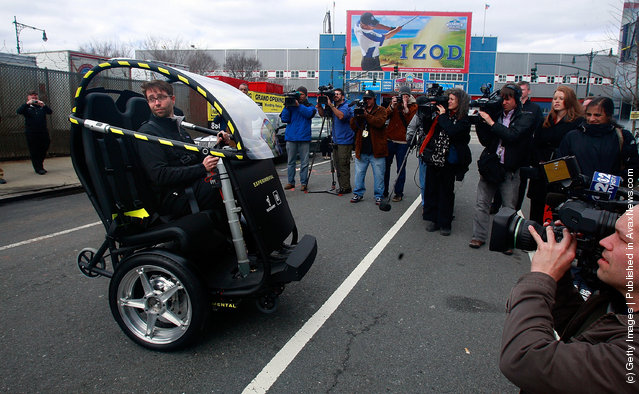
“The Personal Urban Mobility and Accessibility (PUMA) is an experimental electrically powered road vehicle created by Segway and adopted by General Motors as a concept vehicle representing the future of urban transportation. It operates on two wheels placed side-by-side, a layout that differs in placement from motorcycles which instead have their two wheels placed at the front and rear”. – Wikipedia

The Project P.U.M.A. (Personal Urban Mobility and Accessibility) prototype is displayed for the media April 7, 2009 in New York City. (Photo by Mario Tama/Getty Images)
Details
21 Jul 2011 14:32:00
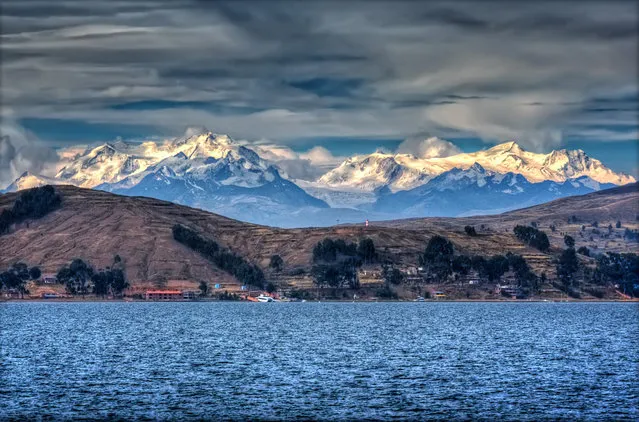
Lake Titicaca

Titicaca or Titiqaqa is a large, deep lake in the Andes on the border of Peru and Bolivia. By volume of water, it is the largest lake in South America. Lake Maracaibo has a larger surface area, though some consider it to be a large brackish bay due to its direct connection with the sea.
Details
22 Jul 2015 12:20:00
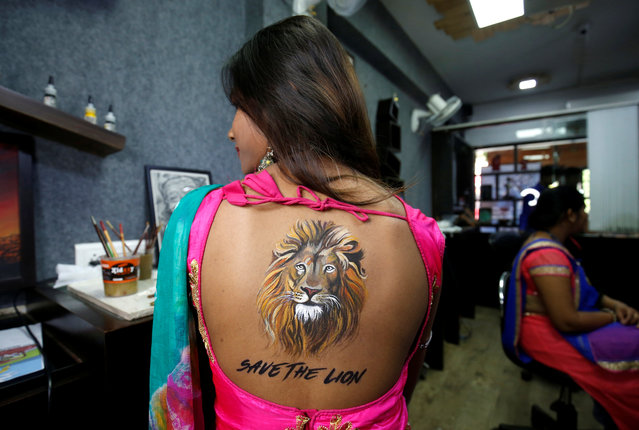
A woman poses after she got an image of a lion tattooed on her back as part of awareness campaign to save Asiatic lions and in preparations for the upcoming Navratri festival in Ahmedabad, India, October 5, 2018. (Photo by Amit Dave/Reuters)

A woman poses after she got an image of a lion tattooed on her back as part of awareness campaign to save Asiatic lions and in preparations for the upcoming Navratri festival in Ahmedabad, India, October 5, 2018. (Photo by Amit Dave/Reuters)
Details
15 Oct 2018 00:05:00
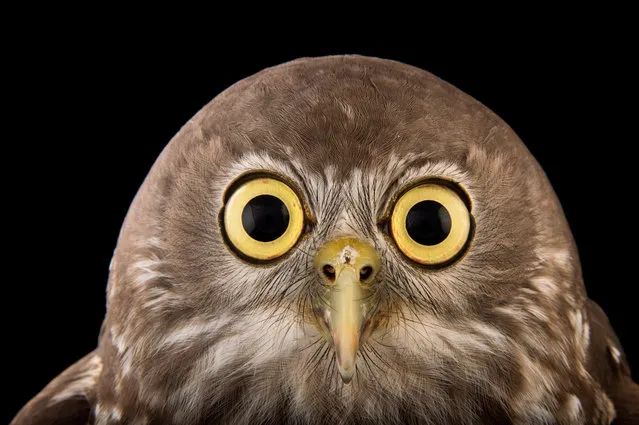
The National Geographic Photo Ark is a travelling exhibition of photographer Joel Sartore’s quest to create a photo archive of biodiversity around the world. So far, Sartore has captured studio portraits of more than 6,000 species – a number that he hopes to double. On 1 July, the ark will open at Melbourne zoo – the first time it has been exhibited in the southern hemisphere. More than 50 portraits will be on display, including many of Australian endangered animals being protected by programs at the zoo itself. These captions have been edited from text supplied by Melbourne zoo. Here: Barking owl. So-named because its call sounds like a barking dog, these birds are native to Australia, Indonesia and Papua New Guinea. In Victoria they are listed as an endangered species, and in 2003 there were estimated to be fewer than 50 breeding pairs. The main threat to the species in Victoria is loss of habitat, especially large trees with hollows in which they can nest and on which many of their prey depend. Apart from a bark, they may utter a chilling scream when they feel threatened. (Photo by Joel Sartore/National Geographic Photo Ark/The Guardian)

The National Geographic Photo Ark is a travelling exhibition of photographer Joel Sartore’s quest to create a photo archive of biodiversity around the world. So far, Sartore has captured studio portraits of more than 6,000 species – a number that he hopes to double. On 1 July, the ark will open at Melbourne zoo – the first time it has been exhibited in the southern hemisphere. More than 50 portraits will be on display, including many of Australian endangered animals being protected by programs at the zoo itself. These captions have been edited from text supplied by Melbourne zoo. Here: Barking owl. (Photo by Joel Sartore/National Geographic Photo Ark/The Guardian)
Details
01 Jul 2017 07:45:00
Astronomy Photographer Of The Year 2013 Part1

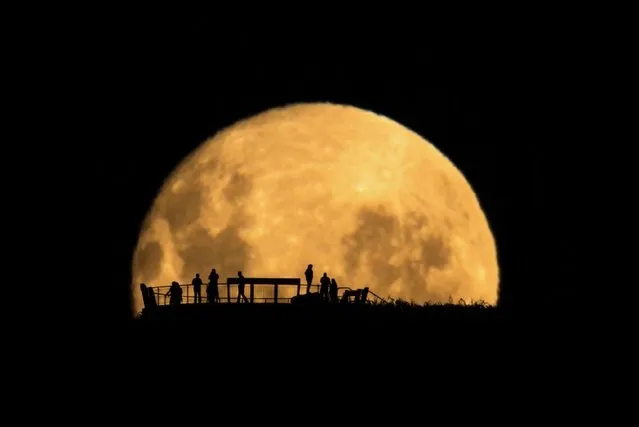
The Royal Observatory just announced its Astronomy Photographer Of The Year 2013 winners. Australian photographer Mark Gee was chosen among a thousand amateur and professional photographers around the globe to win the top title. His work is part of an exhibition of the winning photographers, which opened on Sept. 19 at the Royal Observatory Greenwich. The Royal Observatory shared with us the winners and notable mentions of the competition. Their descriptions of the prizewinners can be found below the images.
Details
04 Oct 2013 11:45:00