Loading...
Done
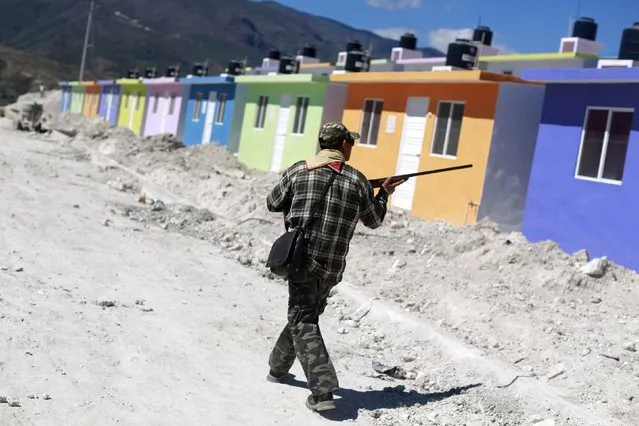
A member of the Community Police of the FUSDEG (United Front for the Security and Development of the State of Guerrero) search for a man, who ran away upon seeing the Community Police approach as they patrolled a street, in the village of Petaquillas, on the outskirts of Chilpancingo, in the Mexican state of Guerrero, February 1, 2015. (Photo by Jorge Dan Lopez/Reuters)

A member of the Community Police of the FUSDEG (United Front for the Security and Development of the State of Guerrero) search for a man, who ran away upon seeing the Community Police approach as they patrolled a street, in the village of Petaquillas, on the outskirts of Chilpancingo, in the Mexican state of Guerrero, February 1, 2015. Approximately 500 members of the Community Police from the FUSDEG took control of the security of the village of Petaquillas on the night of January 30 at the request of the people tired of the actions of organized crime, local media reported. (Photo by Jorge Dan Lopez/Reuters)
Details
03 Feb 2015 13:32:00
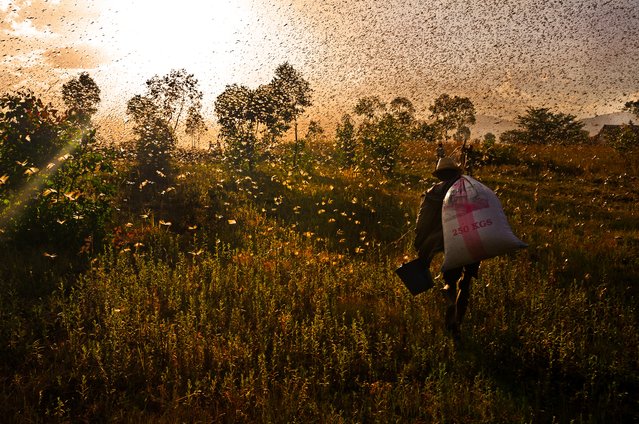
“Locusts & Men”. Oppression, interaction, collaboration. In the life cycle of nature nothing is lost, but the coexistence of different species is sometimes difficult. In Madagascar periodically returns the archaic antagonism between man and the migratory locust, in a circle of life where the two species are looking for space and food for their survival. Photo location: Madagascar, 2013. (Photo and caption by Michele Martinelli/National Geographic Photo Contest)

“Locusts & Men”. Oppression, interaction, collaboration. In the life cycle of nature nothing is lost, but the coexistence of different species is sometimes difficult. In Madagascar periodically returns the archaic antagonism between man and the migratory locust, in a circle of life where the two species are looking for space and food for their survival. At the end of the day a man walks home carrying on his shoulders the heavy bag which contains the locusts captured during the day. The insects provide nutritious meals for the man and his family. Photo location: Madagascar, 2013. (Photo and caption by Michele Martinelli/National Geographic Photo Contest)

ATTENTION! All pictures are presented in high resolution. To see Hi-Res images – just TWICE click on any picture. In other words, click small picture – opens the BIG picture. Click BIG picture – opens VERY BIG picture.
Details
03 Dec 2013 10:59:00
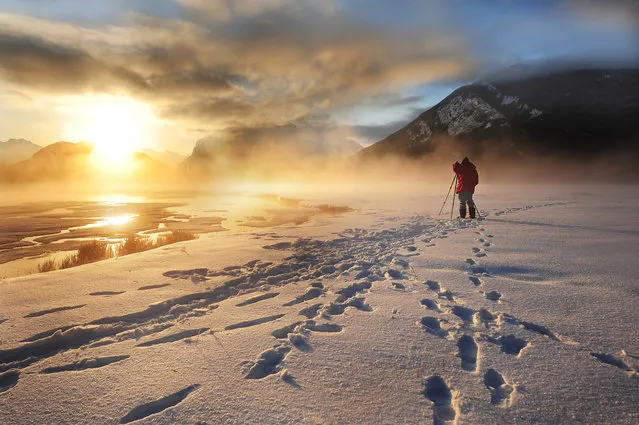
“Artist of the light”. While shooting sunrise in the Vermilion lakes area of Banff national park, Canada, I met a fellow photographer on the scene. Most of the time, we tried not to get in each other's way, however, just by accident, I snapped a picture with him in it working on his tripod settings, and it turned out to be a great photo compared to my sunrise shots. (Photo and caption by Victor Liu/National Geographic Traveler Photo Contest)

“Artist of the light”. While shooting sunrise in the Vermilion lakes area of Banff national park, Canada, I met a fellow photographer on the scene. Most of the time, we tried not to get in each other's way, however, just by accident, I snapped a picture with him in it working on his tripod settings, and it turned out to be a great photo compared to my sunrise shots. (Photo and caption by Victor Liu/National Geographic Traveler Photo Contest)

ATTENTION! All pictures are presented in high resolution. To see Hi-Res images – just TWICE click on any picture. In other words, click small picture – opens the BIG picture. Click BIG picture – opens VERY BIG picture.
Details
27 Jun 2013 13:11:00
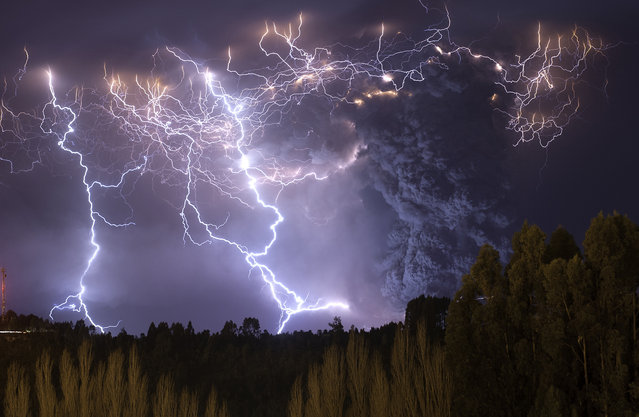
The eruption of Cordon Caulle began on June 4, 2011, located in the Region of Los Rios in Chile. For about 12 months, people and animals became accustomed to living with the daily fall of ash, which also caused problems in the air traffic in South America. The explosions and lightning during first days of the eruption could be seen from hundreds of miles around. This photograph was taken on the second night of eruption from the town of Lago Ranco. (Photo and caption by Francisco Negroni/National Geographic Traveler Photo Contest)

The eruption of Cordon Caulle began on June 4, 2011, located in the Region of Los Rios in Chile. For about 12 months, people and animals became accustomed to living with the daily fall of ash, which also caused problems in the air traffic in South America. The explosions and lightning during first days of the eruption could be seen from hundreds of miles around. This photograph was taken on the second night of eruption from the town of Lago Ranco. (Photo and caption by Francisco Negroni/National Geographic Traveler Photo Contest)

ATTENTION! All pictures are presented in high resolution. To see Hi-Res images – just TWICE click on any picture. In other words, click small picture – opens the BIG picture. Click BIG picture – opens VERY BIG picture.
Details
23 Jun 2013 11:24:00
Performers eat their lunch before the start of the New Year's Day Parade in London, January 1, 2016. (Photo by Kevin Coombs/Reuters)

Performers eat their lunch before the start of the New Year's Day Parade in London, January 1, 2016. (Photo by Kevin Coombs/Reuters)
Details
03 Jan 2016 08:03:00
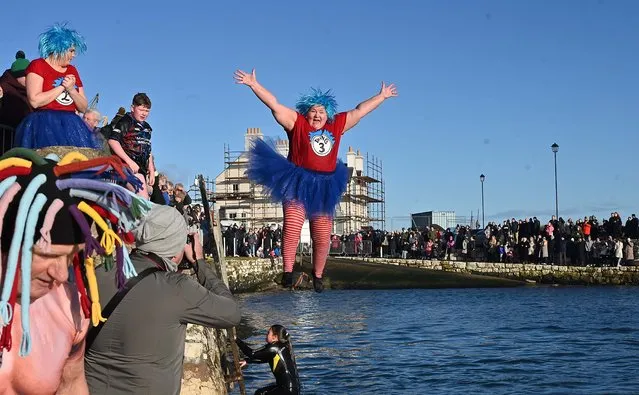
Revellers brave the chill and jump into the water at Carnlough, Co. Antrim, Northern Ireland on January 1, 2024. (Photo by Arthur Allison/Pacemaker)

Revellers brave the chill and jump into the water at Carnlough, Co. Antrim, Northern Ireland on January 1, 2024. (Photo by Arthur Allison/Pacemaker)
Details
15 Feb 2024 08:41:00
Jakub Przygonski at the stage 1 of Dakar Rally, Pisco, Peru on January 7, 2019. (Photo by Kin Marcin/Red Bull Content Pool)

Jakub Przygonski at the stage 1 of Dakar Rally, Pisco, Peru on January 7, 2019. (Photo by Kin Marcin/Red Bull Content Pool)
Details
16 Jan 2019 00:01:00
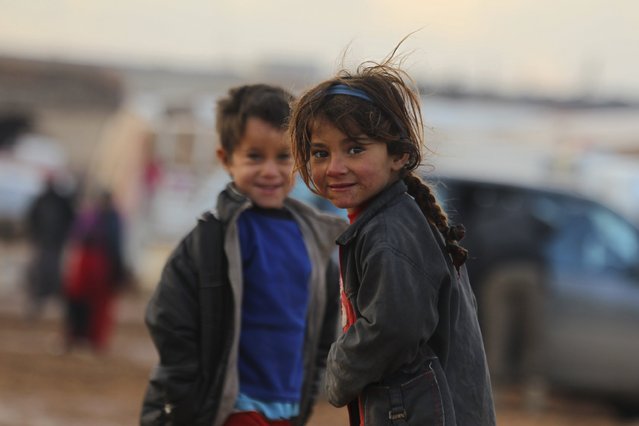
Internally displaced Syrian children play inside a refugee camp in the Hama countryside, Syria January 1, 2016. (Photo by Ammar Abdullah/Reuters)

Internally displaced Syrian children play inside a refugee camp in the Hama countryside, Syria January 1, 2016. (Photo by Ammar Abdullah/Reuters)
Details
03 Jan 2016 08:01:00