Loading...
Done
A section of multi-vehicle accident on Interstate 75 is shown in Detroit, Thursday, January 31, 2013. Snow squalls and slippery roads led to a series of accidents that left at least three people dead and 20 injured on a mile-long stretch of southbound I-75. More than two dozen vehicles, including tractor-trailers, were involved in the pileups. (Photo by Paul Sancya/AP Photo)

A section of multi-vehicle accident on Interstate 75 is shown in Detroit, Thursday, January 31, 2013. Snow squalls and slippery roads led to a series of accidents that left at least three people dead and 20 injured on a mile-long stretch of southbound I-75. More than two dozen vehicles, including tractor-trailers, were involved in the pileups. (Photo by Paul Sancya/AP Photo)
Details
01 Feb 2013 08:48:00
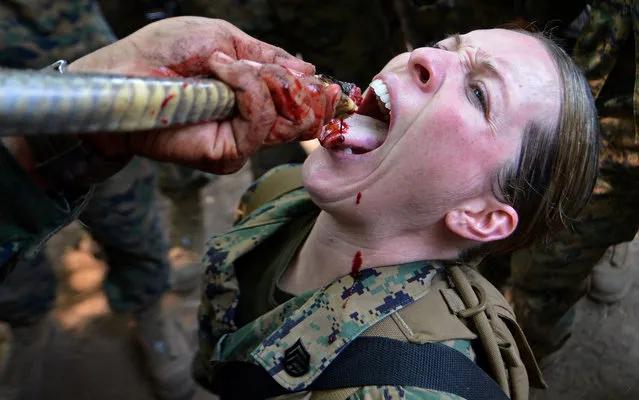
In a military base in the Thai province of Chon Buri February 20 U.S. Marines Navy with Thailand began their studies in jungle survival. The event is held in joint military exercises “Cobra Gold 2013”. During a jungle survival program February 20, 2013 taught by Royal Thai Special Forces in Sannapit, Thailand, U.S. Marines learned to catch cobras and drink their fresh blood, not to mention eat forest insects and pull the heads off of chicken. The training was part of Operation Cobra Gold 13, the 32nd edition of international military exercises hosted by the Thai. According to a U.S. Marines press release, Cobra Gold is the largest exercise of its kind in Asia and incorporates troops from five other nations in addition to the U.S. and Thailand. The Daily Mail reports that the Marines were invited to experience the local custom of drinking cobra blood after being taught to catch and kill cobras in the wild. As CNN notes, Cobra blood is believed to be a panacea and aphrodiasic in parts of Southeast Asia. In Jakarta, vendors can earn over $100 a night selling shots of cobra blood mixed with liquor. (Photo by Pornchai Kittiwongsakul/AFP Photo)

During a jungle survival program February 20, 2013 taught by Royal Thai Special Forces in Sannapit, Thailand, U.S. Marines learned to catch cobras and drink their fresh blood, not to mention eat forest insects and pull the heads off of chicken. The training was part of Operation Cobra Gold 13, the 32nd edition of international military exercises hosted by the Thai. According to a U.S. Marines press release, Cobra Gold is the largest exercise of its kind in Asia and incorporates troops from five other nations in addition to the U.S. and Thailand. The Daily Mail reports that the Marines were invited to experience the local custom of drinking cobra blood after being taught to catch and kill cobras in the wild. As CNN notes, Cobra blood is believed to be a panacea and aphrodiasic in parts of Southeast Asia. In Jakarta, vendors can earn over $100 a night selling shots of cobra blood mixed with liquor. (Photo by Pornchai Kittiwongsakul/AFP Photo)
Details
23 Feb 2013 11:52:00
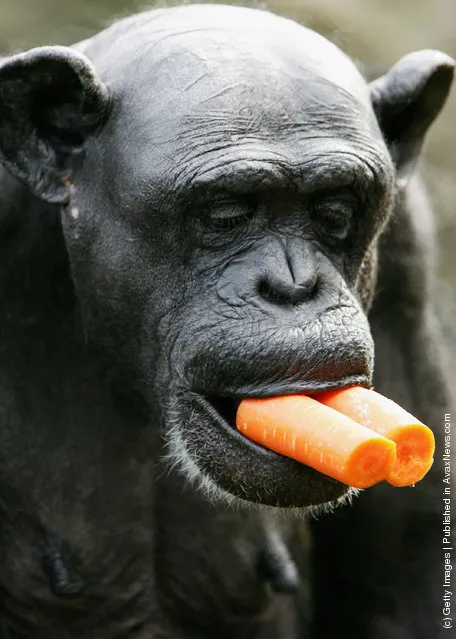
Female Chimpanzee eats carrots

Female Chimpanzee “Fifi” eats carrots as she sits in her enclosure at Taronga Zoo on her 60th birthday May 21, 2007 in Sydney, Australia. Fifi is the oldest of the Zoo's chimp population, which consists of 19 individuals. (Photo by Ian Waldie/Getty Images)
Details
07 Aug 2011 12:48:00
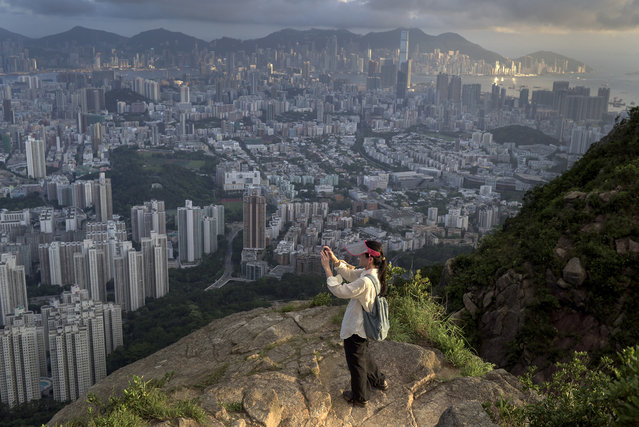
In this photograph taken on June 28, 2015, a hiker in Hong Kong takes a picture of the city from a walking trail. The southern Chinese territory is crisscrossed by more than 180 miles of designated hiking trails. (Photo by Alex Ogle/AFP Photo)

In this photograph taken on June 28, 2015, a hiker in Hong Kong takes a picture of the city from a walking trail. The southern Chinese territory is crisscrossed by more than 180 miles of designated hiking trails. (Photo by Alex Ogle/AFP Photo)
Details
30 Jun 2015 12:47:00
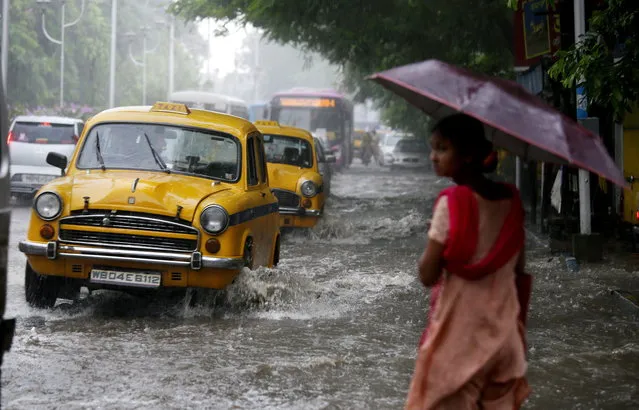
Indian commuters wade through floodwaters during the continuous rain shower in Calcutta, India, July 10, 2015. A monsoon shower hit the city and disrupted daily life. The Indian monsoon, takes place between May and September. (Photo by Piyal Adhikary/EPA)

Indian commuters wade through floodwaters during the continuous rain shower in Calcutta, India, July 10, 2015. A monsoon shower hit the city and disrupted daily life. The Indian monsoon, takes place between May and September. (Photo by Piyal Adhikary/EPA)
Details
11 Jul 2015 14:18:00
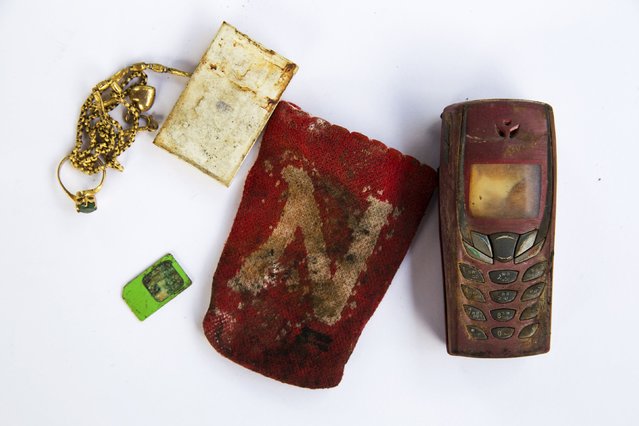
Personal possessions of 2004 tsunami victims are arranged to be photographed outside a police station in Takua Pa, in Phang Nga province December 19, 2014. (Photo by Damir Sagolj/Reuters)

Personal possessions of 2004 tsunami victims are arranged to be photographed outside a police station in Takua Pa, in Phang Nga province December 19, 2014. Thai police opened a shipping container filled with documents and possessions of victims of the 2004 Indian Ocean Tsunami after being asked by Reuters for permission to film its contents. The three metre by 12 metre container was handed over to Thai police in 2011 and contains hundreds of plastic police evidence bags – each one holding the precious items found on the body of a victim. (Photo by Damir Sagolj/Reuters)
Details
24 Dec 2014 13:44:00
Ocean voyage

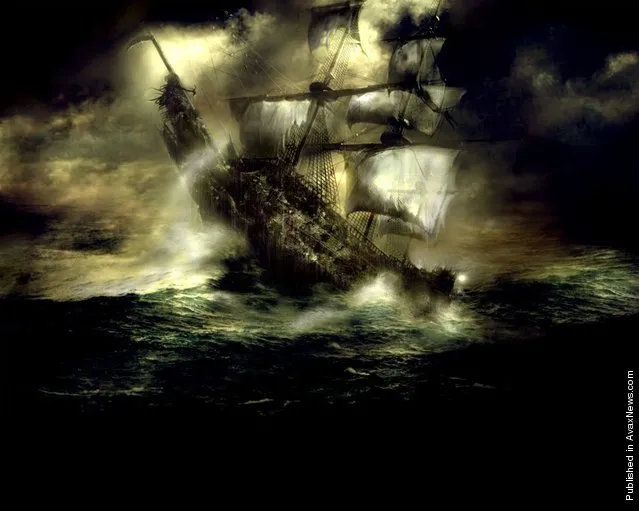
Do you think that history is a science? Well, not exactly. First, and foremost, history is the state's “legend of wars”, it’s official regalia. Of course, public historians are not interested in scientific truth – quite the opposite. In this respect, any attempt to present a state’s history as altruistic and benevolent as possible is welcomed and encouraged – as opposed to any revisionism attempts that may be more accurate. In this matter, Chinese have surpassed us all – they revised in highly creative manner (but rather shamelessly) the technology already invented by Europeans, a process that resulted in oldest state on the planet. Here is an interesting paradox: ask any sinologist about the Middle Kingdom during second century B.C., and he will describe it to you in such a vivid manner as if he has been living there all his life – but as soon as you will ask him to describe Chinese history in the 19-20th centuries… let's say, his eagerness will be greatly diminished. However, we will discuss China in a different article, and in the meantime we will try to understand how exactly historic “legend of wars” is formed and functions – based on a specific and well-known example. A great example is Ferdinand Magellan's first voyage around the world.

Details
14 Nov 2011 09:11:00
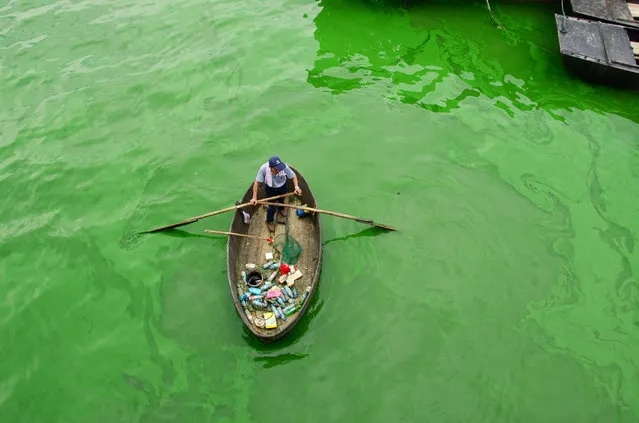
A fisherman boats in Chao Lake where thick cyanobacteria gather on the surface on August 5, 2015 in Chaohu, Anhui Province of China. As high temperature came in summar, part of water in Anhui Province's Chao Lake breeds large tracts of cyanobacteria which not only brought pollution to sense of smell, but also affected people's life. (Photo by ChinaFotoPress/ChinaFotoPress via Getty Images)

A fisherman boats in Chao Lake where thick cyanobacteria gather on the surface on August 5, 2015 in Chaohu, Anhui Province of China. As high temperature came in summar, part of water in Anhui Province's Chao Lake breeds large tracts of cyanobacteria which not only brought pollution to sense of smell, but also affected people's life. (Photo by ChinaFotoPress/ChinaFotoPress via Getty Images)
Details
06 Aug 2015 11:36:00