Loading...
Done
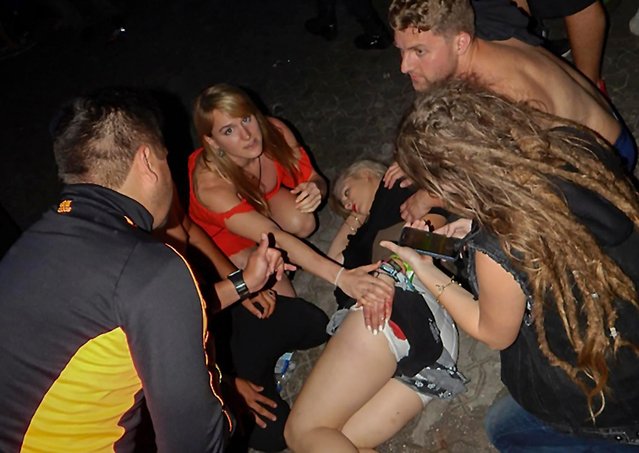
An injured woman is pictured near the Blue Parrot nightclub in Playa del Carmen, Quintana Ro state, Mexico where 5 people were killed, three of them foreigners, during a music festival on January 16, 2017. A shooting erupted at an electronic music festival in the Mexican resort of Playa del Carmen early Monday, leaving at least five people dead and sparking a stampede, the mayor said. Fifteen people were injured, some in the stampede, after at least one shooter opened fire before dawn at the Blue Parrot nightclub during the BPM festival. (Photo by Victor Vargas/AFP Photo)

An injured woman is pictured near the Blue Parrot nightclub in Playa del Carmen, Quintana Ro state, Mexico where 5 people were killed, three of them foreigners, during a music festival on January 16, 2017. A shooting erupted at an electronic music festival in the Mexican resort of Playa del Carmen early Monday, leaving at least five people dead and sparking a stampede, the mayor said. Fifteen people were injured, some in the stampede, after at least one shooter opened fire before dawn at the Blue Parrot nightclub during the BPM festival. (Photo by Victor Vargas/AFP Photo)
Details
17 Jan 2017 12:35:00
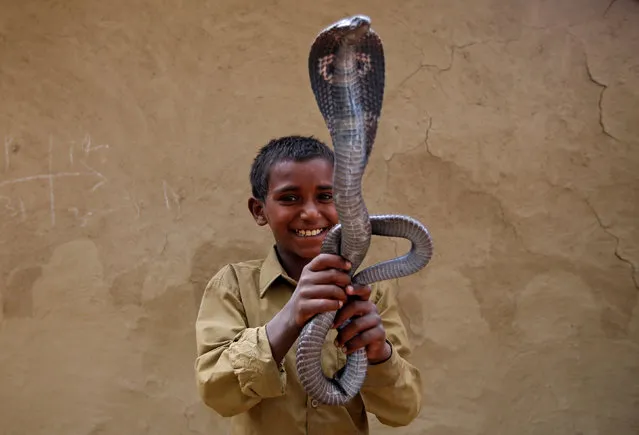
Ravi Nath poses for a photograph with a cobra snake in Jogi Dera (Snake charmers settlement), in the village of Baghpur, in the central state of Uttar Pradesh, India November 10, 2016. (Photo by Adnan Abidi/Reuters)

Ravi Nath poses for a photograph with a cobra snake in Jogi Dera (Snake charmers settlement), in the village of Baghpur, in the central state of Uttar Pradesh, India November 10, 2016. An ancient tribe of snake charmers, known as Saperas, have thrived over the generations by catching venomous snakes and making them dance to their music. Snakes are revered by Hindus in India and snake charmers are considered the followers of Lord Shiva, the blue-skinned Hindu god who is usually portrayed wearing a king cobra around his neck. (Photo by Adnan Abidi/Reuters)
Details
26 Jan 2017 13:06:00
Ecuadorian indigenous people celebrate the festival of the moon or Kulla Raymi, in Quito, Ecuador, 21 September 2021. A circle on the ground made up of fruits and inside the Andean symbol of the chacana, multinational geometric flags and a cross that symbolizes the four cardinal points, were the setting in which the festival of the moon, the Kulla, was commemorated this Tuesday. Raymi, on a hill in Quito. It is one of the four most significant festivities of the Andean agroecological calendar, which commemorates the beginning of life and exalts women as the maximum representation of fertility. (Photo by Jose Jacome/EPA/EFE)

Ecuadorian indigenous people celebrate the festival of the moon or Kulla Raymi, in Quito, Ecuador, 21 September 2021. A circle on the ground made up of fruits and inside the Andean symbol of the chacana, multinational geometric flags and a cross that symbolizes the four cardinal points, were the setting in which the festival of the moon, the Kulla, was commemorated this Tuesday. Raymi, on a hill in Quito. It is one of the four most significant festivities of the Andean agroecological calendar, which commemorates the beginning of life and exalts women as the maximum representation of fertility. (Photo by Jose Jacome/EPA/EFE)
Details
22 Sep 2021 09:01:00
Medical staff celebrate after all patients were discharged at a temporary hospital set up to treat people with the COVID-19 coronavirus in Wuhan in China's central Hubei province on March 9, 2020. China closed most of its makeshift hospitals for coronavirus patients, some schools reopened and Disney resort staff went back to work on March 9 as normality slowly returns to the country after weeks battling the epidemic. (Photo by AFP Photo/China Stringer Network)

Medical staff celebrate after all patients were discharged at a temporary hospital set up to treat people with the COVID-19 coronavirus in Wuhan in China's central Hubei province on March 9, 2020. China closed most of its makeshift hospitals for coronavirus patients, some schools reopened and Disney resort staff went back to work on March 9 as normality slowly returns to the country after weeks battling the epidemic. (Photo by AFP Photo/China Stringer Network)
Details
12 Mar 2020 00:05:00
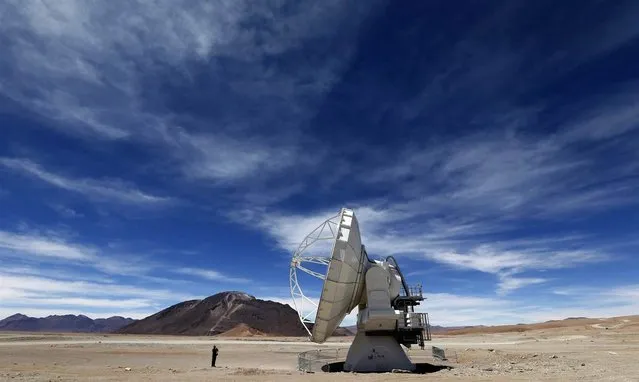
A man takes a photo of a radio antenna that's part of the Atacama Large Milimeter Array Observatory on March 12, 2013 at Llano de Chajnantor, about 43 miles (70 kilometers) from San Pedro de Atacama, Chile. The $1.5 billion ALMA facility, which had its official inauguration on March 13, is considered the world's most expensive ground-based observatory. (Photo by Felipe Trueba/EPA)

A man takes a photo of a radio antenna that's part of the Atacama Large Milimeter Array Observatory on March 12, 2013 at Llano de Chajnantor, about 43 miles (70 kilometers) from San Pedro de Atacama, Chile. The $1.5 billion ALMA facility, which had its official inauguration on March 13, is considered the world's most expensive ground-based observatory. (Photo by Felipe Trueba/EPA)
Details
03 Apr 2013 09:25:00
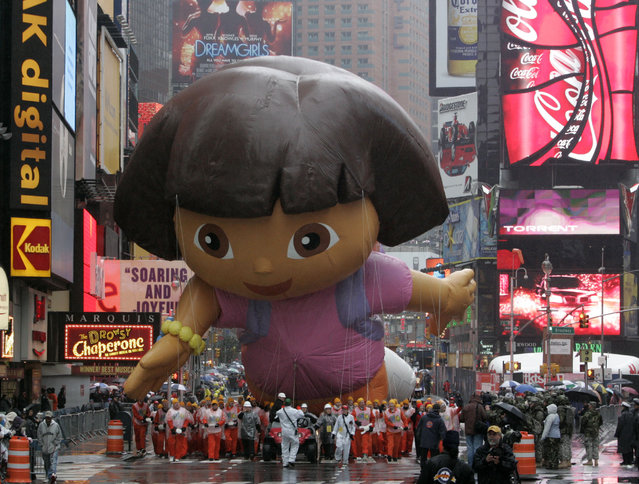
The Dora the Explorer balloon moves through Times Square during the Macy's Thanksgiving Day parade Thursday, November 23, 2006 in New York. (Photo by Frank Franklin II/AP Photo)

The Dora the Explorer balloon moves through Times Square during the Macy's Thanksgiving Day parade Thursday, November 23, 2006 in New York. (Photo by Frank Franklin II/AP Photo)
Details
19 Oct 2014 12:36:00
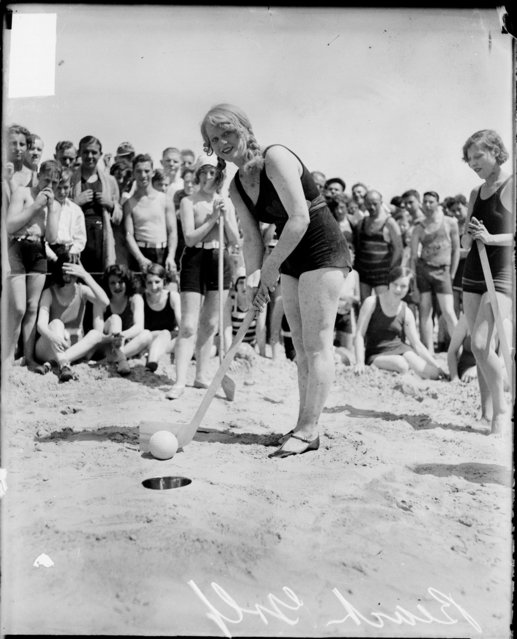
A Summer Activity time Can't Touch By William Holt_Part2

With temperatures soaring and summer well underway, countless Americans will be spending their Independence Day weekend at the beach. Here we revisit some classic images from the turn-of-the-century to the 1930's of vacations by the sea, from Coney Island to Santa Monica.
Details
23 Aug 2013 14:04:00
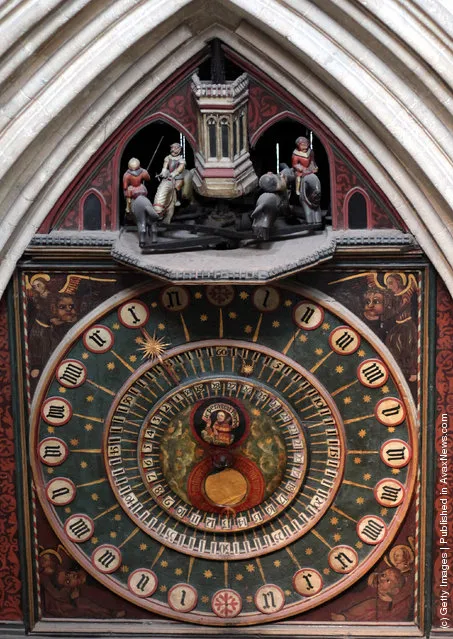
Wells Clock – World's Oldest Mechanical Clock

“Wells Cathedral is a Church of England cathedral in Wells, Somerset, England. Built between 1175 and 1490, Wells Cathedral has been described as “the most poetic of the English Cathedrals”. The Wells clock, an astronomical clock, is located in the north transept. The surviving mechanism, dated to between 1386 and 1392, was replaced in the 19th century, and was eventually moved to the Science Museum in London, where it continues to operate. It is the second-oldest surviving clock in England”. – Wikipedia

Photo: The clock face of world's oldest continually-working mechanical clock is seen as it is hand wound for the very last time on August 21, 2010 in Wells, England. (Photo by Matt Cardy/Getty Images)
Details
10 Aug 2011 11:23:00