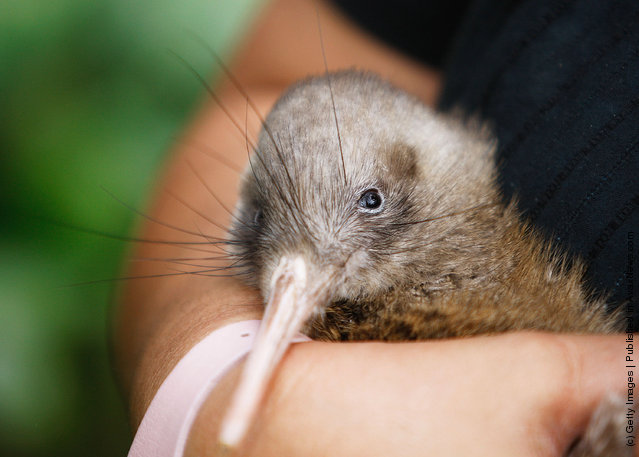
One of ten little spotted kiwi is released on Motuihe Island, a conservation pest-free island close to Auckland, on March 21, 2009 in Auckland, New Zealand. Eventually up to 40 endangered kiwi birds will be relocated to the island. (Photo by Hannah Johnston/Getty Images)
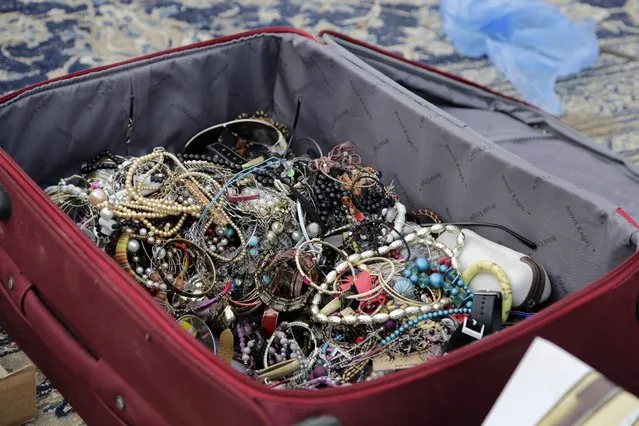
In this April 16, 2015 photo, costume jewelry is on display for sale at al-Aqeeliya open-air auction market in Riyadh, Saudi Arabia. A man came with the suitcase full of beaded jewelry and sold the whole bag to the auction winner, who had just a few moments to inspect its contents before buying. (Photo by Hasan Jamali/AP Photo)
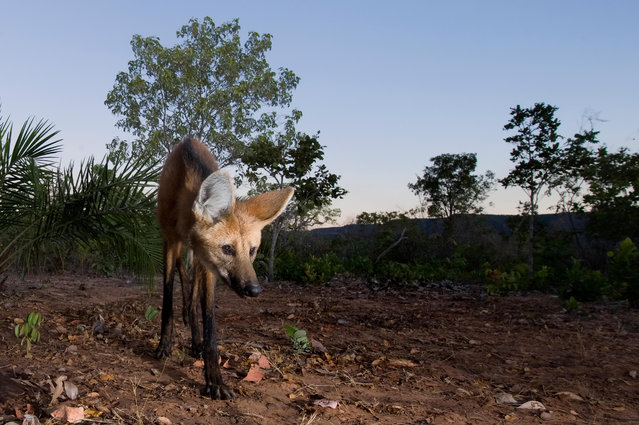
Global wildlife populations will decline by 67% by 2020 unless urgent action is taken to reduce human impact on species and ecosystems, warns the biennial Living Planet Index report from WWF (World Wide Fund for Nature) and ZSL (Zoological Society of London). From elephants to eels, here are some of the wildlife populations most affected by human activity. Here: The maned wolf is among the large mammals in the Brazilian Cerrado that are threatened by the increasing conversion of grasslands into farmland for grazing and growing crops. (Photo by Ben Cranke/Nature Picture Library/Alamy Stock Photo)
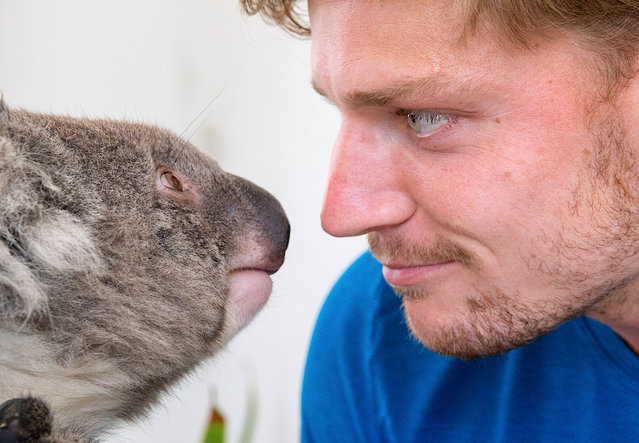
David Goffin of Belgium meets a koala during a promotional event for the Australian Open tennis tournament at Melbourne Park on January 17, 2018. (Photo by Fiona Hamilton/Reuters/Tennis Australia)
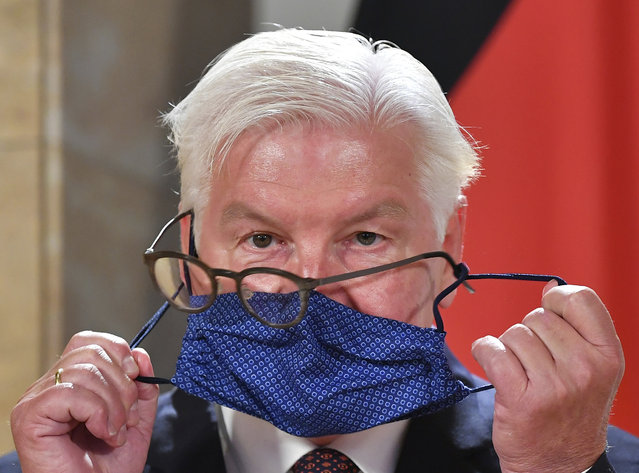
German President Frank-Walter Steinmeier struggles with his glasses and face mask as he attends a press conference after visiting the Salzburg Festival in Salzburg, Austria, Saturday, August 22, 2020. (Photo by Kerstin Joensson/AP Photo)
A person wearing a face mask holds a cat on Swanston Street after cases of the coronavirus were confirmed in Melbourne, Victoria, Australia, January 29, 2020. (Photo by Andrew Kelly/Reuters)
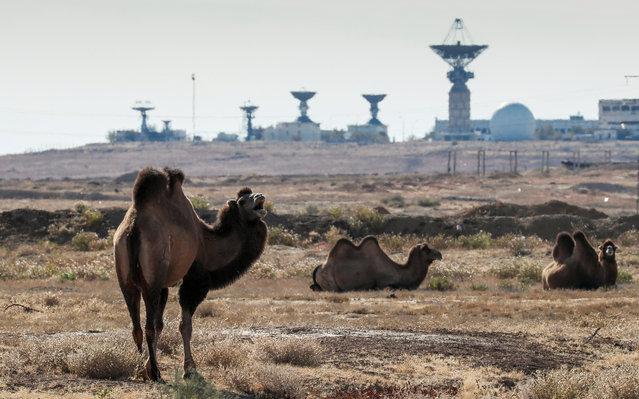
Camels graze in front of a spacecraft tracking station ahead of the Soyuz MS-10 upcoming launch at the Baikonur Cosmodrome, Kazakhstan, October 9, 2018. (Photo by Shamil Zhumatov/Reuters)