Loading...
Done
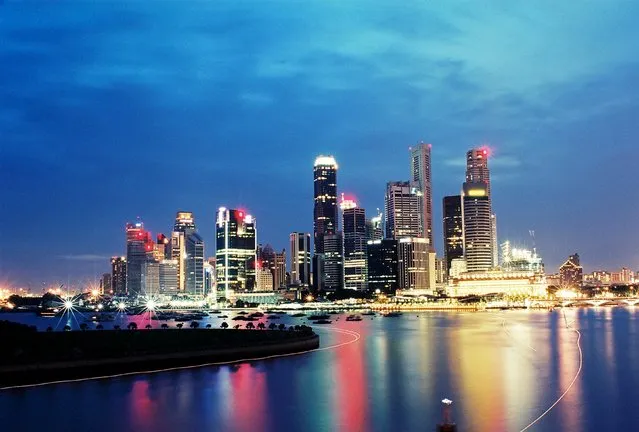
Small transportation boats, known as bumboats, leave trails of light as they travel across Marina Bay past the skyline of Singapore in this photo taken in 2004. Singapore holds a Jubilee weekend from 7 to 10 August to celebrate the 50th anniversary of its independence. (Photo by Edgar Su/Reuters)

Small transportation boats, known as bumboats, leave trails of light as they travel across Marina Bay past the skyline of Singapore in this photo taken in 2004. Singapore holds a Jubilee weekend from 7 to 10 August to celebrate the 50th anniversary of its independence. Fifty years ago, hundreds of small boats lined the Singapore river in the city centre. Today, most small boats are gone, except a handful of neon-lit tourist ferries. Maritime trade is still the backbone of the city-state but after decades of rapid growth Singapore, which at less than half the size of London is among the world’s most densely populated nations, is also a popular tourist destination and a thriving global financial hub. (Photo by Edgar Su/Reuters)
Details
01 Aug 2015 12:26:00
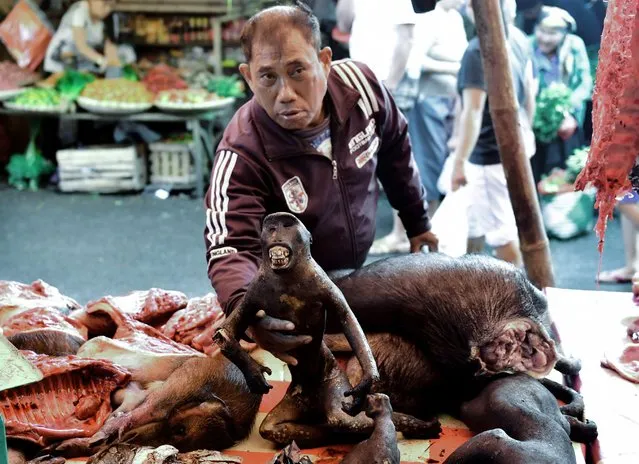
This picture taken on February 18, 2017 shows a customer holding a crested black macaque in Tomohon market in northern Sulawesi, Indonesia. (Photo by Bay Ismoyo/AFP Photo)

This picture taken on February 18, 2017 shows a customer holding a crested black macaque in Tomohon market in northern Sulawesi, Indonesia. Authorities and activists are stepping up efforts to persuade villagers on Sulawesi island to stop consuming the critically endangered crested black macaques, one of many exotic creatures that form part of the local indigenous community' s diet. The macaque' s meat is prized by the ethnic Minahasan people, a largely Christian group in the world' s most populous Muslim- majority country, who have no reservation about eating exotic animals, unlike Indonesia' s Islamic communities. (Photo by Bay Ismoyo/AFP Photo)
Details
04 Apr 2017 10:01:00
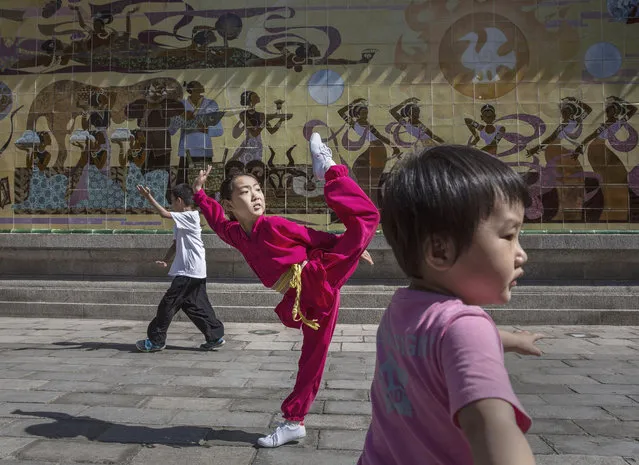
A young Chinese girl kicks during a kung-fu class at Ritan Park on June 11, 2016 in Beijing, China. Ritan, meaning “sun altar”, is among the oldest parks in Beijing, built in the early 1500s during the Ming dynasty for the emperor to make sacrifices to the sun. Less than half a kilometer square, Ritan these days is considered an oasis of green space in a sprawling city of skyscrapers, notorious air pollution, and a population of over 20 million people. Most Chinese live in small apartments with no access to gardens, leaving parks as a welcome haven for people, especially the elderly, to exercise, socialize, or enjoy a degree of privacy. (Photo by Kevin Frayer/Getty Images)

A young Chinese girl kicks during a kung-fu class at Ritan Park on June 11, 2016 in Beijing, China. Ritan, meaning “sun altar”, is among the oldest parks in Beijing, built in the early 1500s during the Ming dynasty for the emperor to make sacrifices to the sun. (Photo by Kevin Frayer/Getty Images)
Details
14 Jun 2016 13:01:00
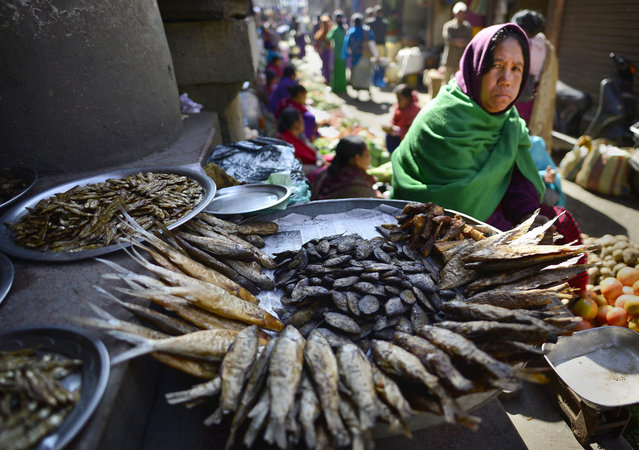
A Manipuri woman sells smoked and dry fish in Ima market - the world's largest all women market - in Imphal city, Manipur state, 06 January 2016. The 150-year-old Ima Keithel or 'Mothers's market' complex, which is run exclusively by women and was damaged in the 04 January 2016 earthquake, is returning back to normal. Nine deaths have been reported from in and around Imphal due to falling debris. (Photo by EPA/Stringer)

A Manipuri woman sells smoked and dry fish in Ima market - the world's largest all women market – in Imphal city, Manipur state, 06 January 2016. The 150-year-old Ima Keithel or “Mothers's market” complex, which is run exclusively by women and was damaged in the 04 January 2016 earthquake, is returning back to normal. Nine deaths have been reported from in and around Imphal due to falling debris. Imphal has a population of some 270,000 and people were jolted from their sleep and ran out of their homes in panic when the earth shook 04 January, reports say. (Photo by EPA/Stringer)
Details
08 Jan 2016 08:04:00
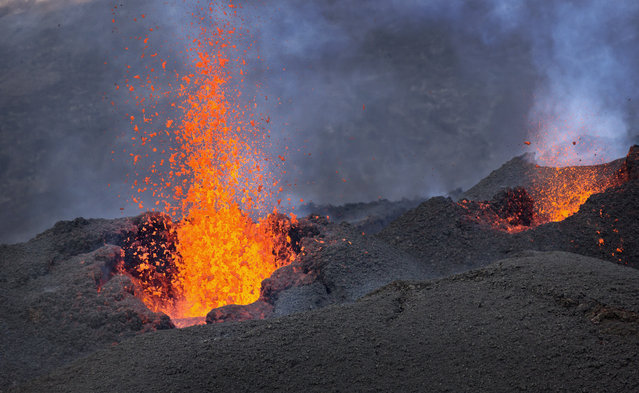
Lava erupts from the Piton de la Fournaise “Peak of the Furnace” volcano, on the southeastern corner of the Indian Ocean island of Reunion Saturday, August 1, 2015. Spewing red-hot lava, one of the most active volcanoes in the world is currently erupting on this Indian Ocean island, where the world's attention has been focused since a wing fragment believed to be from the missing Malaysian jet was discovered washed up on a beach. (Photo by Ben Curtis/AP Photo)

Lava erupts from the Piton de la Fournaise “Peak of the Furnace” volcano, on the southeastern corner of the Indian Ocean island of Reunion Saturday, August 1, 2015. Spewing red-hot lava, one of the most active volcanoes in the world is currently erupting on this Indian Ocean island, where the world's attention has been focused since a wing fragment believed to be from the missing Malaysian jet was discovered washed up on a beach. The lava fountains are shooting as high as 40 meters (44 yards) and are creating cones that are about 20 meters high after only one day of eruption, said Peltier. The volcano is in the Reunion National Park – a world heritage site. The volcano is not seen as dangerous because the lava flows down the east side of the mountain through an uninhabited area called the Grand Brule, or the Big Burned, toward the sea. The last times the volcano threatened the population was in 1977 and 1986. (Photo by Ben Curtis/AP Photo)
Details
03 Aug 2015 12:23:00
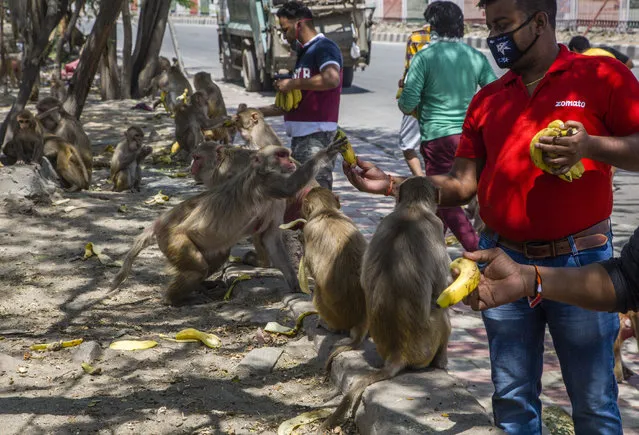
Men give bananas to monkeys gathered on the side of the road as India remains under an unprecedented lockdown over the highly contagious coronavirus (COVID-19) on April 08, 2020 in New Delhi, India. Wild animals, including monkeys, are roaming human settlements in India as people are staying indoors due to the 21-day lockdown. With India's 1.3 billion population and tens of millions of cars off the roads, wildlife is moving towards areas inhabited by humans. Wild animals in many countries have been seen roaming streets. A study says some 60 percent of the new diseases found around the globe every year are zoonotic, meaning they originate in animals and are passed on to humans. COVID-19 is a zoonotic disease that is suspected to have come from the wet markets of Wuhan, China. (Photo by Yawar Nazir/Getty Images)

Men give bananas to monkeys gathered on the side of the road as India remains under an unprecedented lockdown over the highly contagious coronavirus (COVID-19) on April 08, 2020 in New Delhi, India. Wild animals, including monkeys, are roaming human settlements in India as people are staying indoors due to the 21-day lockdown. (Photo by Yawar Nazir/Getty Images)
Details
12 Apr 2020 00:05:00
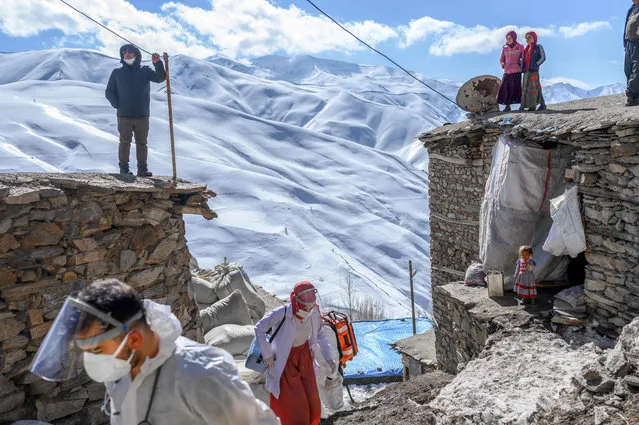
In this photograph taken on February 15, 2021, doctor Sergen Saracoglu (L) and nurse Yilzdiz Ayten (C) from the Bahcesaray public hospital vaccination team, arrive at the village of Guneyyamac in eastern Turkey, as part of an expedition to vaccinate residents of 65 years old or above with Sinovac's CoronaVac Covid-19 vaccine. Turkey's population of more than 83 million is spread out across Europe and Asia and covers some seemingly impregnable terrain. The vaccination effort with China's CoronaVac jab kicked off with a bang in mid-January when Turkey inoculated more than half a million people in the first few days. But it slowed down considerably when doctors left the big cities and tried to reach remote places such as Imamli and Ozbeyli – two ethnically Kurdish hamlets of a few hundred herders and farmers each. (Photo by Bulent Kilic/AFP Photo)

In this photograph taken on February 15, 2021, doctor Sergen Saracoglu (L) and nurse Yilzdiz Ayten (C) from the Bahcesaray public hospital vaccination team, arrive at the village of Guneyyamac in eastern Turkey, as part of an expedition to vaccinate residents of 65 years old or above with Sinovac's CoronaVac Covid-19 vaccine. (Photo by Bulent Kilic/AFP Photo)
Details
18 Mar 2021 09:32:00
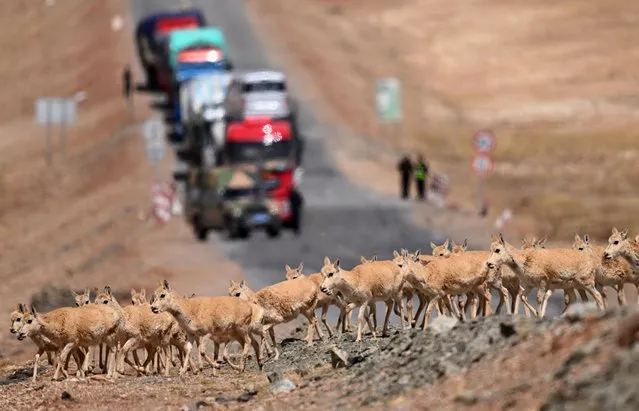
Pregnant Tibetan antelopes move across the Qinghai-Tibet highway in Hoh Xil, northwest China's Qinghai Province, May 29, 2023. A growing number of pregnant Tibetan antelopes are migrating to the heart of northwest China's Hoh Xil National Nature Reserve to give birth, according to the reserve's management office. Every year, tens of thousands of pregnant Tibetan antelopes start their migration to Hoh Xil in around May to give birth and leave with their offspring in late July. Under the first-class state protection in China, the once-endangered species is found in Tibet Autonomous Region, Qinghai Province, and Xinjiang Uygur Autonomous Region. Their population has increased over the past three decades thanks to the ban on illegal hunting and other measures implemented to improve its habitat. (Photo by Xinhua News Agency/Rex Features/Shutterstock)

Pregnant Tibetan antelopes move across the Qinghai-Tibet highway in Hoh Xil, northwest China's Qinghai Province, May 29, 2023. A growing number of pregnant Tibetan antelopes are migrating to the heart of northwest China's Hoh Xil National Nature Reserve to give birth, according to the reserve's management office. Every year, tens of thousands of pregnant Tibetan antelopes start their migration to Hoh Xil in around May to give birth and leave with their offspring in late July. (Photo by Xinhua News Agency/Rex Features/Shutterstock)
Details
08 Jun 2023 02:20:00