Loading...
Done
A woman walks past as South Korean soldiers participate in an anti-chemical and anti-terror exercise as part of the 2023 Ulchi Freedom Shield (UFS) at subway station on August 22, 2023 in Seoul, South Korea. The 11-day exercise, which features drills including the handling of chemical and biological attacks, is a regular joint exercise between U.S. and South Korean troops. The exercise serves as a platform for the South Korean government to prepare for potential emergencies on the Korean Peninsula, with some 580,000 officials from about 4,000 city, county and ward governments, public institutions and others across the nation participating. (Photo by Chung Sung-Jun/Getty Images)

A woman walks past as South Korean soldiers participate in an anti-chemical and anti-terror exercise as part of the 2023 Ulchi Freedom Shield (UFS) at subway station on August 22, 2023 in Seoul, South Korea. The 11-day exercise, which features drills including the handling of chemical and biological attacks, is a regular joint exercise between U.S. and South Korean troops. (Photo by Chung Sung-Jun/Getty Images)
Details
26 Aug 2023 02:53:00
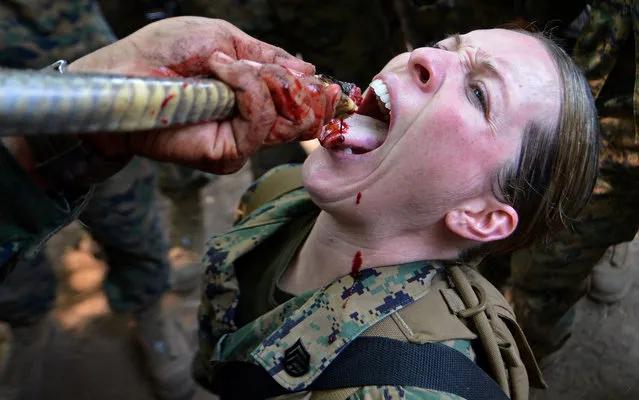
In a military base in the Thai province of Chon Buri February 20 U.S. Marines Navy with Thailand began their studies in jungle survival. The event is held in joint military exercises “Cobra Gold 2013”. During a jungle survival program February 20, 2013 taught by Royal Thai Special Forces in Sannapit, Thailand, U.S. Marines learned to catch cobras and drink their fresh blood, not to mention eat forest insects and pull the heads off of chicken. The training was part of Operation Cobra Gold 13, the 32nd edition of international military exercises hosted by the Thai. According to a U.S. Marines press release, Cobra Gold is the largest exercise of its kind in Asia and incorporates troops from five other nations in addition to the U.S. and Thailand. The Daily Mail reports that the Marines were invited to experience the local custom of drinking cobra blood after being taught to catch and kill cobras in the wild. As CNN notes, Cobra blood is believed to be a panacea and aphrodiasic in parts of Southeast Asia. In Jakarta, vendors can earn over $100 a night selling shots of cobra blood mixed with liquor. (Photo by Pornchai Kittiwongsakul/AFP Photo)

During a jungle survival program February 20, 2013 taught by Royal Thai Special Forces in Sannapit, Thailand, U.S. Marines learned to catch cobras and drink their fresh blood, not to mention eat forest insects and pull the heads off of chicken. The training was part of Operation Cobra Gold 13, the 32nd edition of international military exercises hosted by the Thai. According to a U.S. Marines press release, Cobra Gold is the largest exercise of its kind in Asia and incorporates troops from five other nations in addition to the U.S. and Thailand. The Daily Mail reports that the Marines were invited to experience the local custom of drinking cobra blood after being taught to catch and kill cobras in the wild. As CNN notes, Cobra blood is believed to be a panacea and aphrodiasic in parts of Southeast Asia. In Jakarta, vendors can earn over $100 a night selling shots of cobra blood mixed with liquor. (Photo by Pornchai Kittiwongsakul/AFP Photo)
Details
23 Feb 2013 11:52:00
The Knights of Middle England equestrian stunt display team perform ahead of the first match on July 13, 2024. The British Beach Polo Championships, or “sand polo”, returns to the exclusive Sandbanks peninsula near Poole, Dorset. Spectators can appreciate the horsemanship, speed and gladiatorial nature of polo at the largest beach polo event in the world. (Photo by Max Willcock/Bournemouth News)

The Knights of Middle England equestrian stunt display team perform ahead of the first match on July 13, 2024. The British Beach Polo Championships, or “sand polo”, returns to the exclusive Sandbanks peninsula near Poole, Dorset. Spectators can appreciate the horsemanship, speed and gladiatorial nature of polo at the largest beach polo event in the world. (Photo by Max Willcock/Bournemouth News)
Details
15 Aug 2024 03:59:00
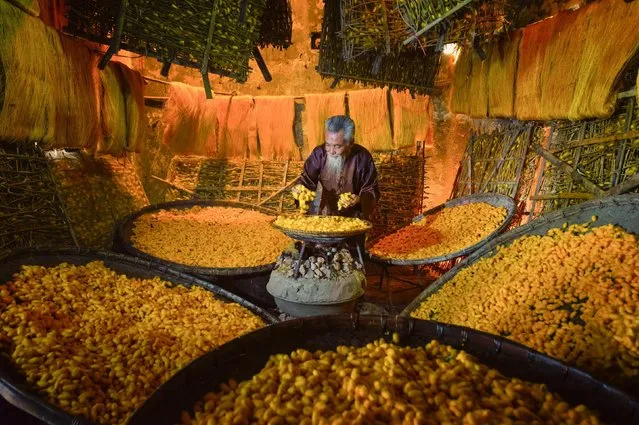
Thousands of bright yellow silkworm cocoons are dried in huge clay bowls in the village of Hong Ly, northern Vietnam in July 2022. Silk fibres are produced by silkworms when they spin themselves into a cocoon on their journey to becoming a silkmoth. The ultra-soft fibres are harvested from the cocoon in their raw state by being boiled in hot water. (Photo by Prabu Mohan/Solent News)

Thousands of bright yellow silkworm cocoons are dried in huge clay bowls in the village of Hong Ly, northern Vietnam in July 2022. Silk fibres are produced by silkworms when they spin themselves into a cocoon on their journey to becoming a silkmoth. The ultra-soft fibres are harvested from the cocoon in their raw state by being boiled in hot water. (Photo by Prabu Mohan/Solent News)
Details
31 Jul 2022 05:59:00
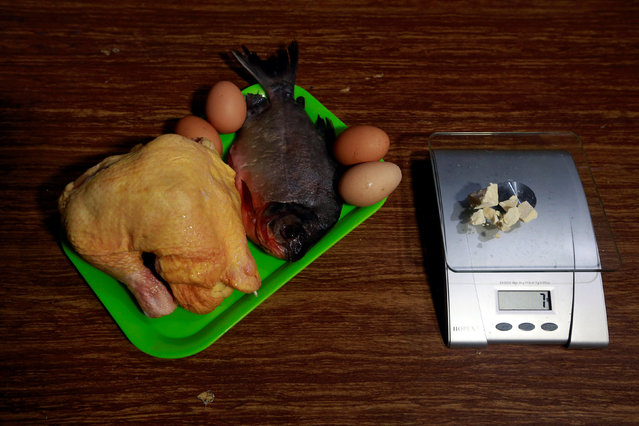
Chicken, fish and eggs lie next to coca paste worth $14,000 Colombian pesos at a local store in Guyabero Region, Guaviare, Colombia, May 24, 2016. (Photo by John Vizcaino/Reuters)

Chicken, fish and eggs lie next to coca paste worth $14,000 Colombian pesos at a local store in Guyabero Region, Guaviare, Colombia, May 24, 2016. As the government nears a historic peace deal with the rebels of the Revolutionary Armed Forces of Colombia (FARC), the nation's authorities are struggling to tame an increase in farming of coca, the raw material used to make cocaine. In the Guyabero Region, where many people work on coca plantations, locals barter coca paste to buy groceries at the local shop. (Photo by John Vizcaino/Reuters)
Details
03 Jun 2016 12:46:00
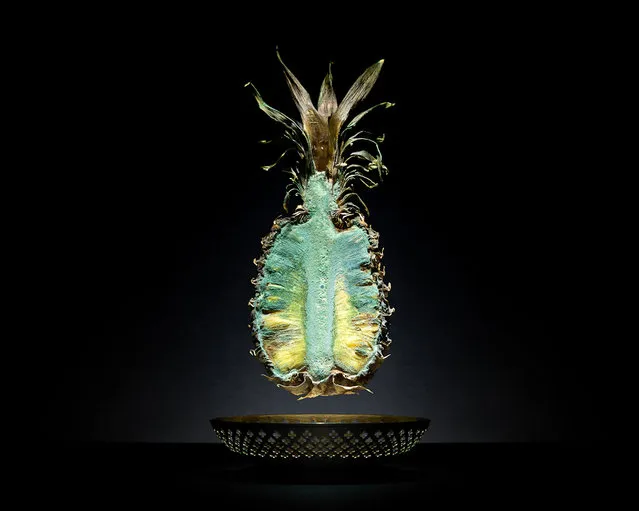
Pineapple

“One Third” – a project on food waste by an Austrian photography Klaus Pichler. According to a UN study one third of the world's food goes to waste – the largest part thereof in the industrialized nations of the global north. Equally, 925 million people around the world are threatened by starvation. The series “One Third” describes the connection between individual wastage of food and globalized food production.

Photo: Pineapple. Place of production: Guayaquil, Ecuador. Cultivation method: Outdoor plantation • Time of harvest: All- season. Transporting distance: 10.666 km (linear distance) • Means of transportation: Aircraft, truck. Carbon footprint (total) per kg: 11,94 kg • Water requirement (total) per kg: 360 l. Price: 2,10 € / kg. (Photo by Klaus Picher)
Details
02 May 2012 11:01:00
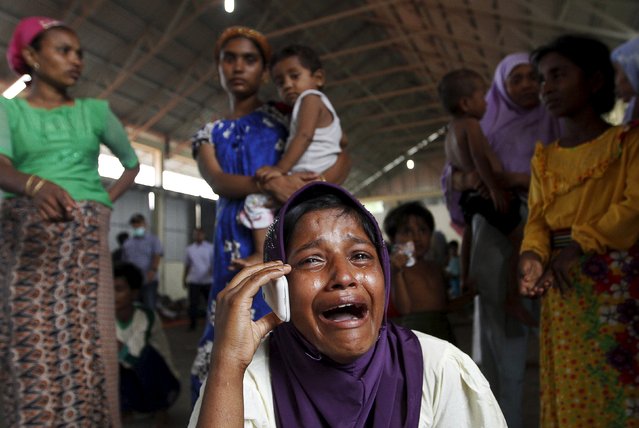
A Rohingya migrant who arrived in Indonesia by boat cries while speaking on a mobile phone with a relative in Malaysia, at a temporary shelter in Kuala Langsa in Indonesia's Aceh Province May 16, 2015. (Photo by Roni Bintang/Reuters)

A Rohingya migrant who arrived in Indonesia by boat cries while speaking on a mobile phone with a relative in Malaysia, at a temporary shelter in Kuala Langsa in Indonesia's Aceh Province May 16, 2015. Nearly 800 migrants were brought ashore in Indonesia on Friday, but other vessels crammed with them were sent back to sea despite a United Nations call to rescue thousands adrift in Southeast Asian waters with dwindling food and water. Thousands of Rohingya Muslims fleeing Myanmar and Bangladesh are stranded on boats as regional governments block them from landing. (Photo by Roni Bintang/Reuters)
Details
20 May 2015 08:53:00
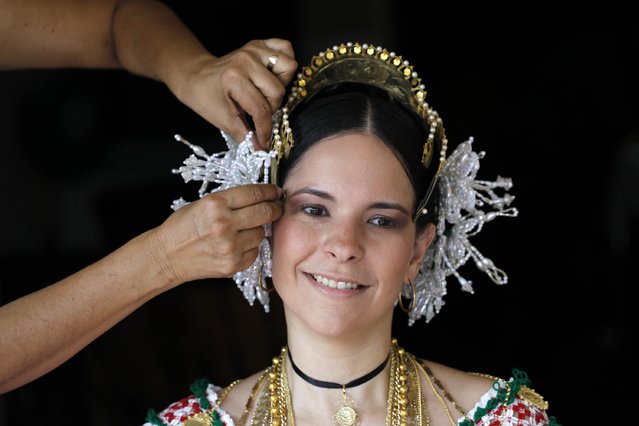
A woman is helped with adorning her hair with jewelry, part of the traditional clothing known as “Pollera”, before the annual Thousand Polleras parade in Las Tablas, in the province of Los Santos January 10, 2015. According to local residents, the Pollera dates back to the 18th century and was worn by the Spanish lower classes. (Photo by Carlos Jasso/Reuters)

A woman is helped with adorning her hair with jewelry, part of the traditional clothing known as “Pollera”, before the annual Thousand Polleras parade in Las Tablas, in the province of Los Santos January 10, 2015. According to local residents, the Pollera dates back to the 18th century and was worn by the Spanish lower classes. Today, it has become the Panamanian national costume. The dress is made entirely by hand and the jewellery worn is pure gold and worth thousands of dollars. (Photo by Carlos Jasso/Reuters)
Details
12 Jan 2015 15:46:00