Loading...
Done
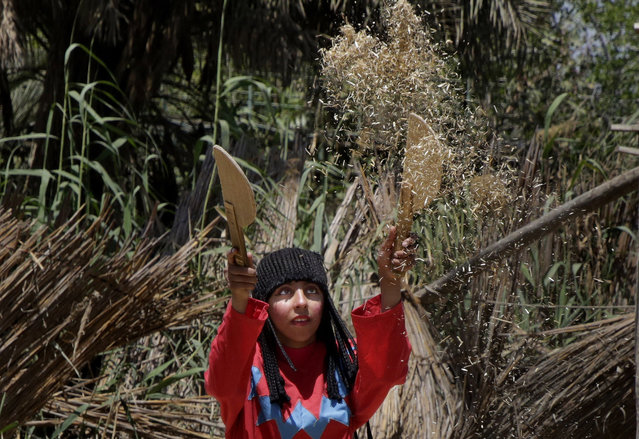
An Egyptian actress working at the Pharaonic Village simulates ancient agriculture scenes during a show marking Sham el-Nessim, or “smelling the breeze”, in Giza, Egypt, Monday, April 13, 2015. (Photo by Amr Nabil/AP Photo)

An Egyptian actress working at the Pharaonic Village simulates ancient agriculture scenes during a show marking Sham el-Nessim, or “smelling the breeze”, in Giza, Egypt, Monday, April 13, 2015. The holiday signifies the arrival of Spring, a uniquely Egyptian tradition practiced since the days of the Pharaohs. (Photo by Amr Nabil/AP Photo)
Details
14 Apr 2015 11:31:00
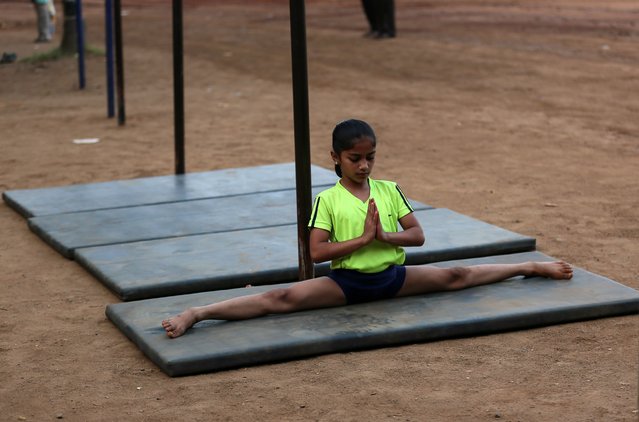
An Indian student warms up during the 44th Samartha Summer Sports Coaching Camp organized by Shree Samarth Vyayam Mandir in Mumbai, India, 25 April 2018. (Photo by Divyakant Solanki/EPA/EFE)

An Indian student warms up during the 44th Samartha Summer Sports Coaching Camp organized by Shree Samarth Vyayam Mandir in Mumbai, India, 25 April 2018. Mallakhamba arose in the western state of Maharashtra centuries ago. It was originally practiced by wrestlers and soldiers as a strength training exercise. (Photo by Divyakant Solanki/EPA/EFE)
Details
02 Jun 2018 00:01:00
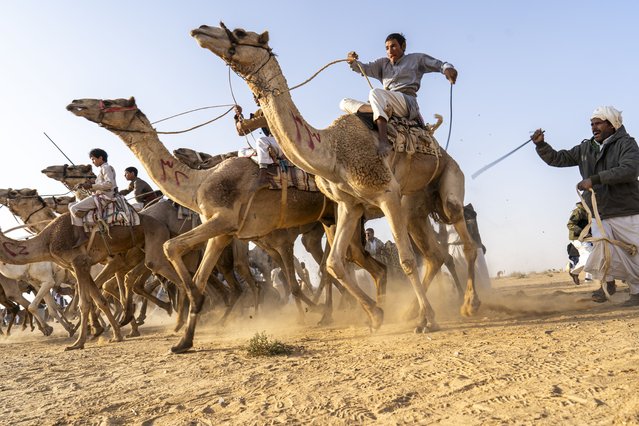
The start of the Al-Sirr camel race on November 19, 2025 in El Hassana, Egypt. The Al-Sirr camel race is one of the most culturally significant and widely celebrated sporting events among the Bedouin communities of Sinai. Every year, Bedouin tribes gather here to hold this traditional race, an event that preserves its authentic heritage. Unlike modern camel races elsewhere, the Bedouin here do not use robotic jockeys or advanced racing technologies. Instead, the camels are ridden by young boys aged approximately 5 to 16, maintaining a long-standing cultural practice. (Photo by Ali Moustafa/Getty Images)

The start of the Al-Sirr camel race on November 19, 2025 in El Hassana, Egypt. The Al-Sirr camel race is one of the most culturally significant and widely celebrated sporting events among the Bedouin communities of Sinai. Every year, Bedouin tribes gather here to hold this traditional race, an event that preserves its authentic heritage. Unlike modern camel races elsewhere, the Bedouin here do not use robotic jockeys or advanced racing technologies. Instead, the camels are ridden by young boys aged approximately 5 to 16, maintaining a long-standing cultural practice. (Photo by Ali Moustafa/Getty Images)
Details
03 Jan 2026 12:49:00
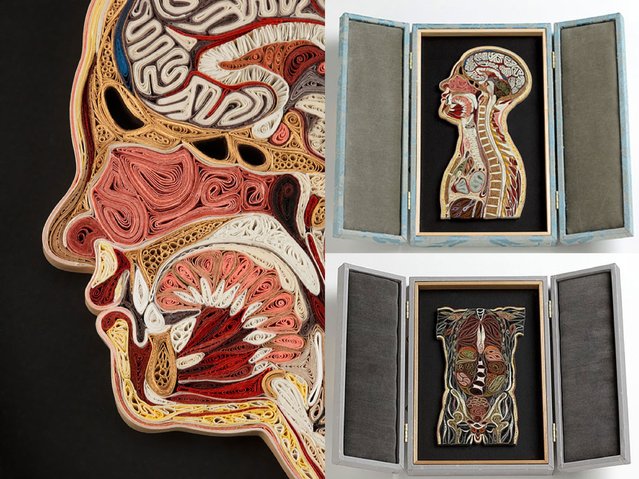
 Paper Anatomy By Lisa Nilsson

These pieces are made of Japanese mulberry paper and the gilded edges of old books. They are constructed by a technique of rolling and shaping narrow strips of paper called quilling or paper filigree. Quilling was first practiced by Renaissance nuns and monks who are said to have made artistic use of the gilded edges of worn out bibles, and later by 18th century ladies who made artistic use of lots of free time. I find quilling exquisitely satisfying for rendering the densely squished and lovely internal landscape of the human body in cross section.
Details
14 Apr 2013 11:07:00
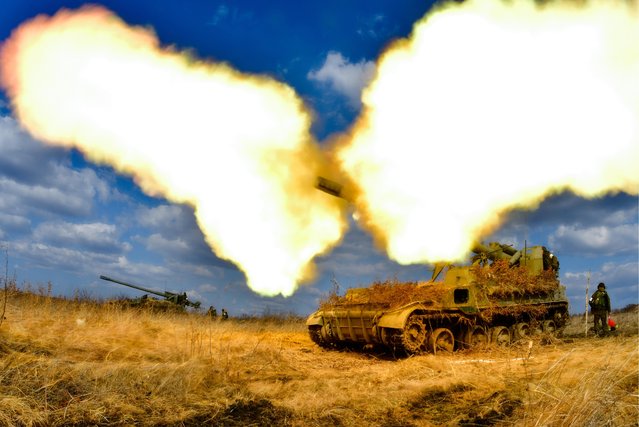
A 2S5 Giatsint self- propelled gun fires during tactical exercises held by artillery detachments of the Russian Eastern Military District' s 5th Army at the Sergeyevsky training ground in Primorye Territory, Russia on March 21, 2017. (Photo by Yuri Smityuk/TASS)

A 2S5 Giatsint self- propelled gun fires during tactical exercises held by artillery detachments of the Russian Eastern Military District' s 5th Army at the Sergeyevsky training ground in Primorye Territory, Russia on March 21, 2017. Over 2500 servicemen practice combat skills received in 2017 winter training exercises. (Photo by Yuri Smityuk/TASS)
Details
22 Mar 2017 10:22:00
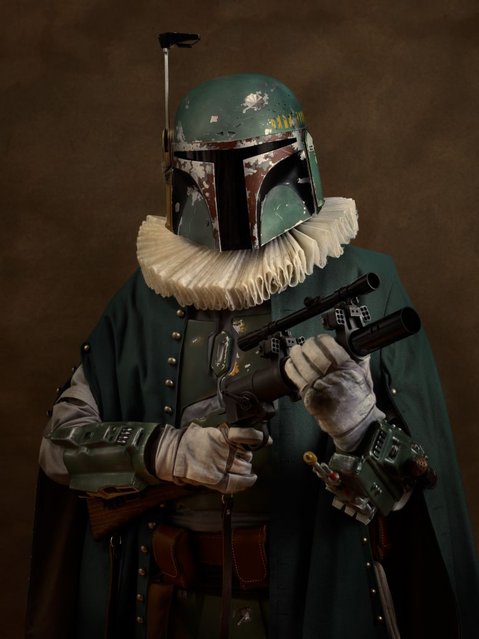
Elizabethan Superheroes And Star Wars Characters By Sacha Goldberger Part 1

In order to capture the attention of the public some artists hone their skills, trying to create the ultimate masterpiece that will bring them fame and glory. Others, however, resort to simpler techniques. For example, a French photographer Sacha Goldberger simply combined characters out of Marvel Comics and Star Wars with the fashion of the Elizabethan era and the style of classical Flemish paintings. The results are nothing more than a joke, especially since the main accessory that was placed on each of the characters is the Elizabethan ruff, while everything else remained practically the same. (Photo by Sacha Goldberger)
Details
26 Nov 2014 14:36:00
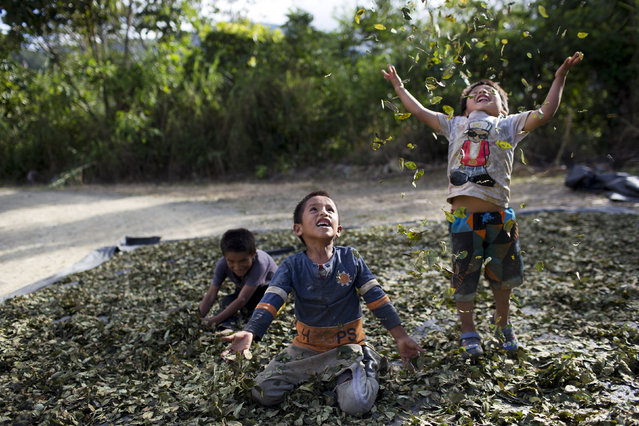
In this March 13, 2015 photo,  Yohan, 4, from left, Cristian, 7, and Angelo, 6, playfully toss coca leaves into the air, singing: “I have a lot of money, look at all the money I have”, in La Mar, province of Ayacucho, Peru. Hauling cocaine out of the remote valley is about the only way to earn decent cash in this region where a farmhand earns less than $10 a day. Beyond extinguishing young lives, the practice has packed Peru's highland prisons with cocaine backpackers while their bosses evade incarceration. (Photo by Rodrigo Abd/AP Photo)

In this March 13, 2015 photo, Yohan, 4, from left, Cristian, 7, and Angelo, 6, playfully toss coca leaves into the air, singing: “I have a lot of money, look at all the money I have”, in La Mar, province of Ayacucho, Peru. Hauling cocaine out of the remote valley is about the only way to earn decent cash in this region where a farmhand earns less than $10 a day. Beyond extinguishing young lives, the practice has packed Peru's highland prisons with cocaine backpackers while their bosses evade incarceration. (Photo by Rodrigo Abd/AP Photo)
Details
12 May 2015 12:40:00
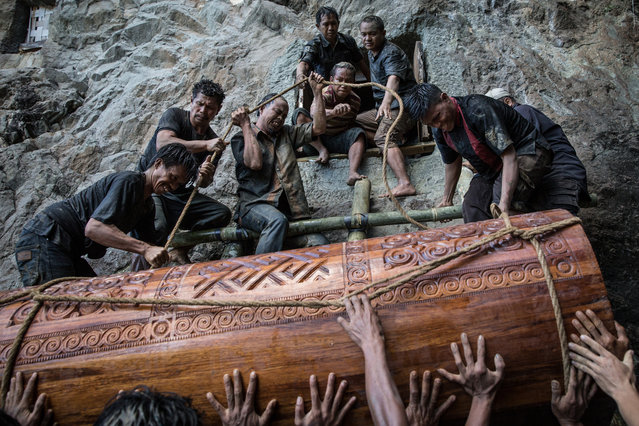
It is said that Torajans are people who “live to die”. For this Indonesian ethnic group, funerals are such extravagant events that they sometimes attract tourists. Families can postpone burials years (and the deceased are considered sick and hosted at home until the funeral) until the family can raise enough money and gather as many relatives as possible. And then it’s a jubilant multiday social event with a parade, dances and animal sacrifices. Agung Parameswara photographed these funerary practices when he traveled to South Sulawesi province, where the Torajans live. But often, their funeral isn’t the last time the dead are seen. In August, crypts are opened, coffins are slid back out and bodies delicately unsheathed. This tender ritual is known as Ma’Nene, which is customarily performed every few years. (Photo by Agung Parameswara/The Washington Post)

It is said that Torajans are people who “live to die”. For this Indonesian ethnic group, funerals are such extravagant events that they sometimes attract tourists. Families can postpone burials years (and the deceased are considered sick and hosted at home until the funeral) until the family can raise enough money and gather as many relatives as possible. And then it’s a jubilant multiday social event with a parade, dances and animal sacrifices. Agung Parameswara photographed these funerary practices when he traveled to South Sulawesi province, where the Torajans live. (Photo by Agung Parameswara/The Washington Post)
Details
06 Oct 2016 09:15:00