A model presents a creation for Iris Van Herpen during the Women's Haute-Couture Fall/Winter 2025-26 collection show in Paris, on July 7, 2025. (Photo by Thomas Samson/AFP Photo)
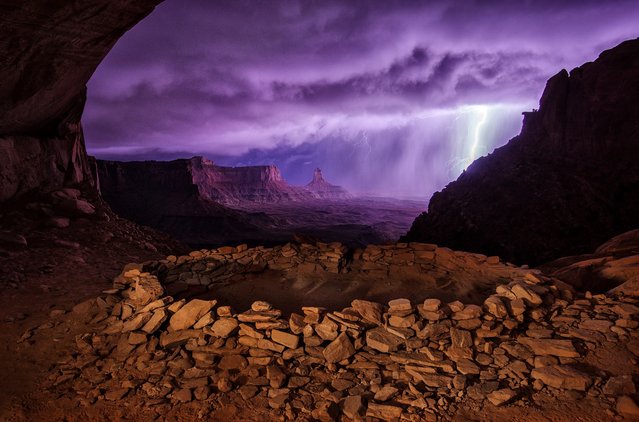
Second Place Winner: “Thunderstorm at False Kiva”. I hiked out to these ruins at night hoping to photograph them with the Milky Way, but instead a thunderstorm rolled through, creating this dramatic image. – Max Seigal. National Geographic Traveler Director of Photography Dan Westergren, one of this year's judges, shares his thoughts on the second place winner: “This photo combines two different scenes into one: the small kiva in a cliff dwelling and the grand vista of Canyonlands National Park across the valley. I really like the two different color palettes – warm inside and purple outside. This two-for-one scene was caused by the lightning storm outside the dwelling, which lit up the landscape like it was a huge electronic flash. Looking at this picture I can imagine what a wonderful sight it must have been for the ancient people who lived here. It doesn't seem too amazing now in our modern world, but might have been mind-blowing for the prehistoric residents”. Location: Utah. (Photo and caption by Max Seigal/National Geographic Traveler Photo Contest)
Farmer Zhang Xianping rides his pig "Big Precious" during an interview with the media, in Zhangjiakou, Hebei province, China, November 2, 2015. Zhang, a pig breeder, instead of killing it, decided to keep the two-year-old "Big Precious" as pet when its weight reached 600 kg, according to local media. (Photo by Reuters/China Daily)
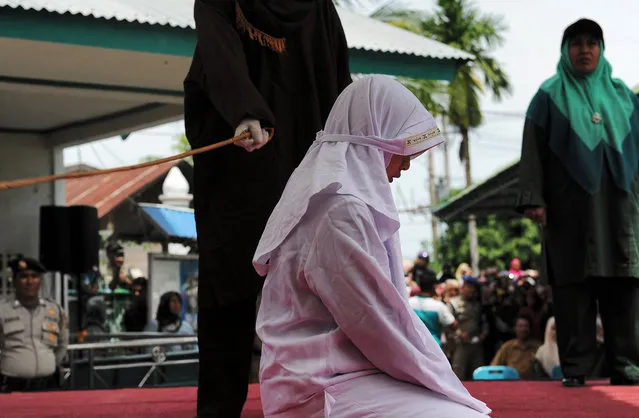
One of four Acehnese teen gets whipped for spending time in close proximity with her boyfriend who is not her husband, which is against Sharia law, in Aceh on April 18, 2017. Aceh on Sumatra island began implementing Sharia law after being granted special autonomy in 2001, an attempt by the central government in Jakarta to quell a long-running separatist insurgency. (Photo by Chaideer Mahyuddin/AFP Photo)
For her series “Japanese Whispers”, Belgian photographer Zaza Bertrand headed inside the intimate world of rabuhos – Japanese love hotels. Love hotels became popular in Japan from the 1960s onwards, due to a lack of privacy in many family homes. There are now around 37,000 of these hotels in Japan, allowing short daytime “rests” or overnight stays. (Photo by Zaza Bertrand/The Guardian)