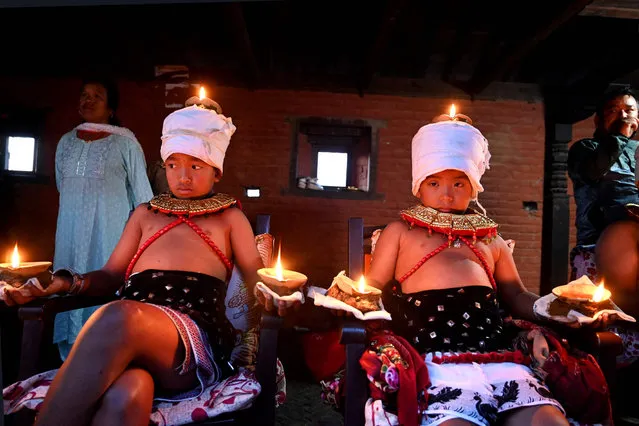
Young devotees carry oil lamps in the early morning of the tenth day celebrations of Hindu Nepali festival “Dashain” at a temple in Bhaktapur on the outskirts of Kathmandu on October 24, 2023. (Photo by Prakash Mathema/AFP Photo)
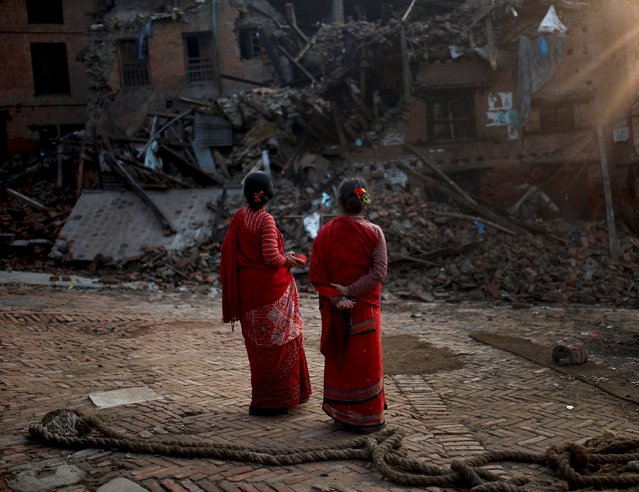
Women look at a collapsed building caused by earthquakes, in Bhaktapur, Nepal, May 18, 2015. Nepal is facing billions in reconstruction costs with almost 745,600 buildings and homes damaged or destroyed, including at least 87,700 in the capital, according to Nepal's emergency authority. (Photo by Ahmad Masood/Reuters)
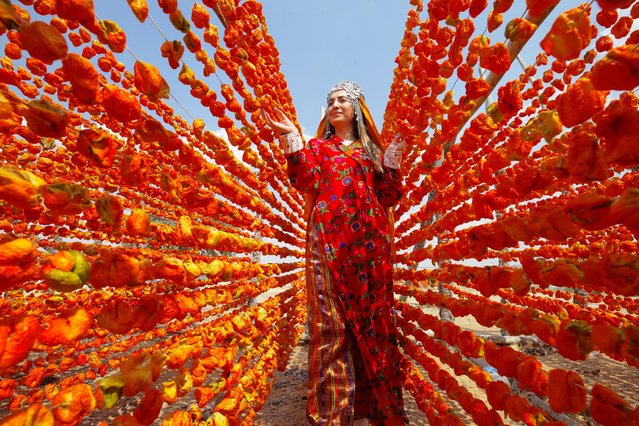
A woman arranges peppers for drying in the sun as seasonal workers process tomatoes after a harvest in Gaziantep, Turkey on August 10, 2021. Drying of peppers, zucchinis, eggplants and gherkins began. (Photo by Mehmet Akif Parlak/Anadolu Agency via Getty Images)
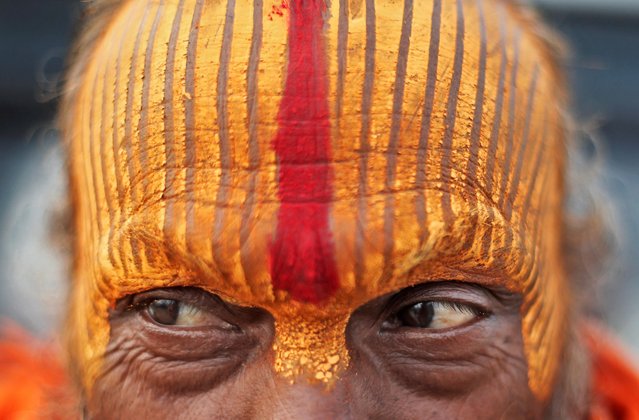
A Sadhu or a Hindu holy man stands on the banks of the river Ganges before taking a holy dip during “Kumbh Mela”, or the Pitcher Festival, in Prayagraj, previously known as Allahabad, India, February 3, 2019. (Photo by Adnan Abidi/Reuters)
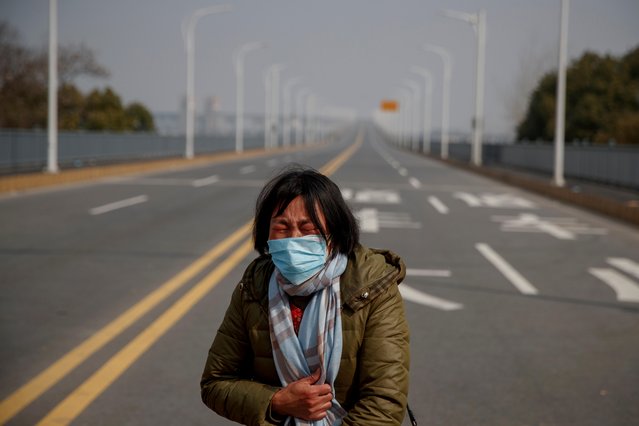
A mother reacts as she pleads with police to allow her daughter to pass a checkpoint for cancer treatment after she arrived from Hubei province at the Jiujiang Yangtze River Bridge in Jiujiang, China, February 1, 2020. (Photo by Thomas Peter/Reuters)
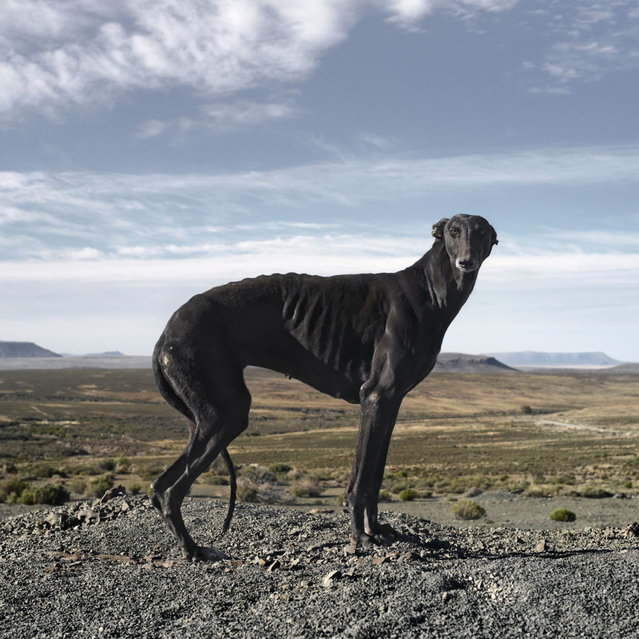
“The Africanis is a landrace of South African dogs. It is believed to be of ancient origin, directly descended from hounds and pariah dogs of ancient Africa, introduced into the Nile Valley from the Levant. The Swahili name for the breed is umbwa wa ki-shenzi meaning common or mongrel or “traditional dog”. Africanis is also an umbrella name for all the aboriginal dogs in southern Africa”. – Wikipedia. Photo: Africanis 18. Murraysburg, Western Cape, May 10, 2010. (Photo by Daniel Naudé)
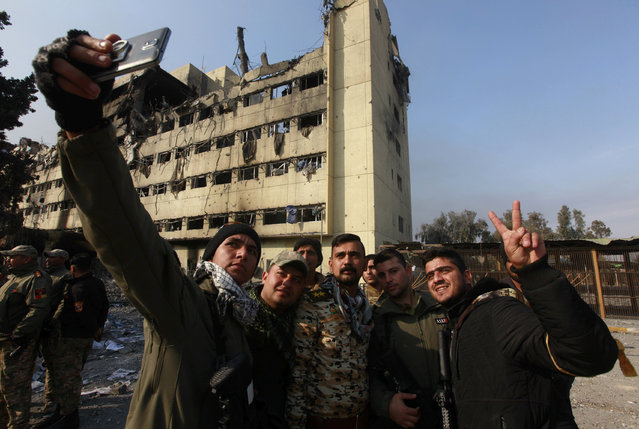
Iraqi rapid response forces take a selfie picture outside a hospital damaged by clashes during a battle between Iraqi forces and Islamic State militants in the Wahda district of eastern Mosul, Iraq, January 8, 2017. (Photo by Alaa Al-Marjani/Reuters)