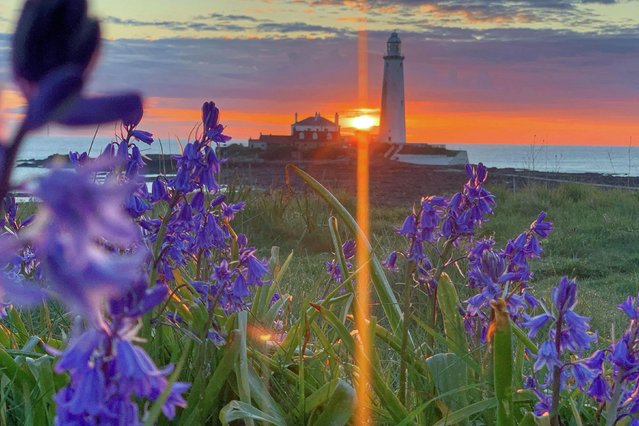
Sunrise over St Mary's lighthouse north of Whitley Bay on the coast of north east England on Wednesday, May 19, 2021. (Photo by Owen Humphreys/PA Images via Getty Images)
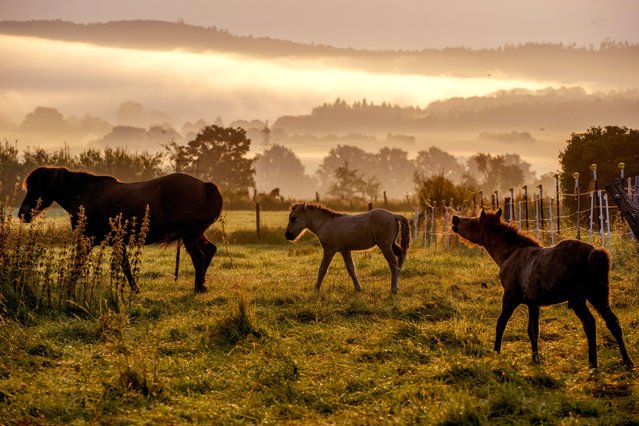
Icelandic horses play in their paddock at a stud farm in Wehrheim near Frankfurt, Germany, as a mist rolls in on Thursday, August 5, 2021. (Photo by Michael Probst/AP Photo)
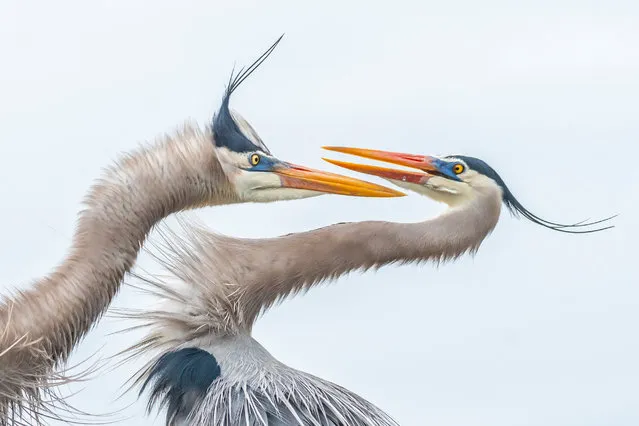
Wakodahatchee wetlands, Delray Beach, Florida, US. Equipped with sinewy necks and spear-like bills, great blue herons can lunge with fearsome speed to strike their aquatic prey. Adults will also employ rapid stabbing motions as one aspect of their complex courtship displays; they’re seemingly dangerous moves, but fitting to the intensity of mating season. (Photo by Melissa Rowell/Audubon Photography Awards)
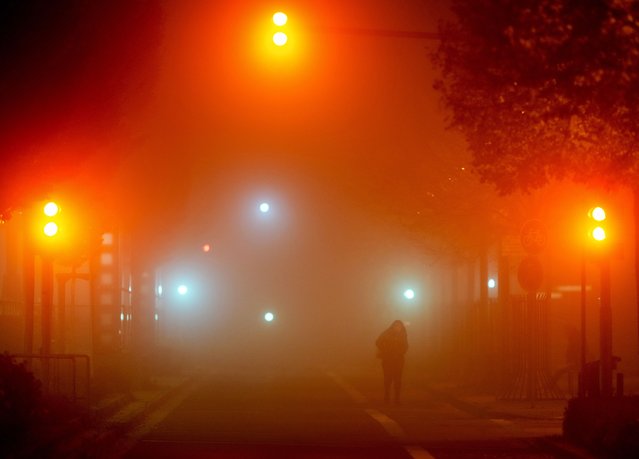
India's Central Reserve Police Force personnel take part in a rehearsal for the Republic Day parade on a cold winter morning in New Delhi January 8, 2014. (Photo by Ahmad Masood/Reuters)
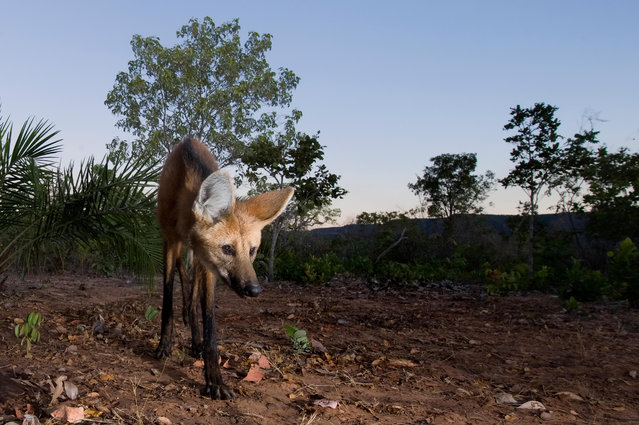
Global wildlife populations will decline by 67% by 2020 unless urgent action is taken to reduce human impact on species and ecosystems, warns the biennial Living Planet Index report from WWF (World Wide Fund for Nature) and ZSL (Zoological Society of London). From elephants to eels, here are some of the wildlife populations most affected by human activity. Here: The maned wolf is among the large mammals in the Brazilian Cerrado that are threatened by the increasing conversion of grasslands into farmland for grazing and growing crops. (Photo by Ben Cranke/Nature Picture Library/Alamy Stock Photo)
Residents carry an injured woman rescued from a collapsed house in Funing county in Yancheng city of eastern China's Jiangsu Province on Thursday June 23, 2016. A powerful tornado hit Thursday, with reports of dozens killed and large numbers of buildings destroyed in the eastern Chinese province of Jiangsu, according to state media. (Photo by Chinatopix via AP Photo)