Loading...
Done
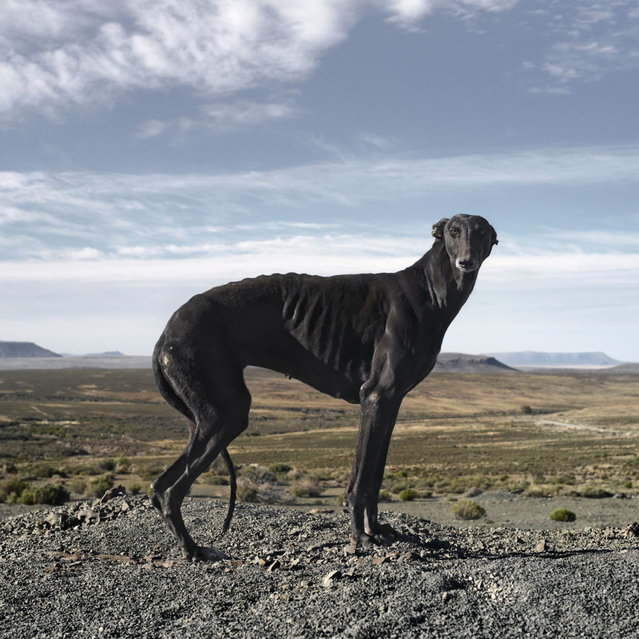
Africanis 18. Murraysburg, Western Cape, May 10, 2010. (Photo by Daniel Naudé)

“The Africanis is a landrace of South African dogs. It is believed to be of ancient origin, directly descended from hounds and pariah dogs of ancient Africa, introduced into the Nile Valley from the Levant. The Swahili name for the breed is umbwa wa ki-shenzi meaning common or mongrel or “traditional dog”. Africanis is also an umbrella name for all the aboriginal dogs in southern Africa”. – Wikipedia. Photo: Africanis 18. Murraysburg, Western Cape, May 10, 2010. (Photo by Daniel Naudé)
Details
19 May 2013 11:51:00
Members of the Pentacle Drummers perform in front of a burning wicker man during the Beltain Celtic Fire Festival at Butser Ancient Farm, in Waterlooville, Hampshire on Saturday, April 29, 2023. (Photo by Andrew Matthews/PA Images via Getty Images)

Members of the Pentacle Drummers perform in front of a burning wicker man during the Beltain Celtic Fire Festival at Butser Ancient Farm, in Waterlooville, Hampshire on Saturday, April 29, 2023. (Photo by Andrew Matthews/PA Images via Getty Images)
Details
09 Aug 2024 04:36:00
Indian Muslim children hold anti-US placards as they participate in a protest meeting against the film “Innocence of Muslims” in Kolkata on October 5, 2012.  A low-budget, US-produced “Innocence of Muslims” movie has incited a wave of bloody anti-US violence in Libya, Egypt, Sudan, Tunisia, Yemen and in several other countries across the Muslim world. (Photo by Dibyangshu Sarkar/AFP/AFP Photo)

Indian Muslim children hold anti-US placards as they participate in a protest meeting against the film “Innocence of Muslims” in Kolkata on October 5, 2012. A low-budget, US-produced “Innocence of Muslims” movie has incited a wave of bloody anti-US violence in Libya, Egypt, Sudan, Tunisia, Yemen and in several other countries across the Muslim world. (Photo by Dibyangshu Sarkar/AFP/AFP Photo)
Details
13 Oct 2012 10:38:00
A surfer rides a wave at the snowy beach of Unstad, in Lofoten Island, Arctic Circle, on March 9, 2016. (Photo by Olivier Morin/AFP Photo)

A surfer rides a wave at the snowy beach of Unstad, in Lofoten Island, Arctic Circle, on March 9, 2016. Surfers from all over the world comes to Lofoten island to surf in extrem conditions. Ocean temperature is 6-7 °C, air temperature around 0°C in spite of a weather very unstable. (Photo by Olivier Morin/AFP Photo)
Details
15 Mar 2016 13:54:00


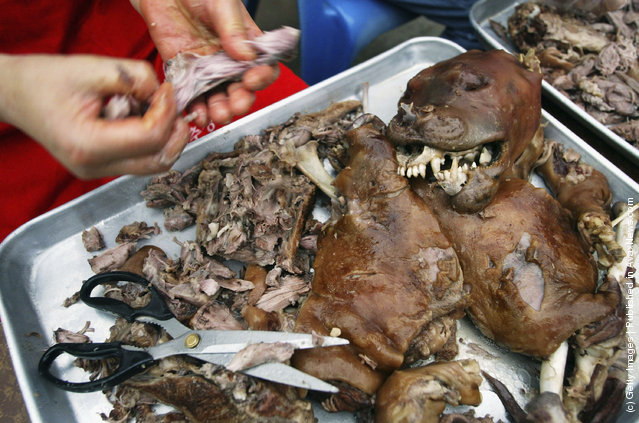
“Dog meat refers to edible parts and the flesh derived from (predominantly domestic) dogs. Human consumption of dog meat has been recorded in many parts of the world, including ancient China, ancient Mexico, and ancient Rome. According to contemporary reports, dog meat is consumed in a variety of countries such as Switzerland, China, Vietnam, the Philippines, and Korea. In addition, dog meat has also been used as survival food in times of war and/or other hardships”. – Wikipedia

Photo: A chef prepares dog meat at a restaurant on July 4, 2005 in Gwacheon, South Korea. Dog meat is a traditional dish in Korea dating back to the Samkuk period (period of the three kingdoms BC 57 – AD 668). Although many recipes existed historically for dog meat, now chefs only make soups, or dishes using boiled or roasted meat. Koreans traditionally eat dog meat on the hottest day of the summer, for it's reputed benefits of virility, invigoration and health. (Photo by Chung Sung-Jun/Getty Images)
Details
24 Jul 2011 13:21:00
A tourist jumps inside an upside-down house at Fengjing Ancient Town, Jinshan District, south of Shanghai, May 1, 2014. The upside-down house was built as a tourist attraction using everyday household items and furniture. (Photo by Aly Song/Reuters)

A tourist jumps inside an upside-down house at Fengjing Ancient Town, Jinshan District, south of Shanghai, May 1, 2014. The upside-down house was built as a tourist attraction using everyday household items and furniture. (Photo by Aly Song/Reuters)
Details
02 May 2014 11:46:00
Carnival revellers dressed as “Peliqueiros” run along a street in the village of Laza, Spain February 26, 2017. “Peliqueiros”, or ancient tax collectors, pursued villagers through the streets ringing their cowbells and hitting villagers with their sticks. (Photo by Miguel Vidal/Reuters)

Carnival revellers dressed as “Peliqueiros” run along a street in the village of Laza, Spain February 26, 2017. “Peliqueiros”, or ancient tax collectors, pursued villagers through the streets ringing their cowbells and hitting villagers with their sticks. (Photo by Miguel Vidal/Reuters)
Details
28 Feb 2017 00:02:00
A Catholic faithful fancy dressed as a “talciguin” -character of the local folklore- takes part in the celebration of an ancient local tradition that marks the start of Holy Week, in Texistepeque, some 80 km west of San Salvador, on April 15, 2019. Talciguines are devils who “lash” Catholic faithfuls to cleanse their sins. (Photo by Marvin Recinos/AFP Photo)

A Catholic faithful fancy dressed as a “talciguin” -character of the local folklore- takes part in the celebration of an ancient local tradition that marks the start of Holy Week, in Texistepeque, some 80 km west of San Salvador, on April 15, 2019. Talciguines are devils who “lash” Catholic faithfuls to cleanse their sins. (Photo by Marvin Recinos/AFP Photo)
Details
18 Apr 2019 00:07:00