Loading...
Done
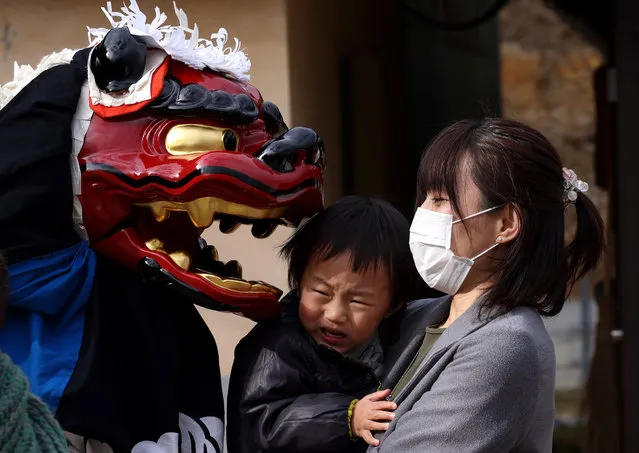
A performer wearing a lion mask performs the Ise Daikagura lion dance at the remote village of Yamanawa on February 08, 2021 in Ryuo, Japan. Ise Daikagura is a group of traditional Lion Dance performers who pray in front of farmers houses and businesses for good grain harvests and disease-free lives. Performers play sacred music using drums and flutes with two lion mask dancers. A lion mask is considered a symbol of God, who enters the house and performs in front of the Shinto God, a statue placed inside the house, mostly in the kitchen. These prayers are called “Kamodo Barai”. After the prayers, they are gifted with money, rice, sake and Japanese sweets from the householders. A group can travel for more than one hundred days to thousands of households and businesses throughout rural-villages in western Japan, and pray to those who are unable to visit the country’s most sacred shrine, the Grand Ise Shrine in Mie Prefecture. The group started its performance in the Edo era between 1603 to 1868 according to Japanese history. The Japanese government designated it as an important folk cultural national property in 1981. (Photo by Buddhika Weerasinghe/Getty Images)

A performer wearing a lion mask performs the Ise Daikagura lion dance at the remote village of Yamanawa on February 08, 2021 in Ryuo, Japan. Ise Daikagura is a group of traditional Lion Dance performers who pray in front of farmers houses and businesses for good grain harvests and disease-free lives. (Photo by Buddhika Weerasinghe/Getty Images)
Details
18 Feb 2021 09:27:00
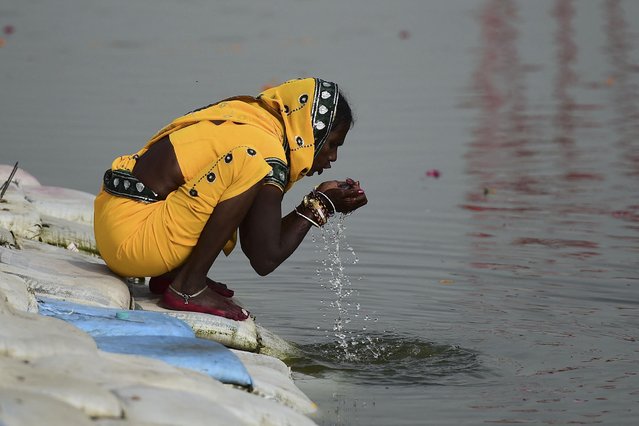
A Hindu devotee drinks water from the Ganges River at the Sangam area, the confluence of rivers Ganges, Yamuna, and the mythical Saraswati, in Allahabad on March 16, 2021. (Photo by Sanjay Kanojia/AFP Photo)

A Hindu devotee drinks water from the Ganges River at the Sangam area, the confluence of rivers Ganges, Yamuna, and the mythical Saraswati, in Allahabad on March 16, 2021. (Photo by Sanjay Kanojia/AFP Photo)
Details
24 Mar 2021 10:21:00
A model on the runway during the Georges Hobeika haute couture autumn/winter 23/24 show at Palais de Chaillot, as part of Paris fashion week in Paris, France on July 4, 2023. (Photo by Abd Rabbo Ammar/Abaca Press/Rex Features/Shutterstock)

A model on the runway during the Georges Hobeika haute couture autumn/winter 23/24 show at Palais de Chaillot, as part of Paris fashion week in Paris, France on July 4, 2023. (Photo by Abd Rabbo Ammar/Abaca Press/Rex Features/Shutterstock)
Details
17 Oct 2024 03:23:00
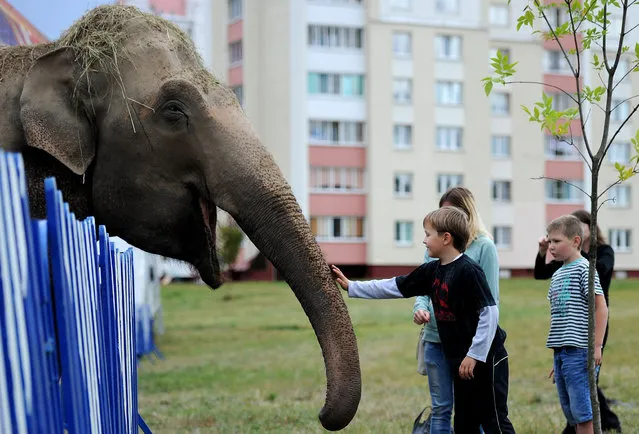
Children pat an elephant at the mobile Diva circus in the town of Molodechno, some 70 kilometers northwest of Minsk on September 3, 2015. (Photo by Sergei Gapon/AFP Photo)

Children pat an elephant at the mobile Diva circus in the town of Molodechno, some 70 kilometers northwest of Minsk on September 3, 2015. (Photo by Sergei Gapon/AFP Photo)
Details
06 Oct 2015 08:05:00
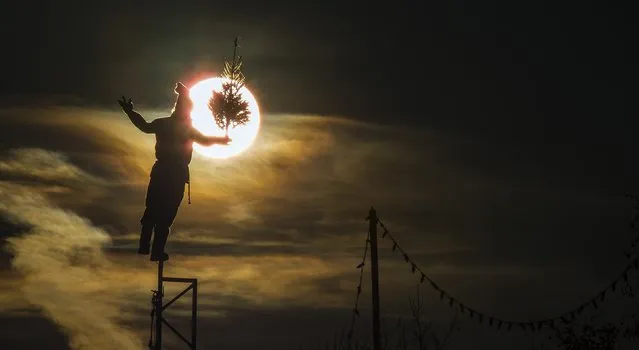
A Santa Claus puppet holding a Christmas tree is pictured against the sun in Berlin November 23, 2014. (Photo by Hannibal Hanschke/Reuters)

A Santa Claus puppet holding a Christmas tree is pictured against the sun in Berlin November 23, 2014. (Photo by Hannibal Hanschke/Reuters)
Details
24 Nov 2014 13:57:00
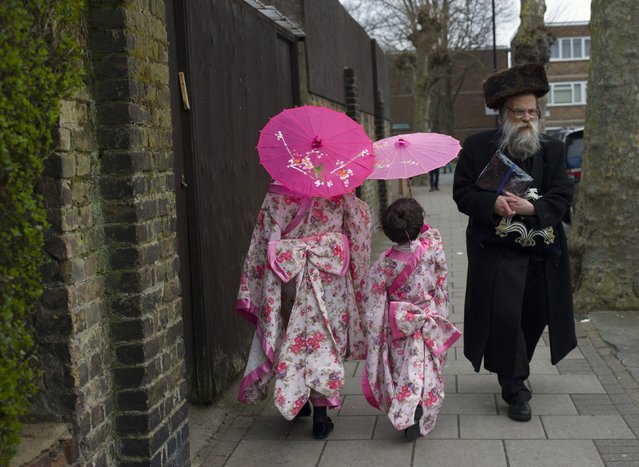
Jewish children in fancy dress during the annual Jewish holiday of Purim on March 12, 2017 in London, England. (Photo by Dan Kitwood/Getty Images)

Jewish children in fancy dress during the annual Jewish holiday of Purim on March 12, 2017 in London, England. Purim is celebrated by Jewish communities around the world with parades and costume parties. Purim commemorates the defeat of Haman, the advisor to the Persian king, and his plot to massacre the Jewish people, 2,500 years ago, as recorded in the biblical book of Esther. (Photo by Dan Kitwood/Getty Images)
Details
14 Mar 2017 00:04:00
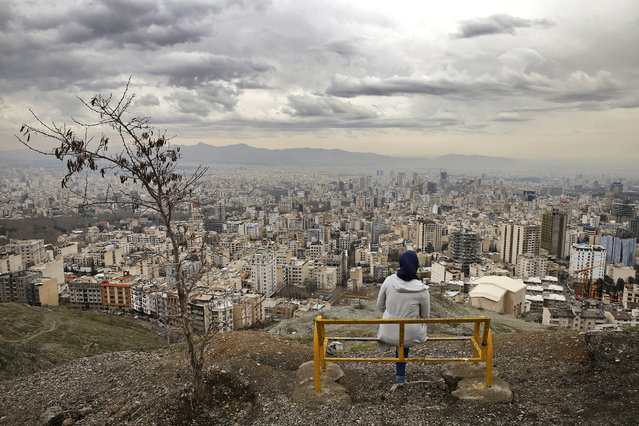
A woman spends her time outdoors to observe the ancient festival of Sizdeh Bedar, an annual public picnic day on the 13th day of the Iranian new year, at the Tochal mountainous area northern Tehran, Iran, Sunday, April, 2, 2017. Sizdeh Bedar, which comes from the Farsi words for “thirteen” and “day out”, is a legacy from Iran's pre-Islamic past that hard-liners in the Islamic Republic never managed to erase from calendars. (Photo by Ebrahim Noroozi/AP Photo)

A woman spends her time outdoors to observe the ancient festival of Sizdeh Bedar, an annual public picnic day on the 13th day of the Iranian new year, at the Tochal mountainous area northern Tehran, Iran, Sunday, April, 2, 2017. Sizdeh Bedar, which comes from the Farsi words for “thirteen” and “day out”, is a legacy from Iran's pre-Islamic past that hard-liners in the Islamic Republic never managed to erase from calendars. (Photo by Ebrahim Noroozi/AP Photo)
Details
21 Apr 2017 07:38:00
The lead singer of one band talks to two bemused kids at a gig at the “Warzone Centre” in Belfast, Northern Ireland, 1980s. (Photo by Ricky Adam/Mediadrumworld)

The lead singer of one band talks to two bemused kids at a gig at the “Warzone Centre” in Belfast, Northern Ireland, 1980s. (Photo by Ricky Adam/Mediadrumworld)
Details
23 Jul 2017 07:40:00