Loading...
Done
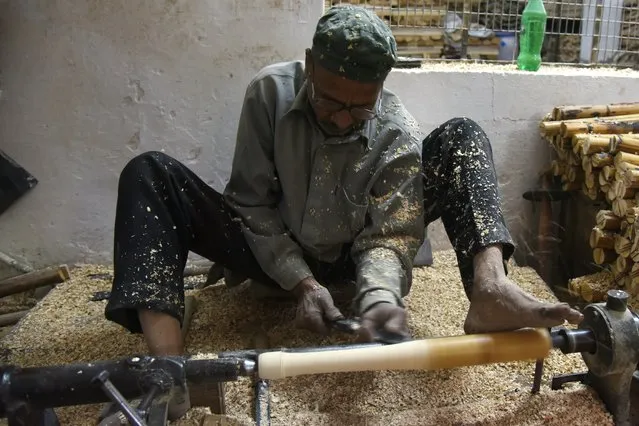
In this photograph taken on December 14, 2016, an Indian craftsman works on unfinished cricket bats in a factory in Meerut, some 70 kms north- east of New Delhi. As Indian factory worker Jitender Singh carves out another big- hitting slab of thick willow he insists MCC proposals to limit the size of cricket bats won' t tame Twenty20 marauders. “I don' t think the thickness matters. It' s more about the balance of the bat and the talent of the batsman”, says Singh, who has made bats for many stars, including South Africa's AB de Villiers. The World Cricket committee of the MCC, the guardians of the game, recommended in December 2016 that limitations be placed on the width and depth of bats because it had become too easy to smash fours and sixes. (Photo by Dominique Faget/AFP Photo)

In this photograph taken on December 14, 2016, an Indian craftsman works on unfinished cricket bats in a factory in Meerut, some 70 kms north- east of New Delhi. (Photo by Dominique Faget/AFP Photo)
Details
11 Jan 2017 14:32:00
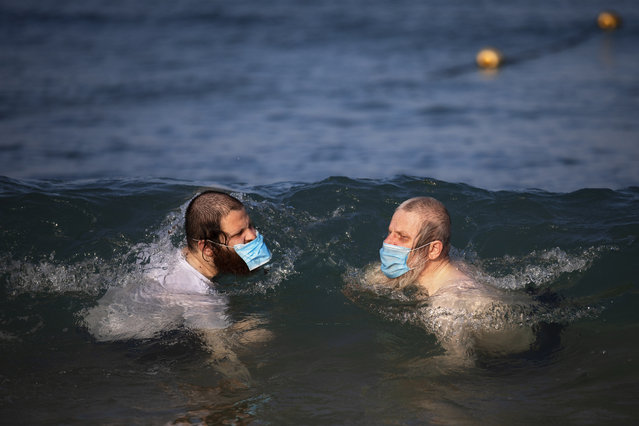
Ultra-orthodox Jewish men wearing protective face masks swim in the Mediterranean Sea, on a beach segregated for males three days a week, in Tel Aviv, Israel, Wednesday, July 8, 2020. In an effort to quell the rapid spread of the coronavirus, Israel has re-imposed a series of restrictions on the public. This week, the Israeli government limited gatherings and ordered reception halls, restaurants, bars, theaters, fitness centers and pools be shut down again. (Photo by Oded Balilty/AP Photo)

Ultra-orthodox Jewish men wearing protective face masks swim in the Mediterranean Sea, on a beach segregated for males three days a week, in Tel Aviv, Israel, Wednesday, July 8, 2020. In an effort to quell the rapid spread of the coronavirus, Israel has re-imposed a series of restrictions on the public. This week, the Israeli government limited gatherings and ordered reception halls, restaurants, bars, theaters, fitness centers and pools be shut down again. (Photo by Oded Balilty/AP Photo)
Details
10 Jul 2020 00:07:00


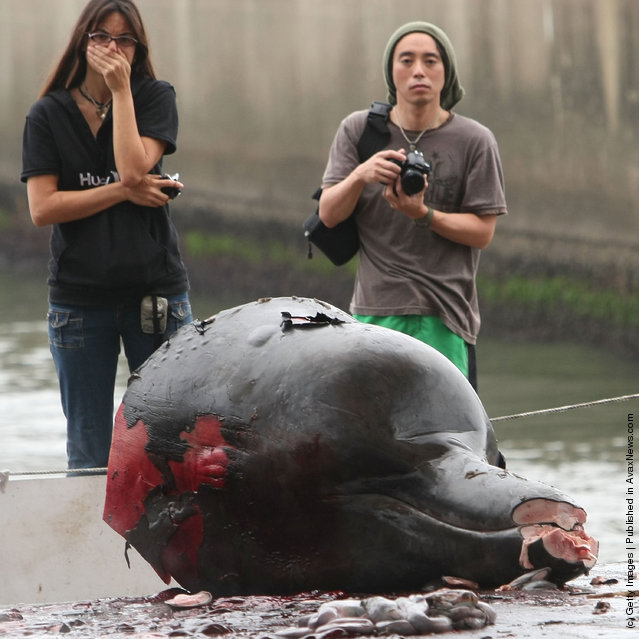
Fishermen slaughter a 9.61m Baird's Beaked whale at Wada Port on June 28, 2008 in Minami Boso, Chiba, Japan. Only five ports are allowed whaling under the coastal whaling program which tries to keep whaling tradition that dates back to the seventeenth century. Japan is only allowed to hunt a limited number of whales every year. (Photo by Koichi Kamoshida/Getty Images)
Details
26 Apr 2011 08:07:00
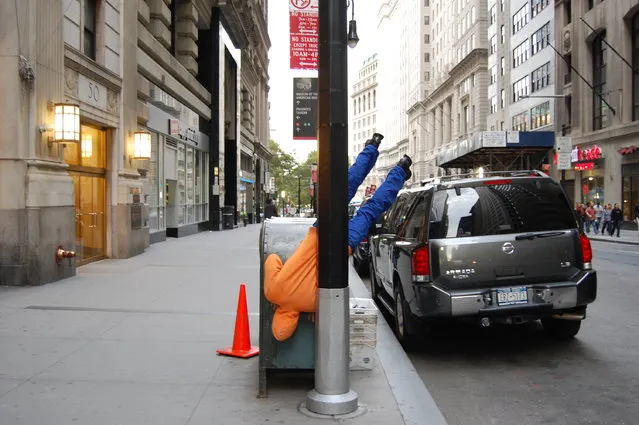
Willi Dorner, Bodies in Urban Spaces, September 26, 2010

“Bodies in urban spaces” is a temporarily intervention in diversified urban architectonical environment. The intention of “bodies in urban spaces” is to point out the urban functional structure and to uncover the restricted movement possibilities and behavior as well as rules and limitations. Photo: “Bodies in Urban Spaces”, September 26, 2010. (Photos by Andrew Russeth)
Details
16 Sep 2013 09:32:00
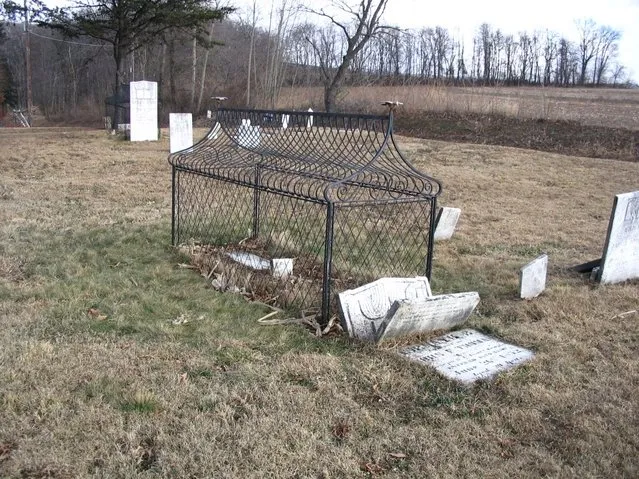
Mortsafe - Protection From The Dead

Mortsafes were contraptions designed to protect graves from disturbance. Resurrectionists had supplied the schools of anatomy in Scotland since the early 18th century. This was due to the necessity for medical students to learn anatomy by attending dissections of human subjects, which was frustrated by the very limited allowance of dead bodies – for example the corpses of executed criminals – granted by the government, which controlled the supply.
Details
29 Nov 2013 12:03:00
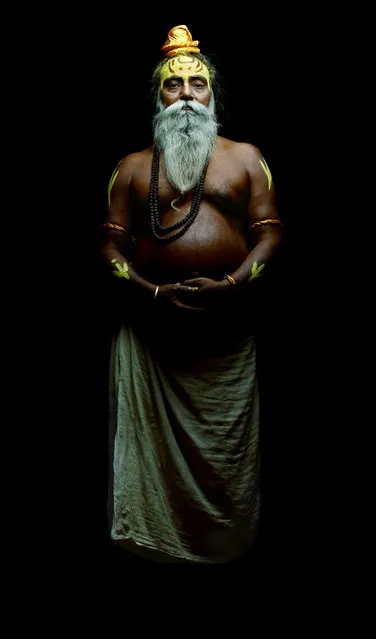
Sadhu Project by Photographer Denis Rouvre

“They’ve been obsessing me for years. I searched and found them in Benares, on the banks of the river Gange (India). They arrive here to get rid of everything and to wait for death. This existence can last for years, sometimes decades, almost a life. Opposite to mine, well organised and filled as a human life can be, to try in vain to push the limits of its end”. – Denis Rouvre. (Photo by Denis Rouvre)
Details
15 Dec 2013 11:12:00
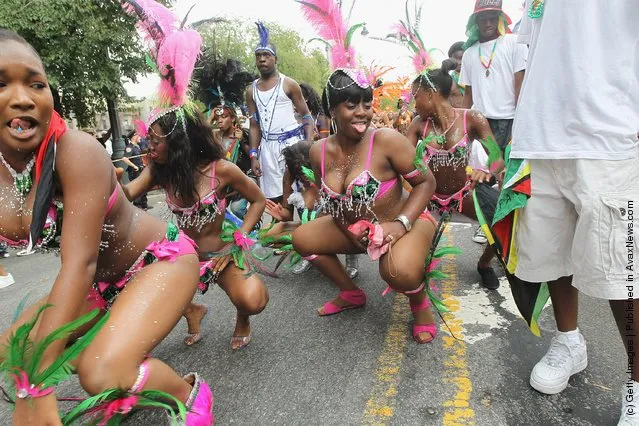
New Yorkers Celebrate At West Indian Day Parade

“The Labor Day Parade (or West Indian Carnival), is an annual celebration held on American Labor Day (the first Monday in September), in Crown Heights, Brooklyn, New York. Ms. Jessie Waddell and some of her West Indian friends started the Carnival in Harlem in the 1920s by staging costume parties in large enclosed places like the Savoy, Renaissance and Audubon Ballrooms due to the cold wintry weather of February. This is the usual time for the pre-Lenten celebrations held in most countries around the world. However, because of the very nature of Carnival, and the need to parade in costume to music, indoor confinement did not work well. The earliest known Carnival street parade was held on September 1, 1947. The Trinidad Carnival Pageant Committee was the founding force behind the parade, which was held in Harlem. The parade route was along Seventh Avenue, starting at 110th St.” – Wikipedia

Photo: A reveler looks on during the West Indian-American Day Parade September 5, 2011 in the Brooklyn borough of New York City. More than 2 million spectators were expected to attend the celebration of Caribbean culture. (Photo by Mario Tama/Getty Images)
Details
06 Sep 2011 11:18:00
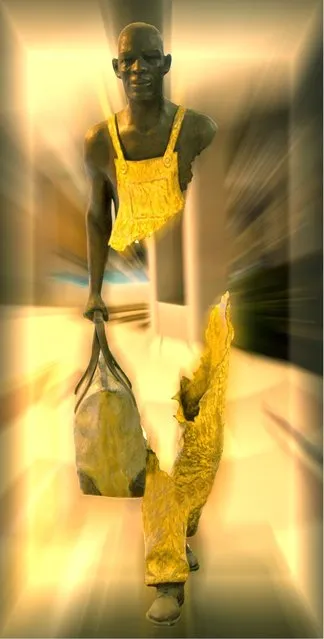
Sculptures by Bruno Catalano

French sculptor Bruno Catalano works in bronze sculpture, with a reoccuring motif. His figures are always lacking mid sections, and seem to be eerily suspended in mid air. Each of his sculptures feature somebody with a suitcase in hand, usually with an introspective or uncertain expression. The lack of midsection represents Bruno Catalano's invitation to viewers of his works to simply fill in the blanks. Lovely use of negative space and a masterful use of bronze working. Check out more of his unique works after the break!
Details
20 Jul 2012 14:48:00