Loading...
Done
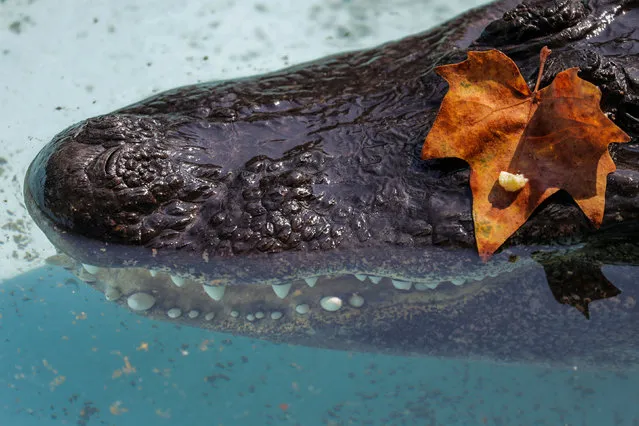
An alligator named Muja is seen in its enclosure in Belgrade's Zoo, Serbia, August 14, 2018. Muja is officially the oldest American alligator in the world living in captivity. He was brought to Belgrade from Germany in 1937, a year after the opening of the Zoo. Muja survived three bombings of Belgrade, the Second World War and all hardships the Zoo went through. (Photo by Marko Djurica/Reuters)

An alligator named Muja is seen in its enclosure in Belgrade's Zoo, Serbia, August 14, 2018. Muja is officially the oldest American alligator in the world living in captivity. He was brought to Belgrade from Germany in 1937, a year after the opening of the Zoo. Muja survived three bombings of Belgrade, the Second World War and all hardships the Zoo went through. (Photo by Marko Djurica/Reuters)
Details
19 Aug 2018 00:03:00
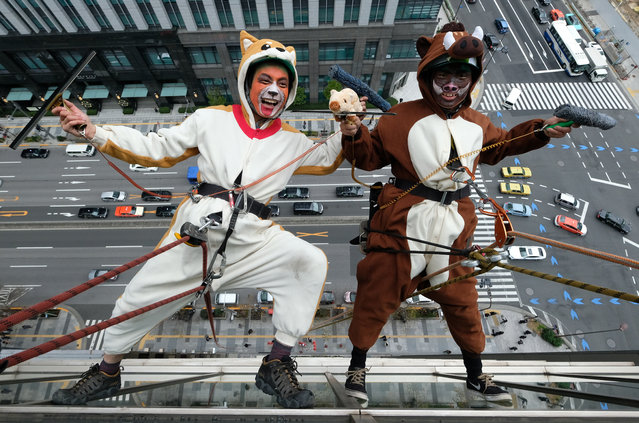
Workers clad in a dog and a wild boar costumes, to represent the outgoing year of the dog and incoming year of the wild boar, clean windows on the side of a hotel in Tokyo on December 13, 2018. (Photo by Kazuhiro Nogi/AFP Photo)

Workers clad in a dog and a wild boar costumes, to represent the outgoing year of the dog and incoming year of the wild boar, clean windows on the side of a hotel in Tokyo on December 13, 2018. (Photo by Kazuhiro Nogi/AFP Photo)
Details
21 Dec 2018 00:05:00
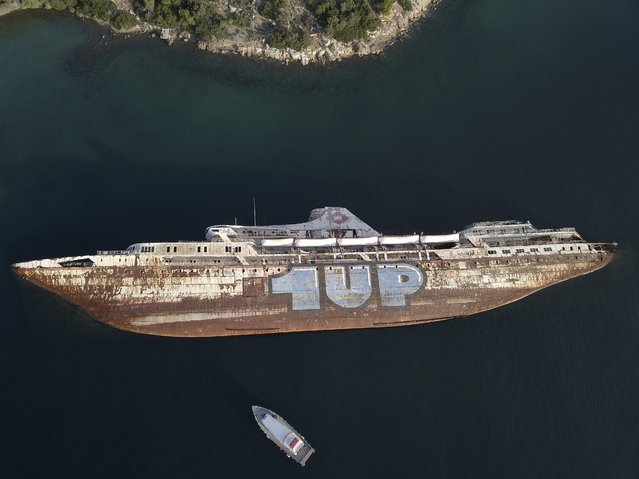
In this Friday, December 4, 2018 photo, a half sunken cruise ship lays on its side, in the Gulf of Elefsina, west of Athens. Dozens of abandoned cargo and passenger ships lie semi-submerged or completely sunken around the Gulf of Elefsina, near Greece’s major port of Piraeus. Now authorities are beginning to remove the dilapidated ships. Some of them have been there for decades, leaking hazards like oil into the environment and creating a danger to modern shipping. One expert calls the abandoned ships “an environmental bomb”. (Photo by Thanassis Stavrakis/AP Photo)

In this Friday, December 4, 2018 photo, a half sunken cruise ship lays on its side, in the Gulf of Elefsina, west of Athens. Dozens of abandoned cargo and passenger ships lie semi-submerged or completely sunken around the Gulf of Elefsina, near Greece’s major port of Piraeus. Now authorities are beginning to remove the dilapidated ships. Some of them have been there for decades, leaking hazards like oil into the environment and creating a danger to modern shipping. One expert calls the abandoned ships “an environmental bomb”. (Photo by Thanassis Stavrakis/AP Photo)
Details
08 Jan 2019 00:05:00
First place, The Beauty of Plants. “There are many stages of lotus growth on display at the Aquatic Gardens, but to come across twotwisted dancing stems of nelumbo nucifera was unexpected and quite magical”. (Photo by Kathleen Furey/The Guardian)

First place, The Beauty of Plants. “There are many stages of lotus growth on display at the Aquatic Gardens, but to come across twotwisted dancing stems of nelumbo nucifera was unexpected and quite magical”. (Photo by Kathleen Furey/The Guardian)
Details
13 Mar 2019 00:03:00
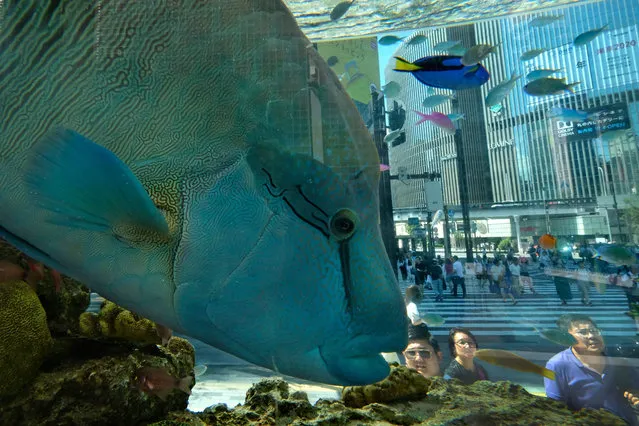
Listed as endangered on the IUCN red list of threatened species, a humphead wrasse, or Napoleon fish, swims in an aquarium during an event in Tokyo's shopping district of Ginza on August 5, 2019. (Photo by Kazuhiro Nogi/AFP Photo)

Listed as endangered on the IUCN red list of threatened species, a humphead wrasse, or Napoleon fish, swims in an aquarium during an event in Tokyo's shopping district of Ginza on August 5, 2019. (Photo by Kazuhiro Nogi/AFP Photo)
Details
18 Sep 2019 00:01:00
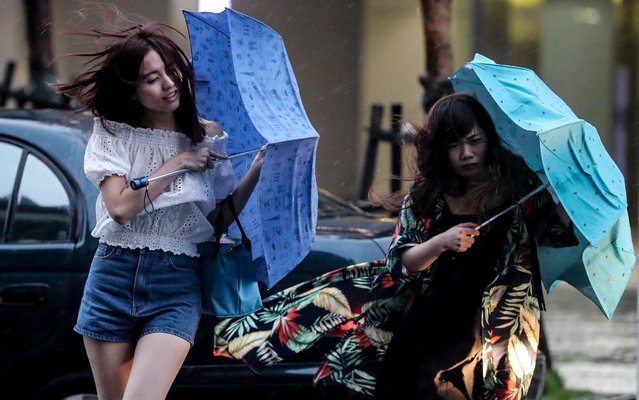
People struggle with the wind as they cross the street under the rain as typhoon Mitag is expected to hit northern Taiwan, in Keelung, Taiwan, 30 September 2019. According to report, Typhoon Mitag will disrupt air, land and water traffic. Mitag is located at sea about 290 kilometers off the south-southeast of Yilan County, moving at 27 kilometers per hour at a northwesterly direction, with maximum sustained winds of 126 kilometers per hour, with gusts of up to 162 kilometers per hour, and with a radius of 180 kilometers, according to Taiwan Central Weather Bureau. (Photo by Ritchie B. Tongo/EPA/EFE/Rex Features/Shutterstock)

People struggle with the wind as they cross the street under the rain as typhoon Mitag is expected to hit northern Taiwan, in Keelung, Taiwan, 30 September 2019. According to report, Typhoon Mitag will disrupt air, land and water traffic. Mitag is located at sea about 290 kilometers off the south-southeast of Yilan County, moving at 27 kilometers per hour at a northwesterly direction, with maximum sustained winds of 126 kilometers per hour, with gusts of up to 162 kilometers per hour, and with a radius of 180 kilometers, according to Taiwan Central Weather Bureau. (Photo by Ritchie B. Tongo/EPA/EFE/Rex Features/Shutterstock)
Details
02 Oct 2019 00:05:00
Elena from Dresden has her hair ruffled by the wind as she stands on a visitors' platform on the Maintower in Frankfurt am Main, western Germany, during stormy weather on February 22, 2017. (Photo by Arne Dedert/AFP Photo/DPA)

Elena from Dresden has her hair ruffled by the wind as she stands on a visitors' platform on the Maintower in Frankfurt am Main, western Germany, during stormy weather on February 22, 2017. (Photo by Arne Dedert/AFP Photo/DPA)
Details
24 Feb 2017 00:01:00
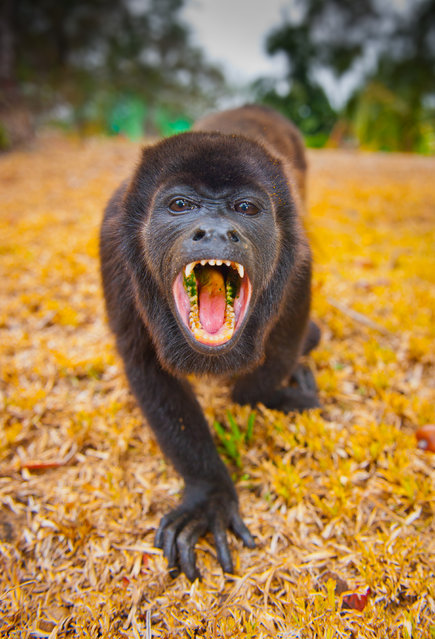
“Attacking Howler Monkey”. Due to a major tropical rainstorm my wife and I were forced to stay overnight in a Howler Monkey Rescue center in Panama. I used the time to explore the area and to take photos of the monkeys. Just after the rain finally stopped, I ran into this monkey that tried to mock attack me. I quickly took a couple of photos before retreating to a (more) safe distance. (Photo and caption by Christian Mueller-Planitz/National Geographic Traveler Photo Contest)

“Attacking Howler Monkey”. Due to a major tropical rainstorm my wife and I were forced to stay overnight in a Howler Monkey Rescue center in Panama. I used the time to explore the area and to take photos of the monkeys. Just after the rain finally stopped, I ran into this monkey that tried to mock attack me. I quickly took a couple of photos before retreating to a (more) safe distance. (Photo and caption by Christian Mueller-Planitz/National Geographic Traveler Photo Contest)

ATTENTION! All pictures are presented in high resolution. To see Hi-Res images – just TWICE click on any picture. In other words, click small picture – opens the BIG picture. Click BIG picture – opens VERY BIG picture.
Details
30 Jun 2013 12:25:00