Loading...
Done
A receptionist dinosaur robot performs at the new robot hotel, aptly called Henn na Hotel or Weird Hotel, in Sasebo, southwestern Japan, Wednesday, July 15, 2015. From the receptionist that does the check-in and check-out to the porter that’s a stand-on-wheels taking luggage up to the room, the hotel, that is run as part of Huis Ten Bosch amusement park, is “manned” almost totally by robots to save labor costs. (Photo by Shizuo Kambayashi/AP Photo)

A receptionist dinosaur robot performs at the new robot hotel, aptly called Henn na Hotel or Weird Hotel, in Sasebo, southwestern Japan, Wednesday, July 15, 2015. From the receptionist that does the check-in and check-out to the porter that’s a stand-on-wheels taking luggage up to the room, the hotel, that is run as part of Huis Ten Bosch amusement park, is “manned” almost totally by robots to save labor costs. (Photo by Shizuo Kambayashi/AP Photo)
Details
16 Jul 2015 11:18:00
Residents of the Brussels suburb of Molenbeek are searched by police before taking part in a memorial gathering to honour the victims of the recent deadly Paris attacks, in Brussels, Belgium, November 18, 2015. (Photo by Yves Herman/Reuters)

Residents of the Brussels suburb of Molenbeek are searched by police before taking part in a memorial gathering to honour the victims of the recent deadly Paris attacks, in Brussels, Belgium, November 18, 2015. (Photo by Yves Herman/Reuters)
Details
19 Nov 2015 08:07:00
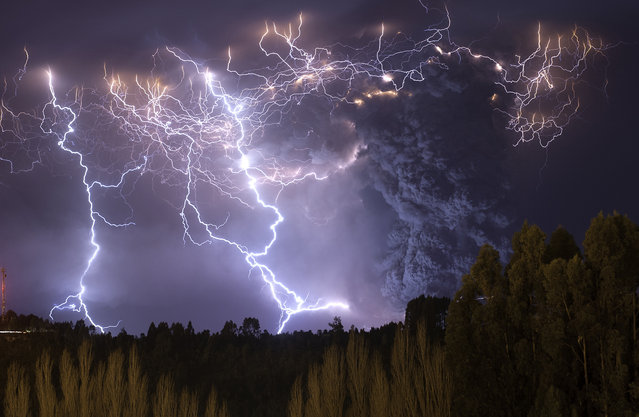
The eruption of Cordon Caulle began on June 4, 2011, located in the Region of Los Rios in Chile. For about 12 months, people and animals became accustomed to living with the daily fall of ash, which also caused problems in the air traffic in South America. The explosions and lightning during first days of the eruption could be seen from hundreds of miles around. This photograph was taken on the second night of eruption from the town of Lago Ranco. (Photo and caption by Francisco Negroni/National Geographic Traveler Photo Contest)

The eruption of Cordon Caulle began on June 4, 2011, located in the Region of Los Rios in Chile. For about 12 months, people and animals became accustomed to living with the daily fall of ash, which also caused problems in the air traffic in South America. The explosions and lightning during first days of the eruption could be seen from hundreds of miles around. This photograph was taken on the second night of eruption from the town of Lago Ranco. (Photo and caption by Francisco Negroni/National Geographic Traveler Photo Contest)

ATTENTION! All pictures are presented in high resolution. To see Hi-Res images – just TWICE click on any picture. In other words, click small picture – opens the BIG picture. Click BIG picture – opens VERY BIG picture.
Details
23 Jun 2013 11:24:00
In Character By Howard Schatz Part 1

Photographer Howard Schatz had an idea: place actors in a series of roles and dramatic situations to reveal the essence of their characters. Such was the premise behind his book, In Character: Actors Acting, which captures some of Hollywood’s most emotive stars in the act of, well, making faces. Luckily for us, he continued the tradition for Vanity Fair. Here are some of the best.
Details
04 Jan 2014 14:38:00
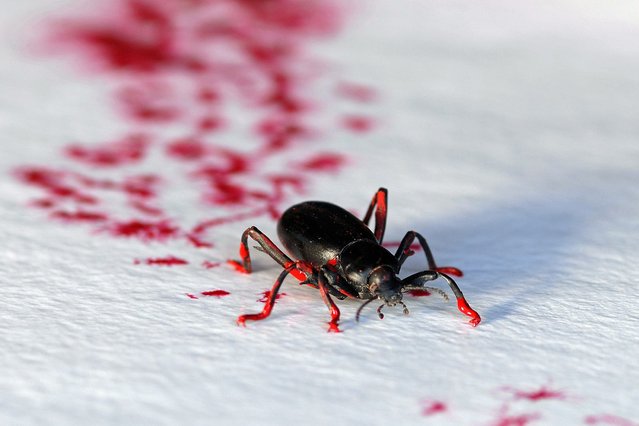
An artist has discovered a bizarre way to create his work – by coating the feet of insects with paint who then crawl across the canvas creating intricate pieces of art. (Photo by Caters News)

An artist has discovered a bizarre way to create his work – by coating the feet of insects with paint who then crawl across the canvas creating intricate pieces of art. (Photo by Caters News)
Details
16 Feb 2014 12:54:00


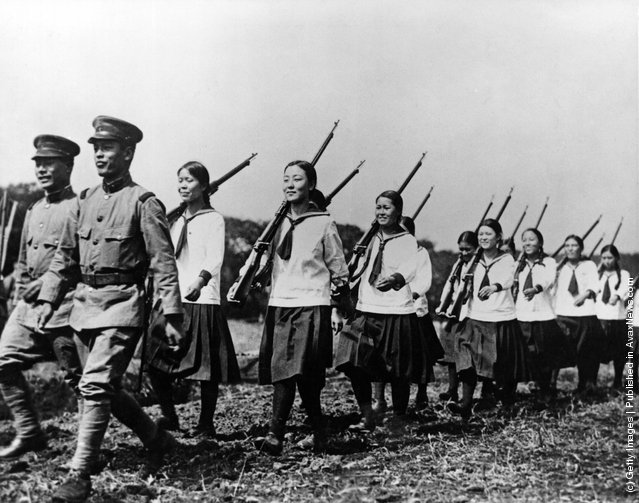
A group of Japanese schoolgirls marching in formation during a school visit to the third regiment to experience the soldier's way of life. (Photo by Fox Photos/Getty Images). Circa 1938
Details
01 Jun 2011 09:18:00
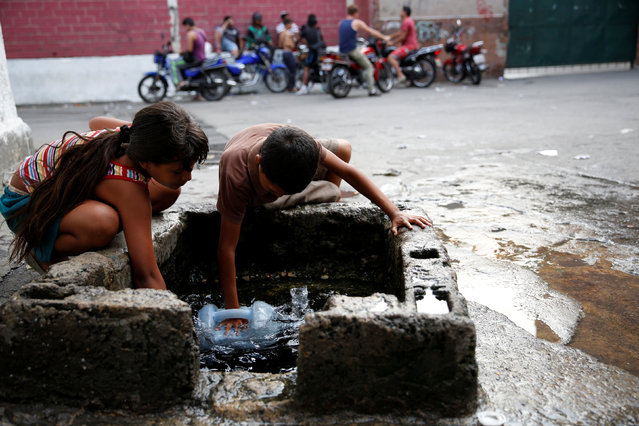
Children fill plastic containers with water from a well on a street, close to a neighbourhood called “The Tank” in the slum of Petare in Caracas, Venezuela, March 17, 2016. (Photo by Carlos Garcia Rawlins/Reuters)

Children fill plastic containers with water from a well on a street, close to a neighbourhood called “The Tank” in the slum of Petare in Caracas, Venezuela, March 17, 2016. Although their nation has one of the world's biggest hydroelectric dams and vast rivers like the fabled Orinoco, Venezuelans are still suffering water and power cuts most days. The problems with stuttering services have escalated in the last few weeks: yet another headache for the OPEC nation's 30 million people already reeling from recession, the world's highest inflation rate, and scarcities of basic goods. President Nicolas Maduro blames a drought, while the opposition blames government incompetence. (Photo by Carlos Garcia Rawlins/Reuters)
Details
08 May 2016 11:15:00
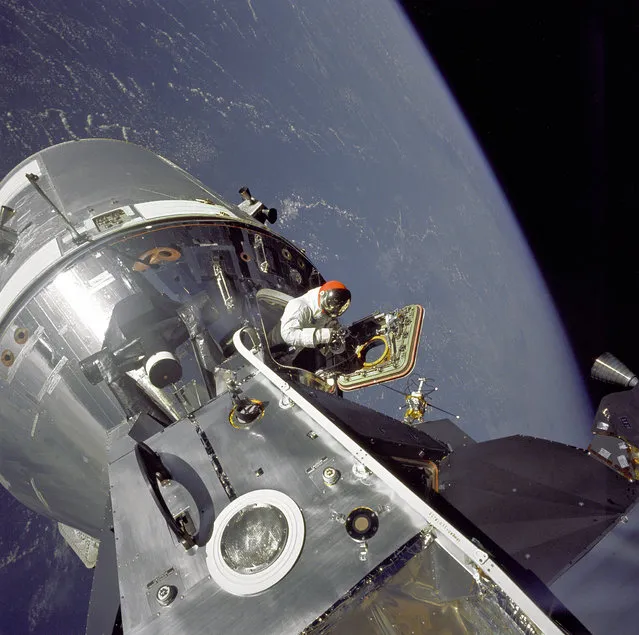
Apollo 9 Command/Service Modules (CSM) nicknamed “Gumdrop” and Lunar Module (LM), nicknamed “Spider” are shown docked together as Command Module pilot David R. Scott stands in the open hatch. Astronaut Russell L. Schweickart, Lunar Module pilot, took this photograph of Scott during his EVA as he stood on the porch outside the Lunar Module. Apollo 9 was an Earth orbital mission designed to test docking procedures between the CSM and LM as well as test fly the Lunar Module in the relative safe confines of Earth orbit. (Photo by NASA)

Apollo 9 Command/Service Modules (CSM) nicknamed “Gumdrop” and Lunar Module (LM), nicknamed “Spider” are shown docked together as Command Module pilot David R. Scott stands in the open hatch. Astronaut Russell L. Schweickart, Lunar Module pilot, took this photograph of Scott during his EVA as he stood on the porch outside the Lunar Module. Apollo 9 was an Earth orbital mission designed to test docking procedures between the CSM and LM as well as test fly the Lunar Module in the relative safe confines of Earth orbit. (Photo by NASA)
Details
20 Jul 2014 11:47:00