Loading...
Done
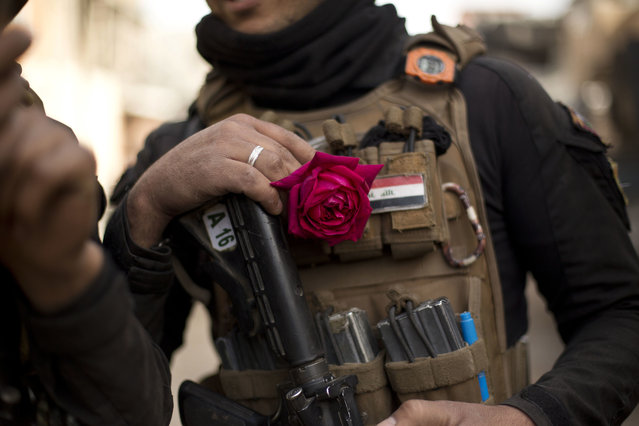
An Iraqi special forces soldier wears a rose in his body armor as troops move from the Yarmouk neighborhood to take another district from Islamic State militant control in Mosul, Iraq, Wednesday, April 12, 2017. (Photo by Maya Alleruzzo/AP Photo)

An Iraqi special forces soldier wears a rose in his body armor as troops move from the Yarmouk neighborhood to take another district from Islamic State militant control in Mosul, Iraq, Wednesday, April 12, 2017. (Photo by Maya Alleruzzo/AP Photo)
Details
26 Apr 2017 08:29:00
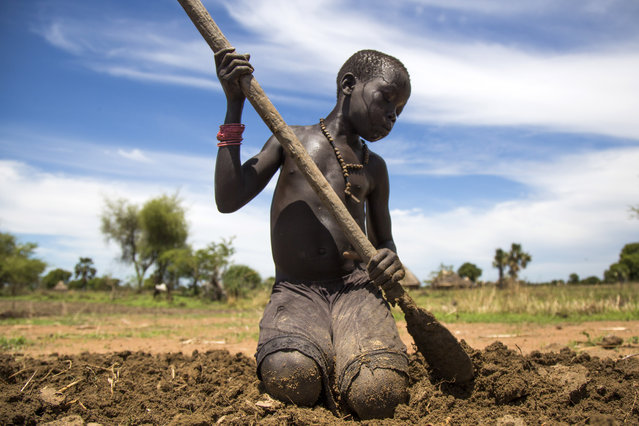
Nyibol Lual, 13 years old, helps her family to prepare the land for cultivation on May 31, 2017, in Panthau, Northern Bahr al Ghazal, South Sudan. The family has a small land where they cultivate sorghum. An estimated 63 per cent of the population in Northern Bahr al Ghazal is experiencing severe food insecurity, according to the latest Integrated Food Security Phase Classification (IPC) report. The situation is particularly bad in Aweil West and Aweil South counties, where the exhaustion of household food stocks and growing dependence on financially inaccessible markets have left the population facing Emergency levels of food insecurity. (Photo by Albert Gonzalez Farran/AFP Photo)

Nyibol Lual, 13 years old, helps her family to prepare the land for cultivation on May 31, 2017, in Panthau, Northern Bahr al Ghazal, South Sudan. The family has a small land where they cultivate sorghum. An estimated 63 per cent of the population in Northern Bahr al Ghazal is experiencing severe food insecurity, according to the latest Integrated Food Security Phase Classification (IPC) report. The situation is particularly bad in Aweil West and Aweil South counties, where the exhaustion of household food stocks and growing dependence on financially inaccessible markets have left the population facing Emergency levels of food insecurity. (Photo by Albert Gonzalez Farran/AFP Photo)
Details
01 Jun 2017 10:10:00
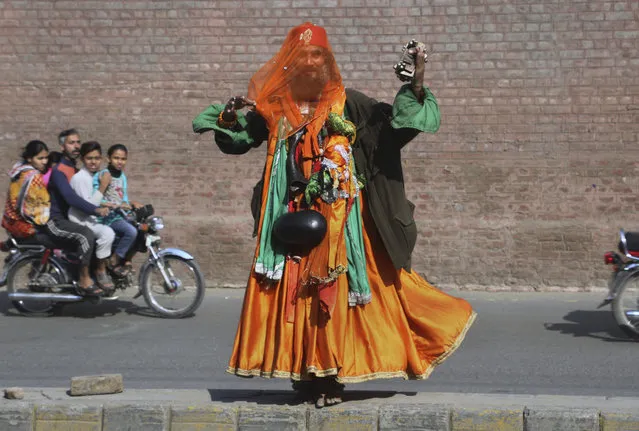
A Muslim dervish sings a traditional Sufi song near a rally for the Mawlid al-Nabi holiday, marking the birthday of Islam's prophet, Muhammad, in Lahore, Pakistan, Sunday, November 10, 2019. To mark the holiday, thousands take part in religious processions, ceremonies and distribute free meals to the poor. (Photo by K.M. Chaudary/AP Photo)

A Muslim dervish sings a traditional Sufi song near a rally for the Mawlid al-Nabi holiday, marking the birthday of Islam's prophet, Muhammad, in Lahore, Pakistan, Sunday, November 10, 2019. To mark the holiday, thousands take part in religious processions, ceremonies and distribute free meals to the poor. (Photo by K.M. Chaudary/AP Photo)
Details
13 Dec 2019 00:01:00
Italian rider Eva Lechner competes in the women's elite race of the “Hotondcross” cyclocross, the competition's fourth stage of the DVV Trofee Cyclocross in Ronse, on December 14, 2019. (Photo by David Stockman/BELGA/AFP Photo)

Italian rider Eva Lechner competes in the women's elite race of the “Hotondcross” cyclocross, the competition's fourth stage of the DVV Trofee Cyclocross in Ronse, on December 14, 2019. (Photo by David Stockman/BELGA/AFP Photo)
Details
16 Dec 2019 00:05:00
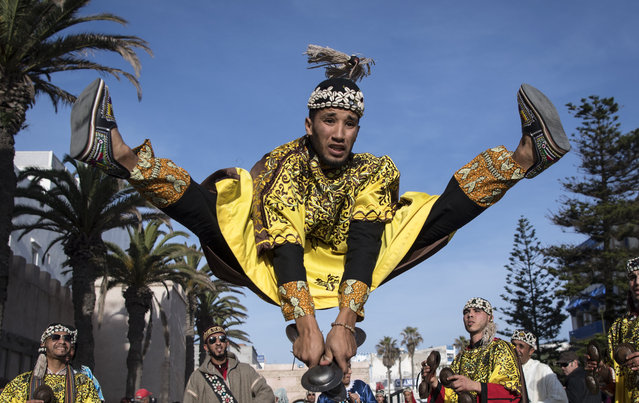
A Gnawa traditional group performs in the city of Essaouira on December 14, 2019, to celebrate the decision of adding the Gnawa culture to UNESCO's list of Intangible Cultural Heritage of Humanity. Gnawa culture, a centuries-old Moroccan practice rooted in music, African rituals and Sufi traditions, was added to UNESCO's list of Intangible Cultural Heritage of Humanity earlier in the week. Gnawa refers to a “set of musical productions, fraternal practices and therapeutic rituals where the secular mixes with the sacred”, according to the nomination submitted by Morocco. Often dressed in colourful outfits, Gnawa musicians play the guenbri, a type of lute with three strings, accompanied by steel castanets called krakebs. (Photo by Fadel Senna/AFP Photo)

A Gnawa traditional group performs in the city of Essaouira on December 14, 2019, to celebrate the decision of adding the Gnawa culture to UNESCO's list of Intangible Cultural Heritage of Humanity. Gnawa culture, a centuries-old Moroccan practice rooted in music, African rituals and Sufi traditions, was added to UNESCO's list of Intangible Cultural Heritage of Humanity earlier in the week. Gnawa refers to a “set of musical productions, fraternal practices and therapeutic rituals where the secular mixes with the sacred”, according to the nomination submitted by Morocco. Often dressed in colourful outfits, Gnawa musicians play the guenbri, a type of lute with three strings, accompanied by steel castanets called krakebs. (Photo by Fadel Senna/AFP Photo)
Details
18 Dec 2019 00:05:00
Buyan, a male Siberian brown bear, cools down under a stream of water sprayed by an employee in an enclosure on a hot summer day, at the Royev Ruchey zoo in Krasnoyarsk, Russia on June 14, 2019. (Photo by Ilya Naymushin/Reuters)

Buyan, a male Siberian brown bear, cools down under a stream of water sprayed by an employee in an enclosure on a hot summer day, at the Royev Ruchey zoo in Krasnoyarsk, Russia on June 14, 2019. (Photo by Ilya Naymushin/Reuters)
Details
09 Jan 2020 00:05:00
Julia Marino of USA in action during the final run of the snowboard slopestyle competition at the Laax Open, in Laax, Switzerland, 17 January 2020. (Photo by Gian Ehrenzeller/EPA/EFE/Rex Features/Shutterstock)

Julia Marino of USA in action during the final run of the snowboard slopestyle competition at the Laax Open, in Laax, Switzerland, 17 January 2020. (Photo by Gian Ehrenzeller/EPA/EFE/Rex Features/Shutterstock)
Details
20 Jan 2020 00:01:00
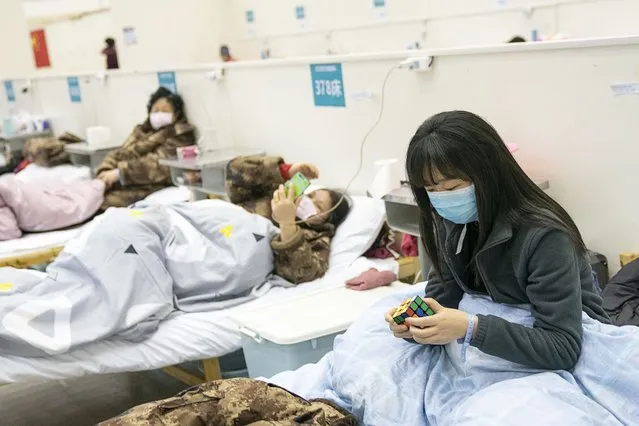
A patient solves a rubik's cube at a temporary hospital converted from “Wuhan Livingroom” in central China's Hubei Province on February 10, 2020. In face of the outbreak of the novel coronavirus pneumonia epidemic, Wuhan authorities have transformed public venues such as exhibition centers and gymnasiums into temporary hospitals. The hospitals have a large capacity of treating patients with mild symptoms and play an important role in isolating the source of infection and cutting off the routes of infection during epidemic prevention. The first batch of patients was hospitalized on Feb. 5. (Photo by Chine Nouvelle/SIPA Press/Rex Features/Shutterstock)

A patient solves a rubik's cube at a temporary hospital converted from “Wuhan Livingroom” in central China's Hubei Province on February 10, 2020. In face of the outbreak of the novel coronavirus pneumonia epidemic, Wuhan authorities have transformed public venues such as exhibition centers and gymnasiums into temporary hospitals. The hospitals have a large capacity of treating patients with mild symptoms and play an important role in isolating the source of infection and cutting off the routes of infection during epidemic prevention. The first batch of patients was hospitalized on Feb. 5. (Photo by Chine Nouvelle/SIPA Press/Rex Features/Shutterstock)
Details
17 Feb 2020 00:07:00