Loading...
Done
A Palestinian girl is seen inside the giant jerry can filled with water as displaced Palestinians, sheltering in tents they have set up in schools and along roadsides, experience the increasing temperatures in Deir al-Balah, Gaza, on June 11, 2024. Especially children are the most affected by the extremely hot weather conditions, while the number of Palestinians migrating to Deir al-Balah is increasing day by day due to Israeli attacks on different parts of Gaza. (Photo by Hasan Jedi/Anadolu via Getty Images)

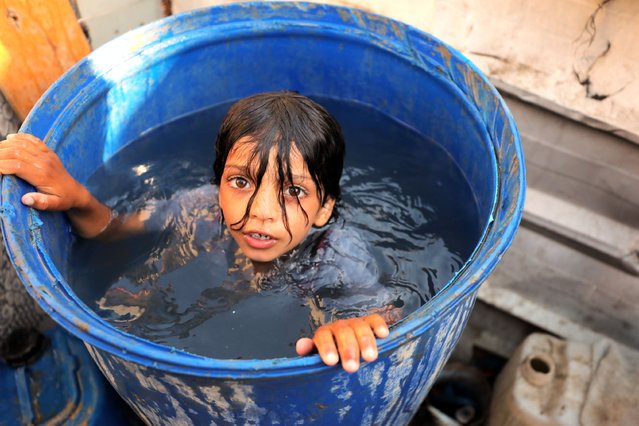
A Palestinian girl is seen inside the giant jerry can filled with water as displaced Palestinians, sheltering in tents they have set up in schools and along roadsides, experience the increasing temperatures in Deir al-Balah, Gaza, on June 11, 2024. Especially children are the most affected by the extremely hot weather conditions, while the number of Palestinians migrating to Deir al-Balah is increasing day by day due to Israeli attacks on different parts of Gaza. (Photo by Hasan Jedi/Anadolu via Getty Images)
Details
25 Jun 2024 03:11:00
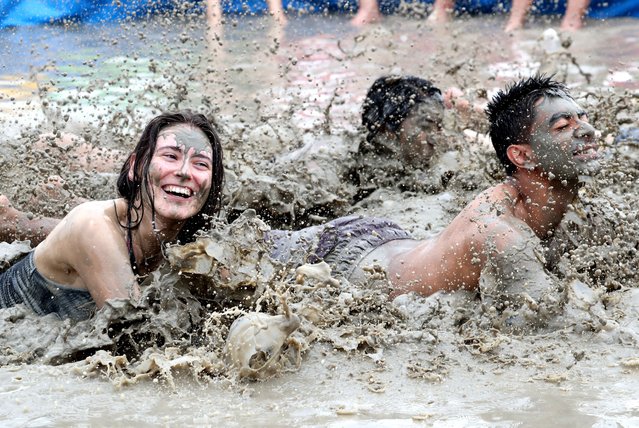
Foreign tourists who visited the “Boryeong Mud Festival” venue in Boryeong-si, Chungcheongnam-do on the July 19th, 2024 are having fun rolling around in a mud bath. The 27th Boryeong Mud Festival this year will be held until the 4th of next month. Last year, more than 1.6 million tourists visited the festival. (Phoot by Shin Hyeon-jong)

Foreign tourists who visited the “Boryeong Mud Festival” venue in Boryeong-si, Chungcheongnam-do on the July 19th, 2024 are having fun rolling around in a mud bath. The 27th Boryeong Mud Festival this year will be held until the 4th of next month. Last year, more than 1.6 million tourists visited the festival. (Phoot by Shin Hyeon-jong)
Details
09 Aug 2024 04:29:00
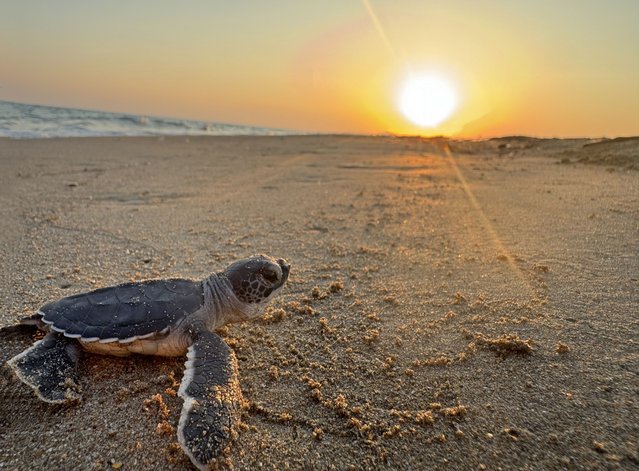
An endangered baby turtle hatched from its egg in its nest on the Belek coast, is trying to reach the open sea by walking along the beach in Antalya, Turkiye on August 05, 2025. In the Belek and Kizilot region, one of the largest nesting areas in the Mediterranean, many baby turtles continue to meet the sea. (Photo by Tahsin Ceylan/Anadolu via Getty Images)

An endangered baby turtle hatched from its egg in its nest on the Belek coast, is trying to reach the open sea by walking along the beach in Antalya, Turkiye on August 05, 2025. In the Belek and Kizilot region, one of the largest nesting areas in the Mediterranean, many baby turtles continue to meet the sea. (Photo by Tahsin Ceylan/Anadolu via Getty Images)
Details
25 Sep 2025 03:59:00
Poland's Daria Pikulik, Poland's Wiktoria Pikulik and Britain's Elinor Barker (R) crash as they compete in the Women's Madison race during the fifth day of the UEC European Track Cycling Championships at the Omnisport indoor arena in Apeldoorn, on January 14, 2024. bark (Photo by John Thys/AFP Photo)

Poland's Daria Pikulik, Poland's Wiktoria Pikulik and Britain's Elinor Barker (R) crash as they compete in the Women's Madison race during the fifth day of the UEC European Track Cycling Championships at the Omnisport indoor arena in Apeldoorn, on January 14, 2024. bark (Photo by John Thys/AFP Photo)
Details
22 Jan 2024 09:07:00
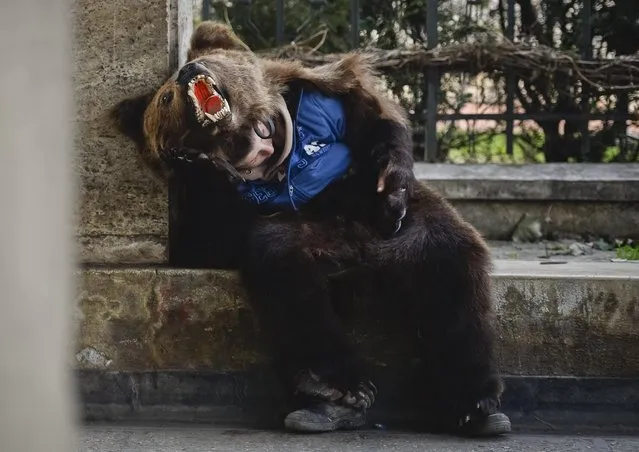
Florin Bors, aged 8 from Bacau, northern Romania, wearing a bear fur takes a break from performing a holiday season ritual in Bucharest, Romania, Tuesday, December 16, 2014. In pre-Christian rural traditions, dancers wearing colored costumes or animal furs, touring house to house in villages singing and dancing to ward off evil. (Photo by Octav Ganea/AP Photo/Mediafax)

Florin Bors, aged 8 from Bacau, northern Romania, wearing a bear fur takes a break from performing a holiday season ritual in Bucharest, Romania, Tuesday, December 16, 2014. In pre-Christian rural traditions, dancers wearing colored costumes or animal furs, touring house to house in villages singing and dancing to ward off evil. In recent years following the economic downturn in Romania, a European Union member since 2007, the tradition has moved to Romania's cities where dancers travel to perform the ritual for money. (Photo by Octav Ganea/AP Photo/Mediafax)
Details
20 Dec 2014 12:07:00
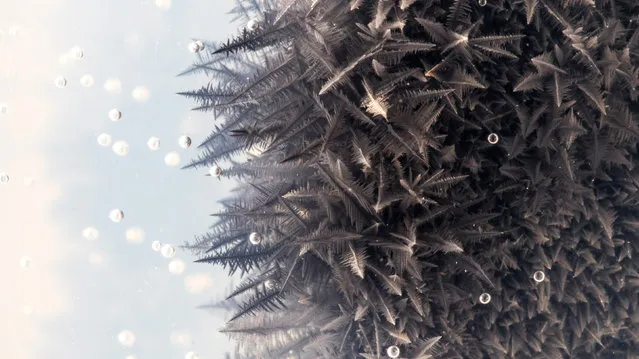
Zinc reacting with lead nitrate in a soft gel to form lead crystals. (Photo by Yan Liang/Caters News)

These beautiful shots may look like works of modern art – but they are actually close-ups of chemical reactions. The works were snapped with the help of a group of scientists from the University of Science and Technology of China (USTC) in Anhui, China. Here: Zinc reacting with lead nitrate in a soft gel to form lead crystals. (Photo by Yan Liang/Caters News)
Details
23 Oct 2014 11:33:00
“The Salt of the Presidium”. Andrew Wanyonyi Sikanga is a salt producer in Nabuyole, western Kenya, who produces salt from an aquatic plant. (Photo by Steve McCurry/2015 Lavazza Calendar)

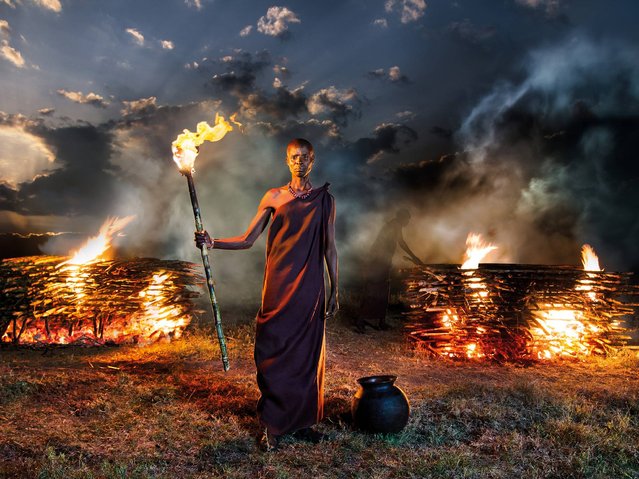
Extraordinary tales of everyday heroism have been illustrated beautifully by renowned US photographer Steve McCurry in the new 2015 Lavazza Calendar. The calendar which has been created in collaboration with the Slow Food movement, features twelve breathtaking pictures, capturing the spirit, strength and humanity of the Earth Defenders – women and men who protect their land and projects in Africa with passion and bravery. The proceeds from sales of the calendar and all donations will be contributed entirely to create 10,000 food gardens in African schools and villages by the end of 2016. (Photo by Steve McCurry/2015 Lavazza Calendar)
Details
27 Oct 2014 12:08:00
Yak near Yamdrok lake, Tibet. It is a long-haired bovinae found throughout the Himalayan region of south Central Asia, the Tibetan Plateau and as far north as Mongolia and Russia. The Tibetan economy is dominated by subsistence agriculture. Due to limited arable land, the primary occupation of the Tibetan Plateau is raising livestock, such as sheep, cattle, goats, camels, yaks, dzo, and horses. The Tibetan yak is an integral part of Tibetan life. (Photo by Dennis Jarvis)

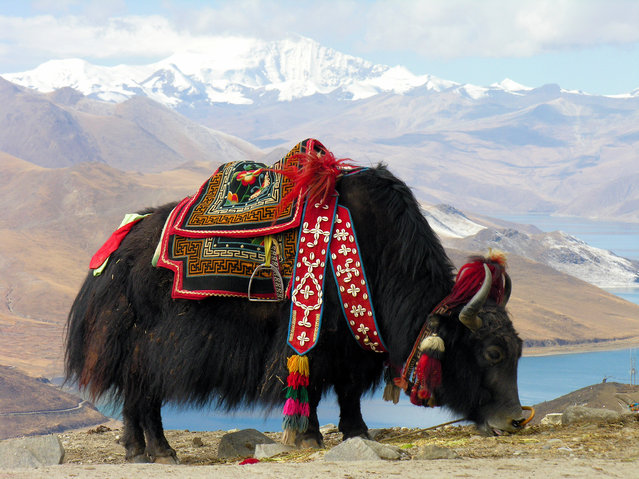
Yak near Yamdrok lake, Tibet. It is a long-haired bovinae found throughout the Himalayan region of south Central Asia, the Tibetan Plateau and as far north as Mongolia and Russia. The Tibetan economy is dominated by subsistence agriculture. Due to limited arable land, the primary occupation of the Tibetan Plateau is raising livestock, such as sheep, cattle, goats, camels, yaks, dzo, and horses. The Tibetan yak is an integral part of Tibetan life. (Photo by Dennis Jarvis)
Details
10 Jun 2015 10:48:00