Loading...
Done
Newborn White-Cheeked Gibbon Nomascus

“Nomascus is the second most speciose genus of gibbons (family Hylobatidae). Originally this genus was a subgenus of Hylobates, and all individuals were considered one species, Hylobates concolor. Species within Nomascus are characterized by 52 chromosomes. Some species are all black, some light with a distinct black tuft of crown fur, and some by distinct, light-colored cheek patches. Nomascus is found from southern China (Yunnan) to southern Vietnam, and also on Hainan Island. One of the genus' species, Nomascus nasutus, has been deemed “the most critically endangered ape species in the world”. All of the species in this genus are endangered or critically endangered”. – Wikipedia

Photo: A newborn White-Cheeked Gibbon clings to its mother in the Nanning Zoo on April 12, 2004 in Nanning, Guangxi province, China. The White-Cheeked Gibbon's natural habitat is Southern China as well as Vietnam and Laos. They are classified as highly endangered and are on the brink of extinction due to poaching and reduction of natural rainforests. (Photo by Getty Images)
Details
12 Aug 2011 11:51:00
French twins Thomas and Vincent (L) Seris take the tram in Bordeaux, November 12, 2014. Born with Xeroderma Pigmentosum (XP), the twins cannot be exposed to the sun and its ultraviolet (UV) light, which could provoke precocious cancers due to an autosomal recessive genetic disorder of DNA repair. (Photo by Regis Duvignau/Reuters)

French twins Thomas and Vincent (L) Seris take the tram in Bordeaux, November 12, 2014. Born with Xeroderma Pigmentosum (XP), the twins cannot be exposed to the sun and its ultraviolet (UV) light, which could provoke precocious cancers due to an autosomal recessive genetic disorder of DNA repair. Colloquially referred to as Children of the Night (Les Enfants de la Lune) the Seris twins are among 70 to 80 people in France who suffer from the genetic defect. The French association “Les Enfants de la Lune” reports that there are between five and ten thousand such cases in the world. Thomas and Vincent have been testing a new protective mask for the last year which is transparent and ventilated and developed by several hospitals in France. (Photo by Regis Duvignau/Reuters)
Details
01 Feb 2015 10:27:00
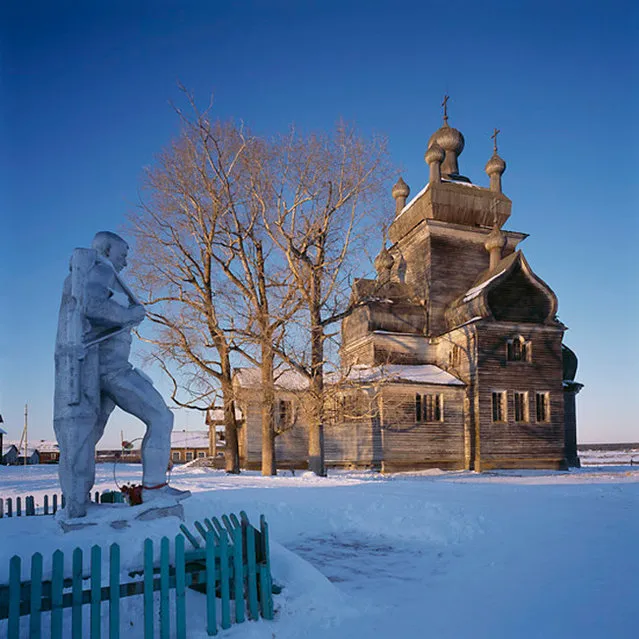
Wooden Churches - Travelling In The Russian North By Richard Davies Part 2

While communism, collectivism, worms, dry rot and casual looting failed to destroy the majestic wooden churches of Russia, it may be ordinary neglect that finally does them in. Dwindled now to several hundred remaining examples, these glories of vernacular architecture lie scattered amid the vastness of the world’s largest country. Just over a decade ago, Richard Davies, a British architectural photographer, struck out on a mission to record the fragile and poetic structures. Austerely beautiful and haunting, “Wooden Churches: Traveling in the Russian North” (White Sea Publishing; $132) is the result. Covering thousands of miles, Mr. Davies described how he and the writer Matilda Moreton tracked down the survivors from among the thousands of onion-domed structures built after Prince Vladimir converted to Christianity in 988.

See also: Wooden Churches Part1
Details
28 Nov 2013 12:13:00
Undated handout photo issued by Oxfam of Caroline Flack who took part in a photo shoot with top photographer Rankin for Oxfam's Lift Lives for Good campaign. (Photo by Rankin/PA Wire)

Celebrities including singer Nicole Scherzinger and actor Simon Pegg have been snapped by top photographer Rankin for an Oxfam campaign. All in all, a dozen well-known faces have been captured in various poses to highlight the charity's Lift Lives for Good campaign. The fundraising drive, launched at the start of the year, aims to shine a light on the work done by the charity to help poor people around the world. Photo: Undated handout photo issued by Oxfam of Caroline Flack who took part in a photo shoot with top photographer Rankin for Oxfam's Lift Lives for Good campaign. (Photo by Rankin/PA Wire)
Details
11 Mar 2014 08:49:00
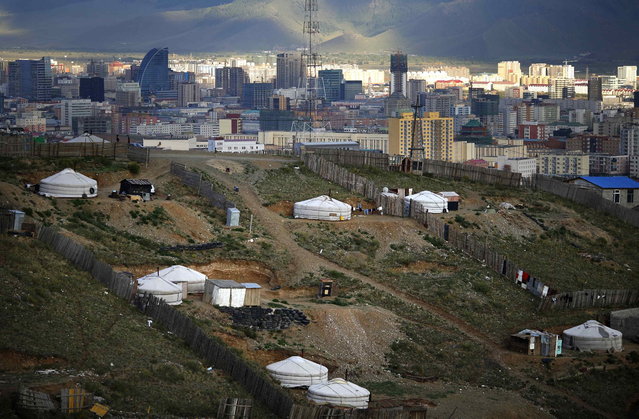
Gers, traditional Mongolian tents, are seen on a hill in an area known as a ger district in Ulan Bator June 26, 2013. (Photo by Carlos Barria/Reuters)

Gers, traditional Mongolian tents, are seen on a hill in an area known as a ger district in Ulan Bator June 26, 2013. Approximately 60 percent of the population of Ulan Bator live in settlements known as ger districts and in many cases residents have limited access to basic services such as water and sanitation. According to a 2010 National Population Center census, every year between thirty and forty thousand people migrate from the countryside to the capital Ulan Bator. Ger districts in the city have been expanding rapidly in recent years. Mongolia is the world's least densely populated country, with 2.8 million people spread across an area around three times the size of France. (Photo by Carlos Barria/Reuters)
Details
11 Aug 2013 11:45:00
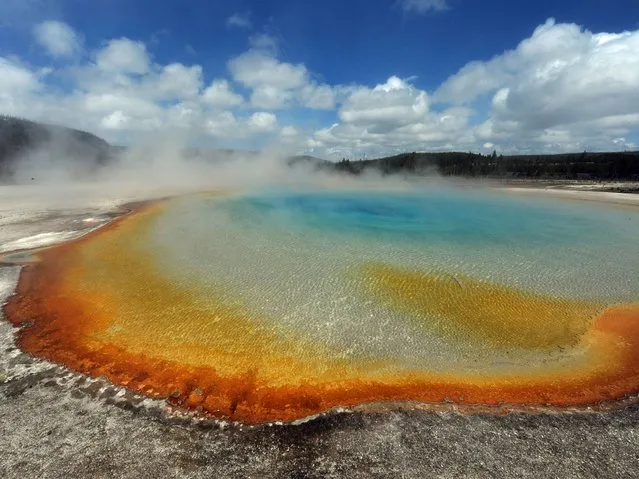
View of the “Sunset Lake” hot spring with it's unique colors caused by brown, orange and yellow algae-like bacteria called Thermophiles, that thrive in the cooling water turning the vivid aqua-blues to a murkier greenish brown, in the Yellowstone National Park, Wyoming on June 1, 2011. (Photo by Mark Ralston/AFP Photo)

View of the “Sunset Lake” hot spring with it's unique colors caused by brown, orange and yellow algae-like bacteria called Thermophiles, that thrive in the cooling water turning the vivid aqua-blues to a murkier greenish brown, in the Yellowstone National Park, Wyoming on June 1, 2011. Yellowstone National Park, was established by the U.S. Congress and signed into law by President Grant on March 1, 1872. The park is located primarily in the U.S. state of Wyoming, though it also extends into Montana and Idaho and was the first national park in the world. It is known for its wildlife and its many geothermal features, especially the Old Faithful Geyser. (Photo by Mark Ralston/AFP Photo)
Details
06 Apr 2014 08:02:00
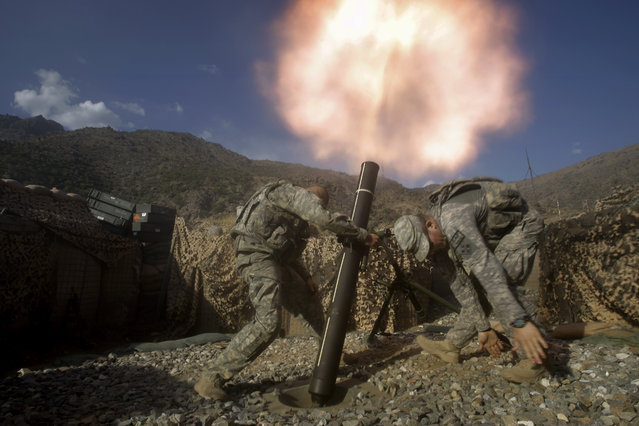
U.S. soldiers from the 2nd Battalion, 12th Infantry Regiment, 4th Brigade Combat Team, fire mortars at known enemy firing positions from a base in the Pech River Valley in Afghanistan's Kunar province, Saturday, October 24, 2009. (Photo by David Guttenfelder/AP Photo)

David Guttenfelder was born in Iowa and graduated from the University of Iowa with a Bachelor of Arts in cultural anthropology. He has worked for the AP since 1994 based in Kenya, the Ivory Coast, India and Japan. He is currently AP’s chief Asia photographer and his feature work has been used prominently in editorial publications throughout the world including Time and National Geographic. Photo: U.S. soldiers from the 2nd Battalion, 12th Infantry Regiment, 4th Brigade Combat Team, fire mortars at known enemy firing positions from a base in the Pech River Valley in Afghanistan's Kunar province, Saturday, October 24, 2009. (Photo by David Guttenfelder/AP Photo)
Details
21 Apr 2014 10:11:00
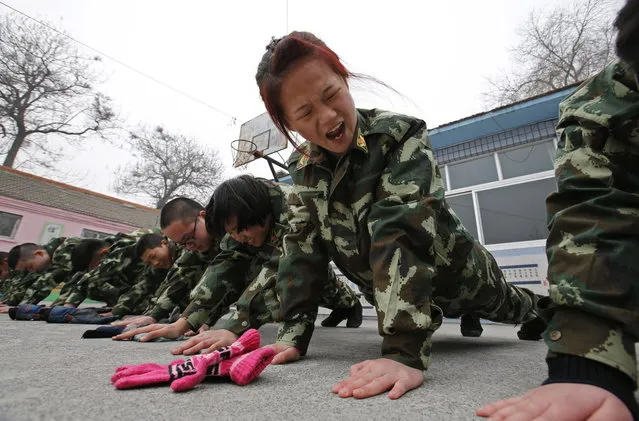
Students receive a group punishment during a military-style close-order drill class at the Qide Education Center in Beijing February 19, 2014. The Qide Education Center is a military-style boot camp which offers treatment for internet addiction. (Photo by Kim Kyung-Hoon/Reuters)

Students receive a group punishment during a military-style close-order drill class at the Qide Education Center in Beijing February 19, 2014. The Qide Education Center is a military-style boot camp which offers treatment for internet addiction. As growing numbers of young people in China immerse themselves in the cyber world, spending hours playing games online, worried parents are increasingly turning to boot camps to crush addiction. Military-style boot camps, designed to wean young people off their addiction to the internet, number as many as 250 in China alone. (Photo by Kim Kyung-Hoon/Reuters)
Details
03 Jul 2014 12:12:00