Loading...
Done
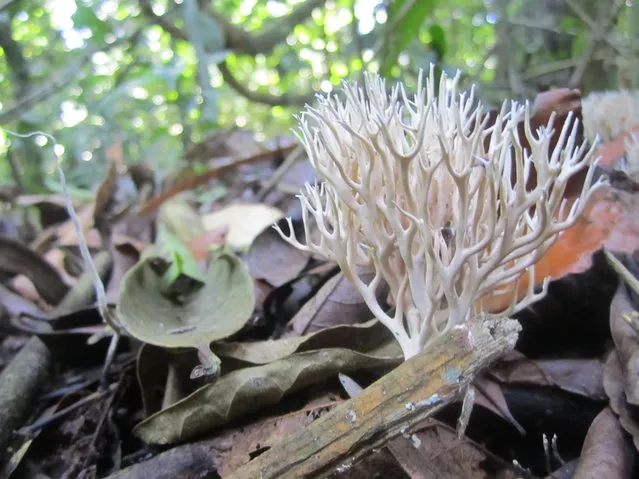
This strange coral-looking specimen is actually a mushroom. The photo, “Beautiful Destroyer”, was taken in the Panamanian tropical rainforest where the mushroom produces nitrogen, an element vital to soil health. (Photo by Sarah A. Batterman)

This strange coral-looking specimen is actually a mushroom. The photo, “Beautiful Destroyer”, was taken in the Panamanian tropical rainforest where the mushroom produces nitrogen, an element vital to soil health. (Photo by Sarah A. Batterman)
Details
13 Aug 2014 09:49:00
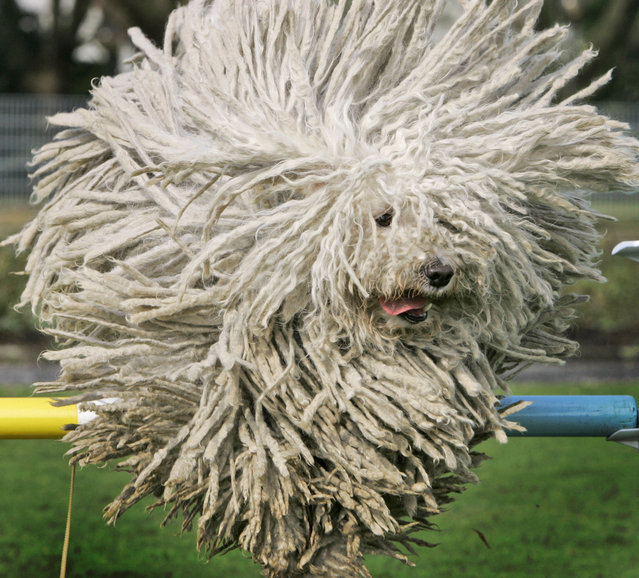
Hungarian Puli sheep dog, Fee, jumps over a hurdle during a preview for a pedigree dog  show in Dortmund on Thursday April 24, 2008. (Photo by Frank Augstein/AP Photo)

Hungarian Puli sheep dog, Fee, jumps over a hurdle during a preview for a pedigree dog show in Dortmund on Thursday April 24, 2008. (Photo by Frank Augstein/AP Photo)
Details
03 Sep 2015 12:49:00
A British Airways passenger plane flies in front of the moon above London, Britain, May 3, 2018. (Photo by Toby Melville/Reuters)

A British Airways passenger plane flies in front of the moon above London, Britain, May 3, 2018. (Photo by Toby Melville/Reuters)
Details
21 Feb 2019 00:03:00
Children pour cold water on themselves under the control of fitness coach Margarita Filimonova (R) at local kindergarten number 317, with the air temperature at about minus 23 degrees Celsius (minus 9.4 degrees Fahrenheit), in Russia's Siberian city of Krasnoyarsk, February 5, 2013. (Photo by Ilya Naymushin/Reuters)

Children pour cold water on themselves under the control of fitness coach Margarita Filimonova (R) at local kindergarten number 317, with the air temperature at about minus 23 degrees Celsius (minus 9.4 degrees Fahrenheit), in Russia's Siberian city of Krasnoyarsk, February 5, 2013. (Photo by Ilya Naymushin/Reuters)

P.S. All pictures are presented in high resolution. To see Hi-Res images – just TWICE click on any picture. In other words, click small picture – opens the BIG picture. Click BIG picture – opens VERY BIG picture (if available; this principle works anywhere on the site AvaxNews).

Details
17 Feb 2013 15:40:00
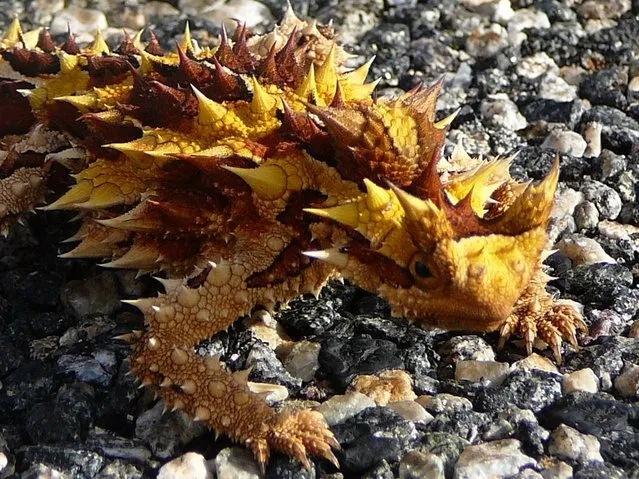
The Thorny Dragon Or Thorny Devil

The thorny dragon or thorny devil (Moloch horridus) is an Australian lizard, also known as the mountain devil, the thorny lizard, or the moloch. This is the sole species of genus Moloch. The thorny devil grows up to 20 cm (8.0 in) in length, and it can live up to 20 years.
Details
23 Jul 2014 20:20:00
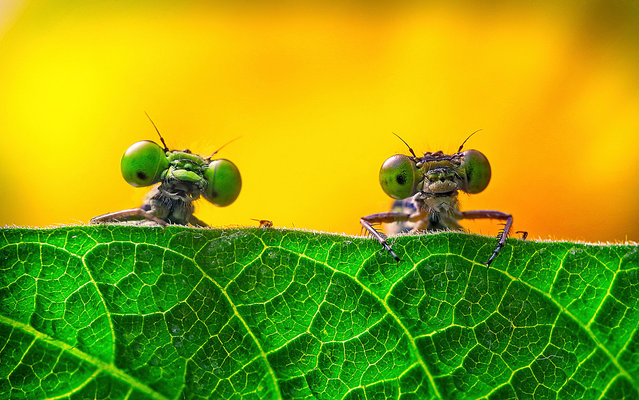
Shortlisted: “Two big eyes” by Miao Yong (Zejiang province, China). Damselflies look over the leaves. “I was photographing insects in a park near my home when suddenly I found two damselflies in the grass. They kept flying and it was very difficult to focus until suddenly they parked behind a leaf”. (Photo by Miao Yong/2017 Royal Society of Biology Photographer of the Year)

Shortlisted: “Two big eyes” by Miao Yong (Zejiang province, China). Damselflies look over the leaves. “I was photographing insects in a park near my home when suddenly I found two damselflies in the grass. They kept flying and it was very difficult to focus until suddenly they parked behind a leaf”. (Photo by Miao Yong/2017 Royal Society of Biology Photographer of the Year)
Details
16 Oct 2017 09:04:00
“The most difficult aspect of this shoot was to get each African pygmy dormouse – also known as micro squirrels – on to a separate camera. Once in place, they needed to remain still long enough to get them both in the frame and looking at me. Often solitary, they naturally wanted to move away”. (Photo by David Yeo/Leica Studio Mayfair/The Guardian)

David Yeo’s photography places naturally small species alongside animals that have been selectively bred to be tiny and cute. Here: “The most difficult aspect of this shoot was to get each African pygmy dormouse – also known as micro squirrels – on to a separate camera. Once in place, they needed to remain still long enough to get them both in the frame and looking at me. Often solitary, they naturally wanted to move away”. (Photo by David Yeo/Leica Studio Mayfair/The Guardian)
Details
24 Oct 2017 08:20:00
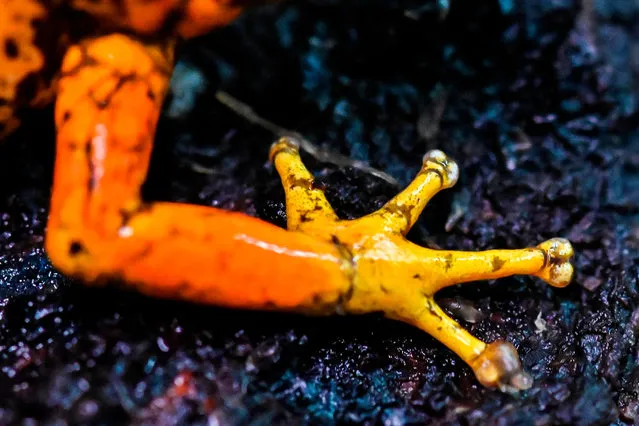
A leg of a “diablito” frog (Oophaga sylvatica) is photographed in a laboratory at a laboratory in the zoo of Cali, Colombia, on July 19, 2019. Colombia is the second country with the largest number of amphibians in the world after Brazil. More than 40% of amphibian species worldwide are in danger of extinction. (Photo by Luis Robayo/AFP Photo)

A leg of a “diablito” frog (Oophaga sylvatica) is photographed in a laboratory at a laboratory in the zoo of Cali, Colombia, on July 19, 2019. Colombia is the second country with the largest number of amphibians in the world after Brazil. More than 40% of amphibian species worldwide are in danger of extinction. (Photo by Luis Robayo/AFP Photo)
Details
28 Nov 2020 00:03:00