Loading...
Done
A chimpanzee looks in the direction of a camera at the Gut Aiderbichl Sanctuary for Traumatized Chimpanzees and other Primates in Gaenserndorf, near Vienna, 17 September 2018. 34 former laboratory chimpanzees of former Austrian pharmaceutical company Immuno AG spend their lives at the Gut Aiderbichl Sanctuary for Traumatized Chimpanzees and other Primates since 2009. U.S.-based Baxter International Inc. took over the Immuno AG in 1996, banned experiments with primates and rebuilt a former safari park for the Gut Aiderbichl Sanctuary for Traumatized Chimpanzees and other Primates. After three decades in captivity in too small cages, the chimpanzees, most of them came from Sierra Leone as cubs, have species-appropriate indoor and outdoor enclosures. The financial support by Baxter International Inc. and Austrian officials will end by 2019. (Photo by Christian Bruna/EPA/EFE)

A chimpanzee looks in the direction of a camera at the Gut Aiderbichl Sanctuary for Traumatized Chimpanzees and other Primates in Gaenserndorf, near Vienna, 17 September 2018. 34 former laboratory chimpanzees of former Austrian pharmaceutical company Immuno AG spend their lives at the Gut Aiderbichl Sanctuary for Traumatized Chimpanzees and other Primates since 2009. (Photo by Christian Bruna/EPA/EFE)
Details
23 Sep 2018 00:03:00
A general view of atmosphere at the annual VOLT Festival in Sopron, 208 kms west of Budapest, Hungary on August 16, 2016. (Photo by Rockstar Photographers)

A general view of atmosphere at the annual VOLT Festival in Sopron, 208 kms west of Budapest, Hungary on August 16, 2016. (Photo by Rockstar Photographers)
Details
28 Jul 2017 09:58:00
An urban Opossum covered in light snow visits a suburban Chicago deck on December 10, 2025. (Photo by H Rick Bamman/ZUMA Press Wire/Rex Features/Shutterstock)

An urban Opossum covered in light snow visits a suburban Chicago deck on December 10, 2025. (Photo by H Rick Bamman/ZUMA Press Wire/Rex Features/Shutterstock)
Details
28 Dec 2025 08:41:00
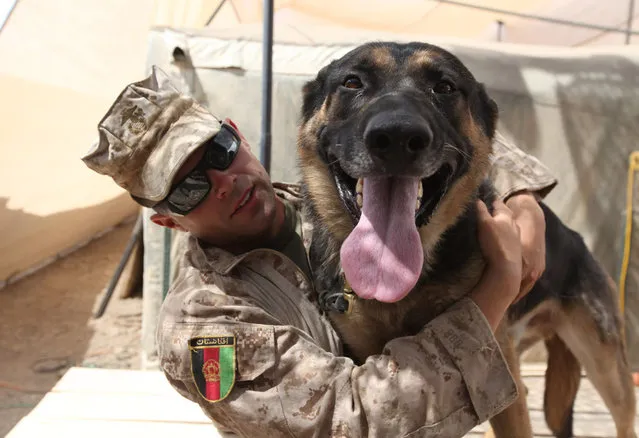
Afghanistan: Dogs of War Part 1

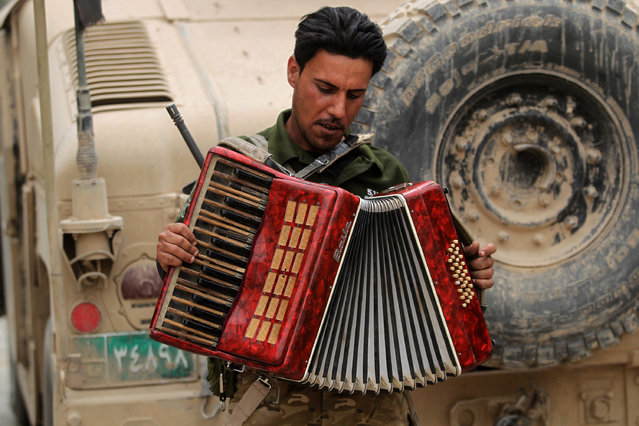
Throughout the course of the long war in Afghanistan, Coalition troops have relied on thousands of military working dogs to help keep them safe, and make their jobs easier. The dogs are trained to detect explosives, to find illegal drugs, to search for missing comrades, or target enemy combatants. Not only are they active on the front lines, but behind the lines they serve as therapy dogs, service dogs, and loyal companions. They also share the same risks as the ground troops, suffering injuries and sometimes death on the battlefields. Gathered here are images of these dogs and their handlers in Afghanistan and back home, from over the past several years, part of the ongoing series here on Afghanistan.
Details
03 Jun 2014 21:02:00
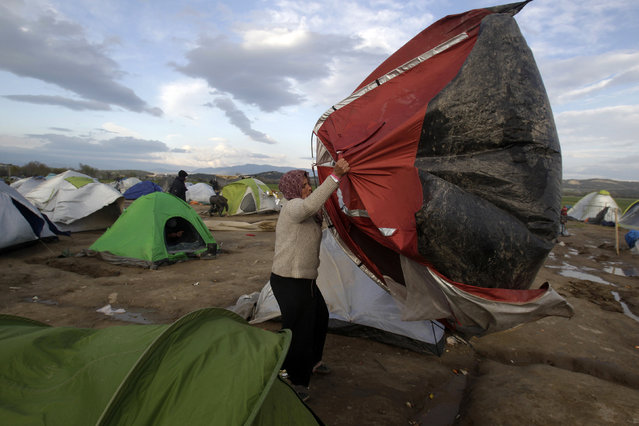
A migrant tries to restrain her tent from strong winds in a makeshift camp for refugees and migrants at the Greek-Macedonian border near the village of Idomeni, Greece, March 24, 2016. (Photo by Alexandros Avramidis/Reuters)

A migrant tries to restrain her tent from strong winds in a makeshift camp for refugees and migrants at the Greek-Macedonian border near the village of Idomeni, Greece, March 24, 2016. (Photo by Alexandros Avramidis/Reuters)
Details
25 Mar 2016 13:35:00
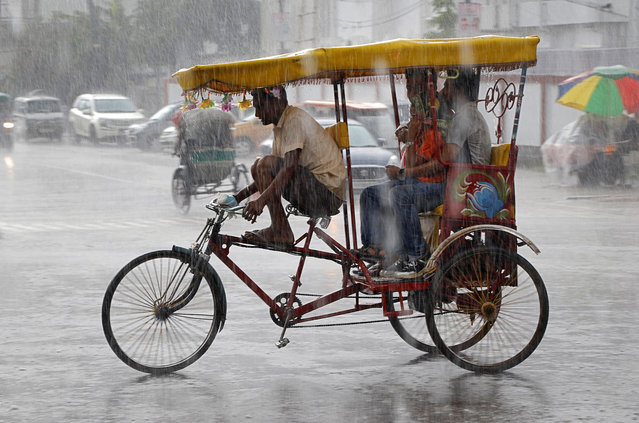
A man transports passengers on an improvised motorized rickshaw during heavy rains in Agartala, India, April 20, 2018. (Photo by Jayanta Dey/Reuters)

A man transports passengers on an improvised motorized rickshaw during heavy rains in Agartala, India, April 20, 2018. (Photo by Jayanta Dey/Reuters)
Details
03 May 2018 00:01:00
Leonhard Nienbling is shown with his 6-month old pet baboon Jackl, who holds a 6-month old kitten, its playmate, June 29, 1952. Niebling has quite an animal collection at his home in Zirndorf, Germany. (Photo by Heinrich Sanden/AP Photo)

Leonhard Nienbling is shown with his 6-month old pet baboon Jackl, who holds a 6-month old kitten, its playmate, June 29, 1952. Niebling has quite an animal collection at his home in Zirndorf, Germany. (Photo by Heinrich Sanden/AP Photo)
Details
26 Sep 2017 09:08:00
Indigenous woven backpacks called guayare are seen in front of a house in Paraitepui village, before a walking excursion to Mount Roraima, near Venezuela's border with Brazil January 13, 2015. A mysterious table-topped mountain on the Venezuela-Brazil border that perplexed 19th century explorers and inspired “The Lost World” novel is attracting ever more modern-day adventurers. (Photo by Carlos Garcia Rawlins/Reuters)

Indigenous woven backpacks called guayare are seen in front of a house in Paraitepui village, before a walking excursion to Mount Roraima, near Venezuela's border with Brazil January 13, 2015. A mysterious table-topped mountain on the Venezuela-Brazil border that perplexed 19th century explorers and inspired “The Lost World” novel is attracting ever more modern-day adventurers. (Photo by Carlos Garcia Rawlins/Reuters)
Details
04 Feb 2015 12:09:00