Loading...
Done
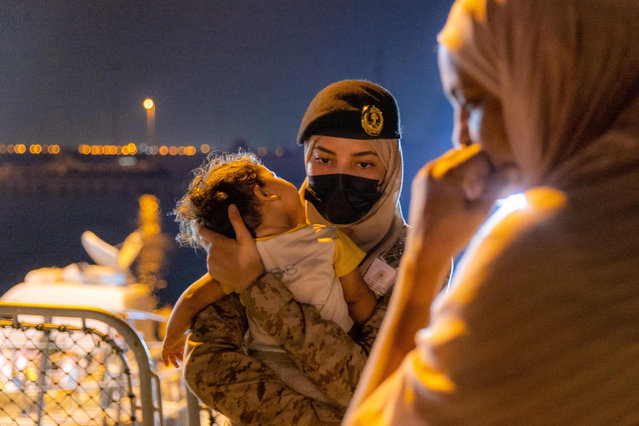
This handout picture provided by the Saudi Media Ministry on April 24, 2023 shows a member of the Saudi Navy Forces carrying an evacuee baby upon arrival at King Faisal navy base in Jeddah, following a rescue operation from Sudan. Elderly women in wheelchairs and babies asleep in their parents' arms were among nearly 200 people from 14 countries who disembarked from a naval frigate in the coastal city of Jeddah on Monday night after daring – and draining – journeys to safety. (Photo by SPA/AFP Photo)

This handout picture provided by the Saudi Media Ministry on April 24, 2023 shows a member of the Saudi Navy Forces carrying an evacuee baby upon arrival at King Faisal navy base in Jeddah, following a rescue operation from Sudan. Elderly women in wheelchairs and babies asleep in their parents' arms were among nearly 200 people from 14 countries who disembarked from a naval frigate in the coastal city of Jeddah on Monday night after daring – and draining – journeys to safety. (Photo by SPA/AFP Photo)
Details
02 Aug 2024 04:15:00
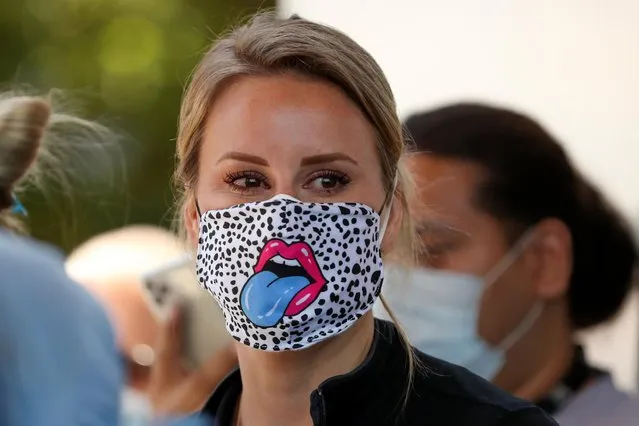
A nurse at St. Joseph's Hospital wears a unique mask as the hospital celebrates the release of a COVID-19 patient after 45 days in their care during the outbreak of the coronavirus disease (COVID-19) in Orange, California, U.S., May 5, 2020. (Photo by Mike Blake/Reuters)

A nurse at St. Joseph's Hospital wears a unique mask as the hospital celebrates the release of a COVID-19 patient after 45 days in their care during the outbreak of the coronavirus disease (COVID-19) in Orange, California, U.S., May 5, 2020. (Photo by Mike Blake/Reuters)
Details
08 May 2020 00:03:00
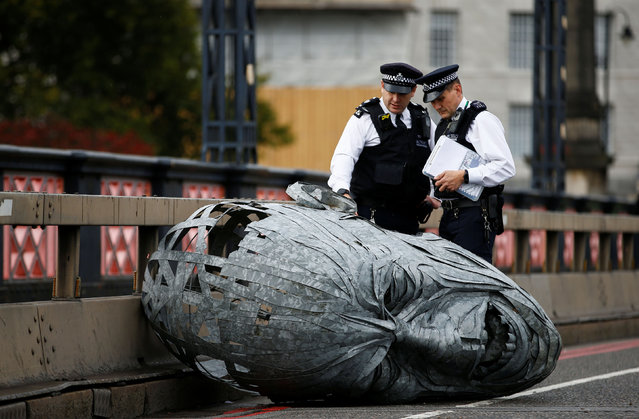
A sculpture made by activists on Lambeth bridge during the Extinction Rebellion protest in London, England on October 7, 2019. (Photo by Henry Nicholls/Reuters)

A sculpture made by activists on Lambeth bridge during the Extinction Rebellion protest in London, England on October 7, 2019. (Photo by Henry Nicholls/Reuters)
Details
29 Jan 2020 00:01:00
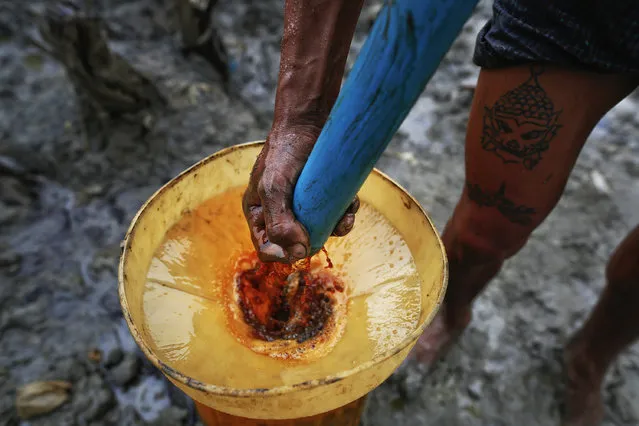
Ko Min, 26, manually extracts oil from one of three 300 feet deep wells he works on in the Minhla township of the Magwe district October 27, 2013. Everyday, Ko Min makes around $30 extracting crude oil from three small wells after he bought rights to use them for close to $1000 from a farmer who owns the land. (Photo by Damir Sagolj/Reuters)

Ko Min, 26, manually extracts oil from one of three 300 feet deep wells he works on in the Minhla township of the Magwe district October 27, 2013. Everyday, Ko Min makes around $30 extracting crude oil from three small wells after he bought rights to use them for close to $1000 from a farmer who owns the land. In Myanmar, an impoverished country rich with natural resources, people from poor communities find ways to supplement their income by exploiting such resources, such as the Minhla township, traditionally rich with oil, often using primitive and dangerous methods. (Photo by Damir Sagolj/Reuters)
Details
21 Apr 2014 10:06:00
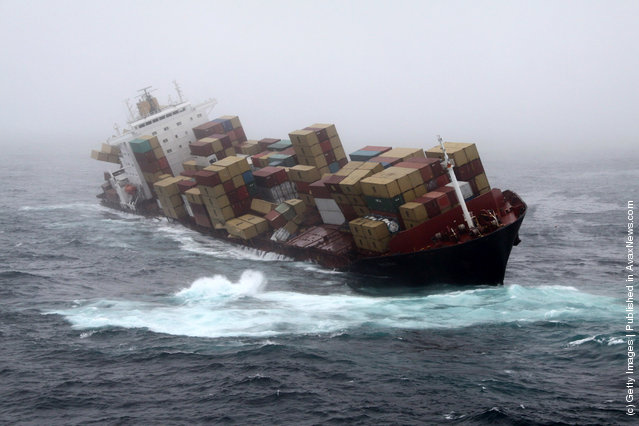
Authorities Fear MV Rena May Break-Up In Rough Seas

In this handout provided by Maritime New Zealand, MV Rena is battered by strong seas as it is stuck on Astrolabe Reef, on November 2, 2011 in Tauranga, New Zealand. The stricken vessel encountered a three metre swell, which led authorities to fear it may finally break up. Rena struck the reef on October 5, and has spilled 350 tonnes of oil, and almost 100 shipping containers. (Photo by Graeme Brown/Maritime New Zealand via Getty Images)
Details
02 Nov 2011 10:50:00
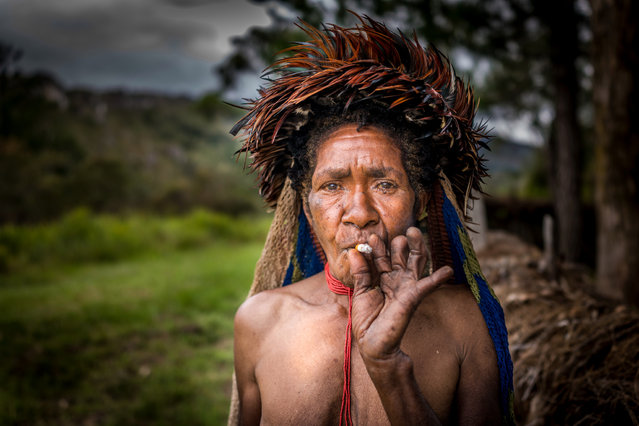
Dani tribeswoman smokes a cigarette and shows her amputated fingers in, Western New Guinea, Indonesia, August 2016. (Photo by Teh Han Lin/Barcroft Images)

Dani tribeswoman smokes a cigarette and shows her amputated fingers in, Western New Guinea, Indonesia, August 2016. Deep in the highlands of Western New Guinea, Indonesia, lives one of the world’s most isolated tribes. Known as the Dani people, the tribe was unwittingly discovered by American philanthropist, Richard Archbold, after an expedition in 1938. (Photo by Teh Han Lin/Barcroft Images)
Details
18 Nov 2016 11:03:00
Details
11 May 2012 03:39:00
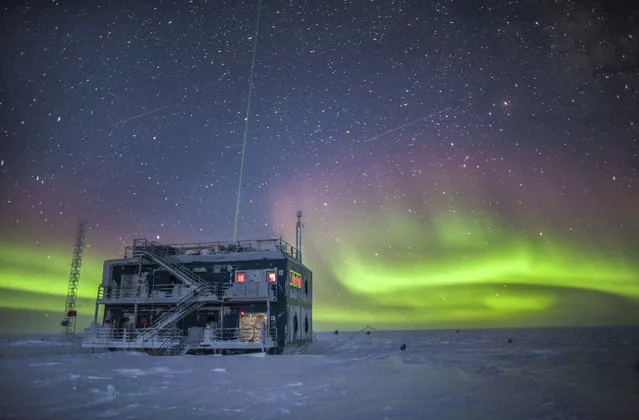
This undated photo provided by NOAA in May 2018 shows aurora australis near the South Pole Atmospheric Research Observatory in Antarctica. When a hole in the ozone formed over Antarctica, countries around the world in 1987 agreed to phase out several types of ozone-depleting chemicals called chlorofluorocarbons (CFCs). Production was banned, emissions fell and the hole shriveled. But according to a study released on Wednesday, May 16, 2018, scientists say since 2013, there’s more of a banned CFC going into the atmosphere. (Photo by Patrick Cullis/NOAA via AP Photo)

This undated photo provided by NOAA in May 2018 shows aurora australis near the South Pole Atmospheric Research Observatory in Antarctica. When a hole in the ozone formed over Antarctica, countries around the world in 1987 agreed to phase out several types of ozone-depleting chemicals called chlorofluorocarbons (CFCs). Production was banned, emissions fell and the hole shriveled. But according to a study released on Wednesday, May 16, 2018, scientists say since 2013, there’s more of a banned CFC going into the atmosphere. (Photo by Patrick Cullis/NOAA via AP Photo)
Details
15 Aug 2018 00:05:00