Loading...
Done
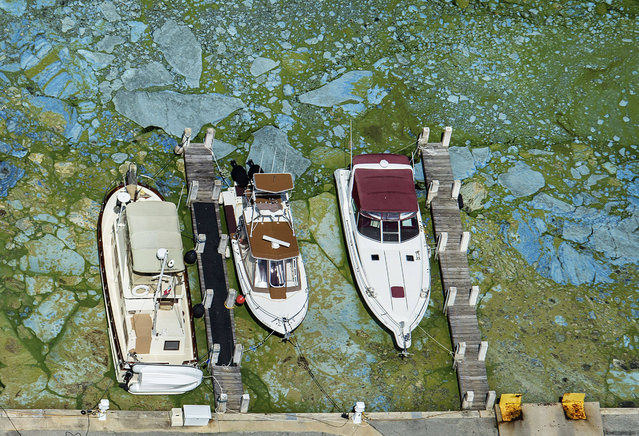
In this June 29, 2016 file photo, boats docked at Central Marine in Stuart, Fla., are surrounded by blue green algae. The 153-mile-long Indian River Lagoon has been plagued by harmful algae blooms. Water quality testing data analyzed by the AP showed the average phosphorous level – a byproduct of fertilizers and human waste that algae thrive on, rose nearly 75 percent between 2000 and 2016. (Photo by Greg Lovett/The Palm Beach Post via AP Photo)

In this June 29, 2016 file photo, boats docked at Central Marine in Stuart, Fla., are surrounded by blue green algae. The 153-mile-long Indian River Lagoon has been plagued by harmful algae blooms. Water quality testing data analyzed by the AP showed the average phosphorous level – a byproduct of fertilizers and human waste that algae thrive on, rose nearly 75 percent between 2000 and 2016. (Photo by Greg Lovett/The Palm Beach Post via AP Photo)
Details
11 May 2017 07:26:00
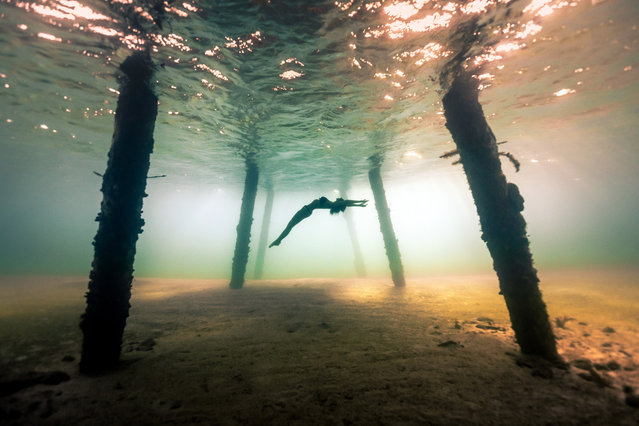
A diver swims in the shallow water under a pier. (Photo by Alex Voyer/Caters News Agency)

A series of beautiful shots of divers swimming near sunken ships have emerged. Alex Voyer, 39, was sailing around the Caribbean on a 60-foot boat when he stopped for a dive. The images show amazing shipwrecks as free divers explore the seabed. Here: A diver swims in the shallow water under a pier. (Photo by Alex Voyer/Caters News Agency)
Details
27 Aug 2018 00:03:00
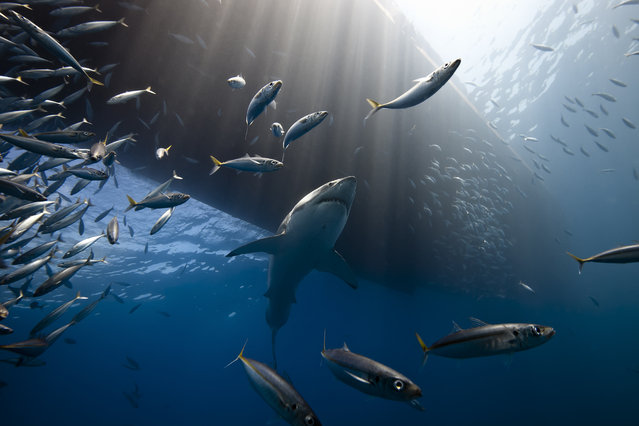
“Great White Shark of Guadalupe Island”. A great white shark very quiet under the boat and a lot of fish. The sun ray lighting the head of the shark. Location: Guadalupe Island, Mexico. (Photo and caption by Marc Henauer/National Geographic Traveler Photo Contest)

“Great White Shark of Guadalupe Island”. A great white shark very quiet under the boat and a lot of fish. The sun ray lighting the head of the shark. Location: Guadalupe Island, Mexico. (Photo and caption by Marc Henauer/National Geographic Traveler Photo Contest)

ATTENTION! All pictures are presented in high resolution. To see Hi-Res images – just TWICE click on any picture. In other words, click small picture – opens the BIG picture. Click BIG picture – opens VERY BIG picture.
Details
04 Jul 2013 09:49:00
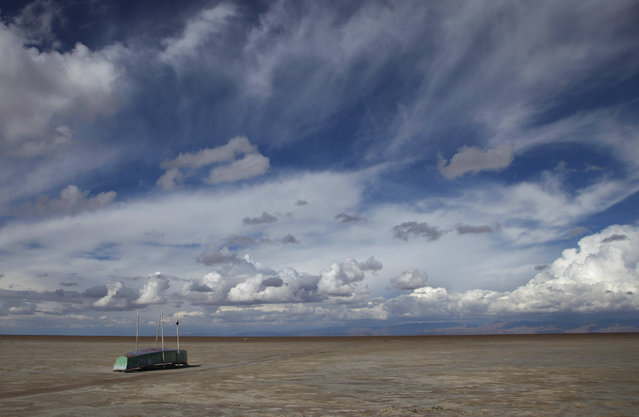
In this January 12, 2016 photo, an abandoned boat lies on the dried up lake bed of Lake Poopo, on the outskirts of Untavi, Bolivia. Drought caused by the recurrent El Nino meteorological phenomenon is considered the main driver of the lake's demise. Along with glacial melting, authorities say another factor is the diversion of water from Poopo's tributaries, mostly for mining but also for agriculture. (Photo by Juan Karita/AP Photo)

In this January 12, 2016 photo, an abandoned boat lies on the dried up lake bed of Lake Poopo, on the outskirts of Untavi, Bolivia. Drought caused by the recurrent El Nino meteorological phenomenon is considered the main driver of the lake's demise. Along with glacial melting, authorities say another factor is the diversion of water from Poopo's tributaries, mostly for mining but also for agriculture. (Photo by Juan Karita/AP Photo)
Details
21 Jan 2016 12:33:00
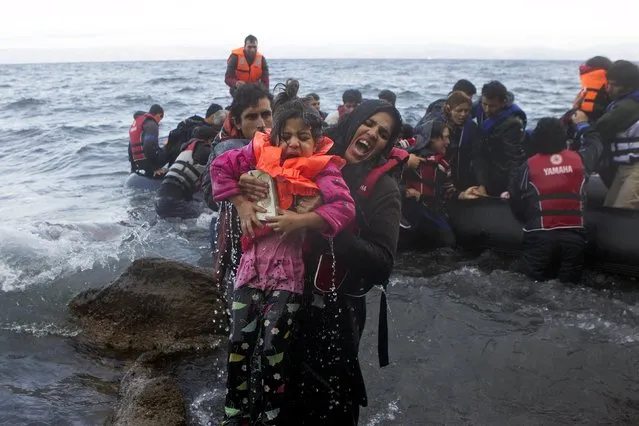
A migrant woman pulls a girl out of the water as refugees and migrants arrive on an overcrowded dinghy in rough sea on the Greek island of Lesbos, after crossing a part of the Aegean Sea from the Turkish coast, October 2, 2015. A record number of at least 430,000 refugees and migrants have taken rickety boats across the Mediterranean to Europe this year, 309,000 via Greece, according to International Organization for Migration figures. (Photo by Dimitris Michalakis/Reuters)

A migrant woman pulls a girl out of the water as refugees and migrants arrive on an overcrowded dinghy in rough sea on the Greek island of Lesbos, after crossing a part of the Aegean Sea from the Turkish coast, October 2, 2015. A record number of at least 430,000 refugees and migrants have taken rickety boats across the Mediterranean to Europe this year, 309,000 via Greece, according to International Organization for Migration figures. (Photo by Dimitris Michalakis/Reuters)
Details
05 Oct 2015 08:05:00
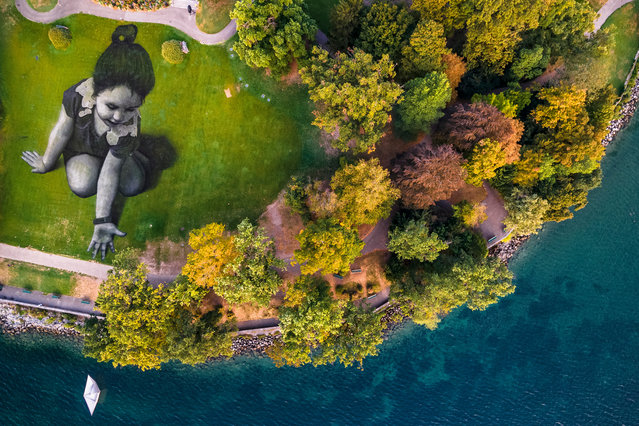
A picture taken with a drone shows the giant landart painting entitled “Message From Future” by French artist Saype in the park “La Perle du Lac” in Geneva, Switzerland, 16 September 2018 (issued 17 September). The artwork covering 5,000 square meters was produced with biodegradable paints made from natural pigments. The artist called the little girl “Future” as a symbol of the generations from the future and the small origami boats that she drops into Lake Geneva aims to represent a message of hope sent to the world. (Photo by Valentin Flauraud/EPA/EFE)

A picture taken with a drone shows the giant landart painting entitled “Message From Future” by French artist Saype in the park “La Perle du Lac” in Geneva, Switzerland, 16 September 2018 (issued 17 September). The artwork covering 5,000 square meters was produced with biodegradable paints made from natural pigments. The artist called the little girl “Future” as a symbol of the generations from the future and the small origami boats that she drops into Lake Geneva aims to represent a message of hope sent to the world. (Photo by Valentin Flauraud/EPA/EFE)
Details
19 Oct 2018 00:01:00
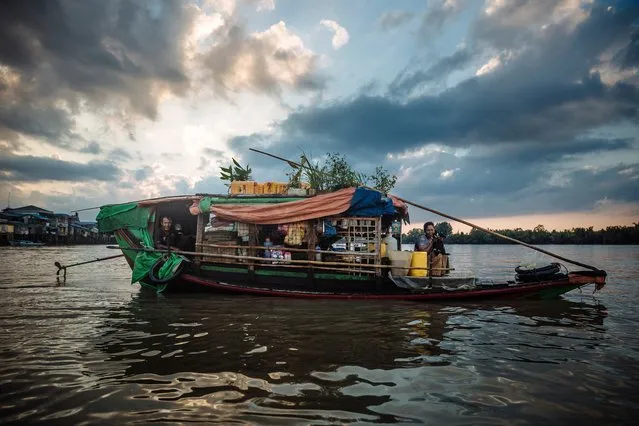
Tin and Naing win live on a small boat which they sail throughout the Delta region in Myanmar. The former gardeners once had a home on land but it was destroyed when a powerful cyclone ravaged the area in 2008. Since then, the couple have not been able to afford to rebuild their home, so they live on the boat from which they sell fish paste to make a living. (Photo by Muse Mohammed/IOM)

The ferocity of crises worldwide is forcing a record number of people to flee their homes, seeking some form of safety within their own country or across international borders. There are 65.3 million displaced people worldwide, including 21.3 million refugees. Most have lost their homes to armed conflict or natural disasters but other factors, such as extreme poverty and climate change, also drive displacement. The International Organisation for Migration commissioned photojournalist Muse Mohammed to document the plight of the displaced. (Photo by Muse Mohammed/IOM)
Details
02 Jan 2017 12:04:00
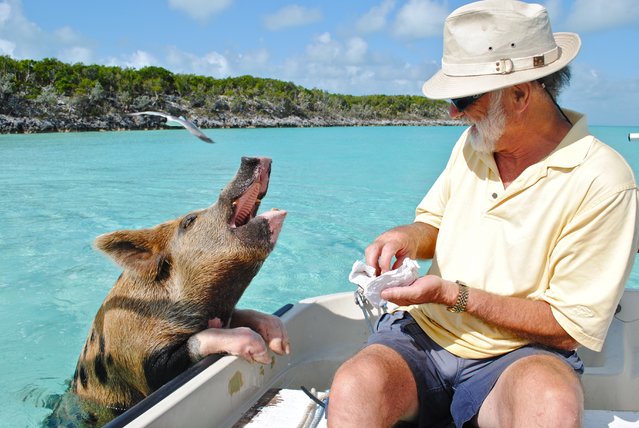
“So you're on a boat in Bahamas and then this pig swims by begging for food”. (Photo and caption by Lisa Larsen/Public Domain)

The Bahamas, the Commonwealth nation of hundreds of islands roughly the size of Connecticut and with population of just a bit over Anaheim, is known for its crystal waters and pristine beaches. This is possibly one of the world’s most beautiful havens of nature, yet people are coming here to see pigs. It is unclear when the pigs first appeared on Exuma Island or where they come from. There’s talk about a daring escape from a shipwreck, or sailors releasing the swine on purpose. In all probability, there were no pigs on this tropical paradise before European settlers came, so their mere presence is the work of human. The intriguing feat of nature, however, is that this population of pigs developed a fine aptitude for swimming. Here: “So you're on a boat in Bahamas and then this pig swims by begging for food”. (Photo and caption by Lisa Larsen/Public Domain)
Details
03 Sep 2015 11:53:00