Loading...
Done
What 200 Calories Looks Like In Different Foods Part 2

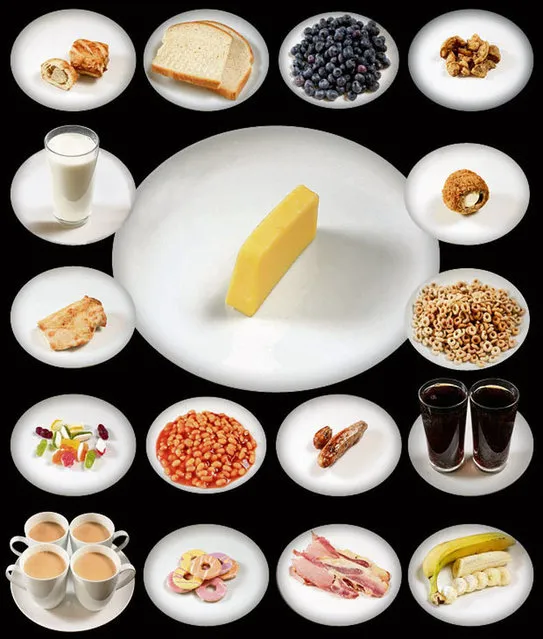
Some foods have significantly more Calories than others but what does the difference actually look like. Each of the photographs below represents 200 Calories of the particular type of food; the images are sorted from low to high calorie density. When you consider that an entire plate of broccoli contains the same number of Calories as a small spoonful of peanut butter, you might think twice the next time you decide what to eat. According to the U.S. Department of Agriculture, the average adult needs to consume about 2000 – 2500 Calories to maintain their weight. In other words, you have a fixed amount of Calories to “spend” each day; based on the following pictures, which would you eat?


See Also: Ppart 1 _ Part 3
Details
01 Aug 2014 11:30:00
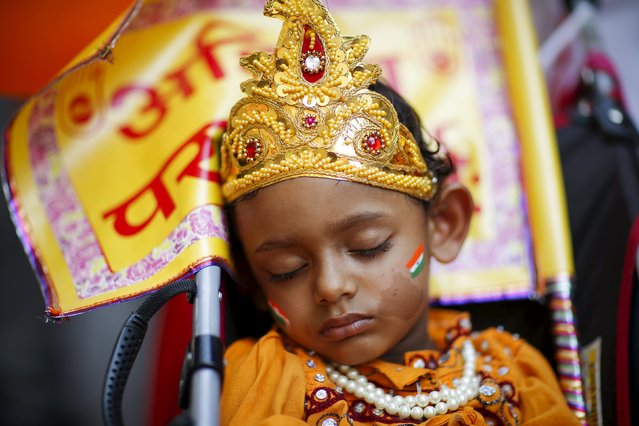
A child falls sleep while people take part in the 35th India Day Parade in New York August 16, 2015. (Photo by Eduardo Munoz/Reuters)

A child falls sleep while people take part in the 35th India Day Parade in New York August 16, 2015. (Photo by Eduardo Munoz/Reuters)
Details
17 Aug 2015 11:13:00
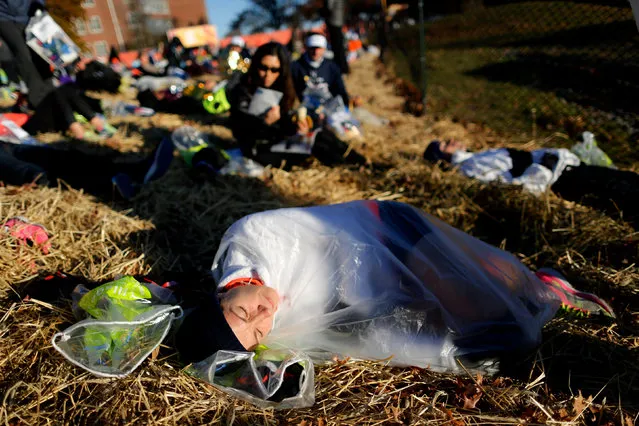
Runners sleep before competing in the 2016 New York City Marathon in the Manhattan borough of New York City, NY, U.S. November 6, 2016. (Photo by Eduardo Munoz/Reuters)

Runners sleep before competing in the 2016 New York City Marathon in the Manhattan borough of New York City, NY, U.S. November 6, 2016. (Photo by Eduardo Munoz/Reuters)
Details
07 Nov 2016 11:48:00
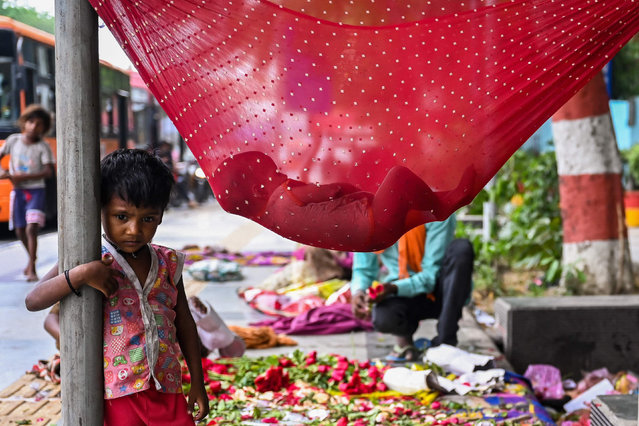
A child sleeps inside a makeshift hammock made of a saree which is a tradition Indian costume worn by women, along a road in New Delhi on August 19, 2021. (Photo by Sajjad Hussain/AFP Photo)

A child sleeps inside a makeshift hammock made of a saree which is a tradition Indian costume worn by women, along a road in New Delhi on August 19, 2021. (Photo by Sajjad Hussain/AFP Photo)
Details
24 Aug 2021 08:16:00
Everyday Objects Into Cute Characters By Gilbert Legrand Part 2

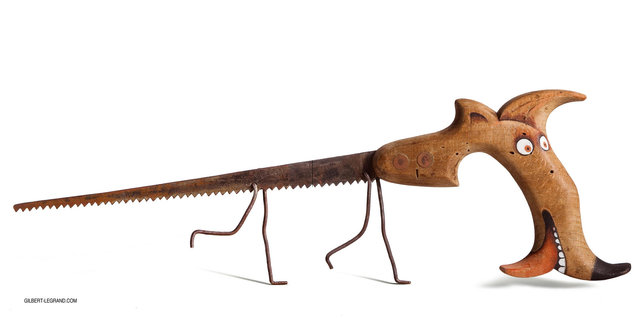
French artist Gilbert Legrand’s new series takes everyday objects like corkscrews, tape measures, and more and turns them into hilariously cute characters that almost make you forget their original purpose. Skillfully using each object’s natural shape, he crafts a character full of whimsy and personality. Each is painted to detail, with even the tiniest of characters bearing an expression which leaves no doubt as to their feelings about the situation. It truly takes a talented hand and imagination to turn paint brushes and zippers into humorous characters with surprisingly huge personalities.


See Also: Psrt 1 _ Part 3
Details
10 Jul 2014 11:08:00


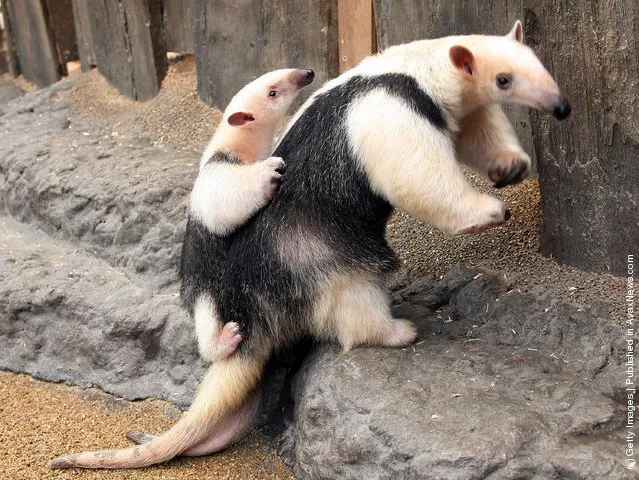
“The Southern Tamandua, Collared Anteater or Lesser Anteater (Tamandua tetradactyla) is a species of anteater from South America. It is a solitary animal, found in many habitats from mature to highly disturbed secondary forests and arid savannas. It feeds on ants, termites and bees. It has very strong foreclaws that can be used to break insect nests or to defend itself”. – Wikipedia

Photo: A three-month-old baby Southern Tamandua “Konbu” lies on its mother Tae's back at Sunshine International Aquarium on July 7, 2009 in Tokyo, Japan. Baby Southern Tamandua feels safe and comfortable holding onto something and normally stays on the mother's back until around 3 months old. (Photo by Junko Kimura/Getty Images)
Details
19 May 2011 10:31:00
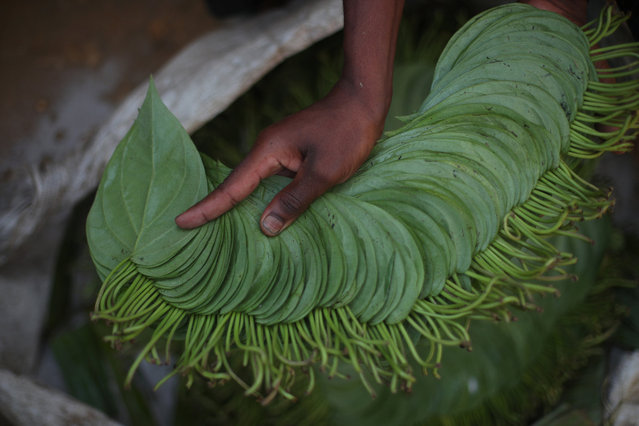
Faruk, 17, a Rohingya refugee trader holds betel leaves which are on sale at a stall in Palong Khali refugee camp near Cox's Bazar, Bangladesh, November 3, 2017. He left his village in Myanmar when the military opened fire towards the Rohingya. “I buy this betel leaf from Palong Khali market, in one bundle there are 160 pieces, I buy it for 80 taka and I sell it for 100 taka. Bangladeshi's and I sell for the same rate in the camp. Outside in the local market it is 80 taka per bundle. My problem is that I don't have money so I can't buy anything to eat, I can't buy fish to eat”, he said. (Photo by Hannah McKay/Reuters)

Faruk, 17, a Rohingya refugee trader holds betel leaves which are on sale at a stall in Palong Khali refugee camp near Cox's Bazar, Bangladesh, November 3, 2017. He left his village in Myanmar when the military opened fire towards the Rohingya. “I buy this betel leaf from Palong Khali market, in one bundle there are 160 pieces, I buy it for 80 taka and I sell it for 100 taka (1 Bangladeshi Taka = 0.012 US Dollar). Bangladeshi's and I sell for the same rate in the camp. Outside in the local market it is 80 taka per bundle. My problem is that I don't have money so I can't buy anything to eat, I can't buy fish to eat”, he said. (Photo by Hannah McKay/Reuters)
Details
27 Nov 2017 08:54:00
Vinyl Clock By Pavel Sidorenko Part 2

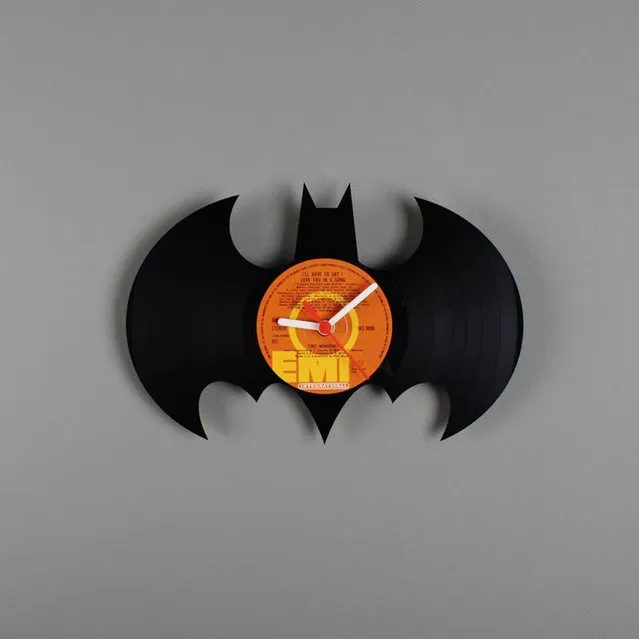
Pavel Sidorenko is an award winning Estonian designer who was born in 1980 in Tallinn and studied product design at Estonian Academy of Arts and Graduated in 2006. Not only does he incorporate pragmatic necessity, but also transmits an emotional qualities within the everyday environment. His fantastic collection of Re Vinyl designs are a result of upcycling a product fashioned from old vinyl records. Beautifully crafted and working with a range of themes from scenography to animal creatures, there is sure to be something for everyone with these stylish selection of recycled vinyl clocks!


See also: Part 1
Details
01 Mar 2014 11:09:00