Loading...
Done
Chris Hondros RetrospectivePart2

Chris Hondros, a Getty Images photographer, was fatally wounded on April 20, 2011, in a mortar attack by government forces while covering the civil war in Libya. Hondros' work is woven in our history as he covered everything from politics to marathons. A new film will focus on his life as told through his images. Here's a look at some of his finest and final work. Some of these images are graphic in nature
Details
23 Aug 2013 17:38:00
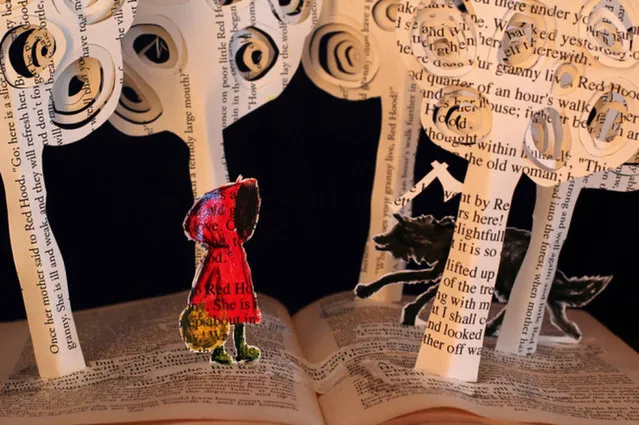
Book Sculpture by Justin Rowe

Justin Rowe creates these magical sculptures from hand cut books and found images with the help of just a touch of gum arabic and 24 carat gold or palladium leaf. Some are very much in the realms of fairy stories like the one above, but my favourites are the stories below where Justin’s skill brings the book’s own illustrations to life.
Details
18 Nov 2013 12:58:00
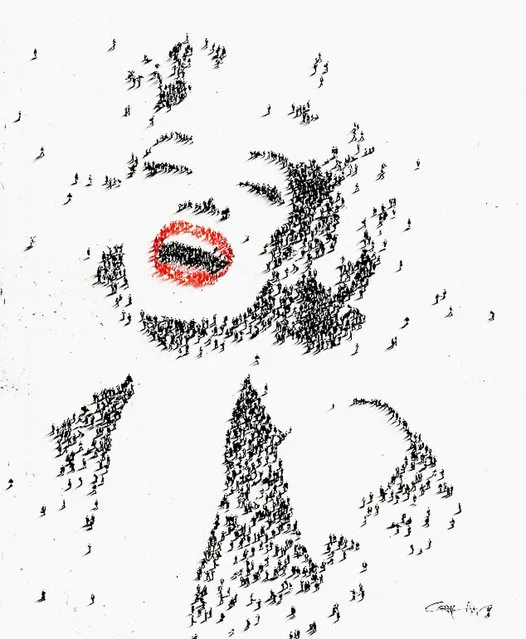
Craig Alan  By Famous Faces In A Crowd

Craig Alan was born in 1971 in San Bernardino, California and has always been attracted to the artistic side of life. Craig Alan’s earliest experimentation was street portraiture, helping him perfect his flair for replicating the human figure and afforded the budding artist a sense of economic autonomy.
Details
16 Jan 2013 15:48:00


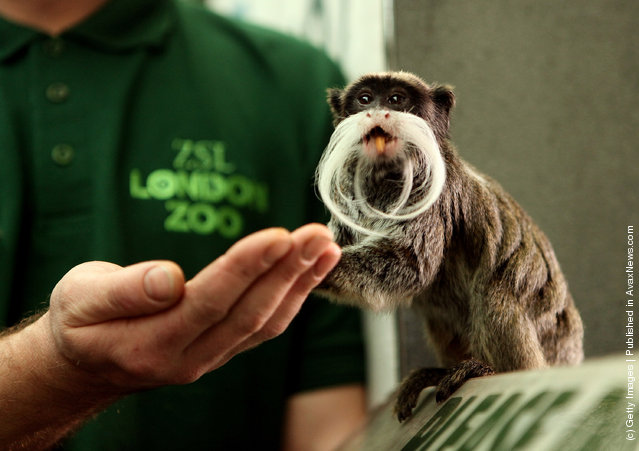
An Emperor Tamarin monkey, native to the Amazon rainforest, experiences its new home in the living rainforest enclosure at ZSL London Zoo on March 25, 2010 in London, England. Entitled “Rainforest Life” the large temperature and humidity controlled bio-dome is home to free-roaming monkeys, sloths, tree anteaters and tropical birds. The exhibit, which is opening in the International Year of Biodiversity, will be open to the public from March 27, 2010. (Photo by Oli Scarff/Getty Images)
Details
19 Apr 2011 11:48:00
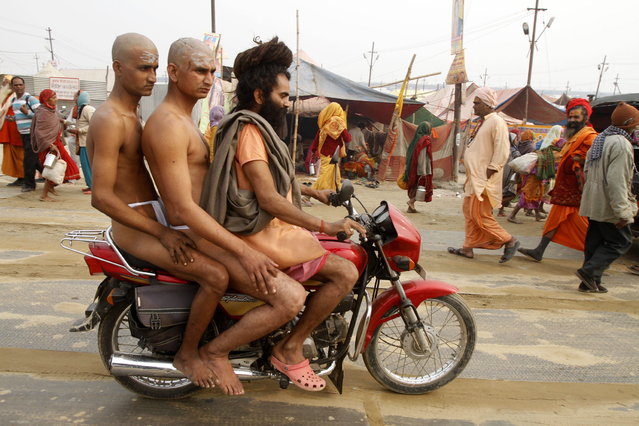
Two Hindu holy men of the Juna Akhara sect  are being take on a motorcycle by their teacher as they got delayed for a rituals that are believed to rid them of all ties in this life and dedicate themselves to serving God as a “Naga” or naked holy men, at Sangam, the confluence of the Ganges and Yamuna River during the Maha Kumbh festival in Allahabad, India, Wednesday, February 6, 2013. (Photo by Rajesh Kumar Singh/AP Photo)

Two Hindu holy men of the Juna Akhara sect are being take on a motorcycle by their teacher as they got delayed for a rituals that are believed to rid them of all ties in this life and dedicate themselves to serving God as a “Naga” or naked holy men, at Sangam, the confluence of the Ganges and Yamuna River during the Maha Kumbh festival in Allahabad, India, Wednesday, February 6, 2013. The significance of nakedness is that they will not have any worldly ties to material belongings, even something as simple as clothes. This ritual that transforms selected holy men to Naga can only be done at the Kumbh festival. (Photo by Rajesh Kumar Singh/AP Photo)
Details
07 Feb 2013 10:11:00
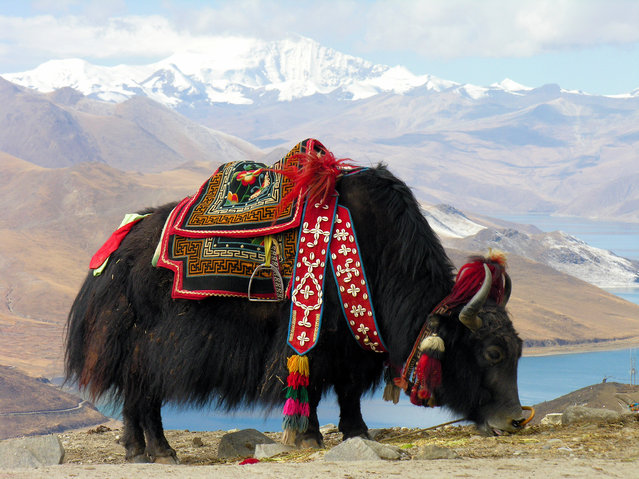
Yak near Yamdrok lake, Tibet. It is a long-haired bovinae found throughout the Himalayan region of south Central Asia, the Tibetan Plateau and as far north as Mongolia and Russia. The Tibetan economy is dominated by subsistence agriculture. Due to limited arable land, the primary occupation of the Tibetan Plateau is raising livestock, such as sheep, cattle, goats, camels, yaks, dzo, and horses. The Tibetan yak is an integral part of Tibetan life. (Photo by Dennis Jarvis)

Yak near Yamdrok lake, Tibet. It is a long-haired bovinae found throughout the Himalayan region of south Central Asia, the Tibetan Plateau and as far north as Mongolia and Russia. The Tibetan economy is dominated by subsistence agriculture. Due to limited arable land, the primary occupation of the Tibetan Plateau is raising livestock, such as sheep, cattle, goats, camels, yaks, dzo, and horses. The Tibetan yak is an integral part of Tibetan life. (Photo by Dennis Jarvis)
Details
10 Jun 2015 10:48:00
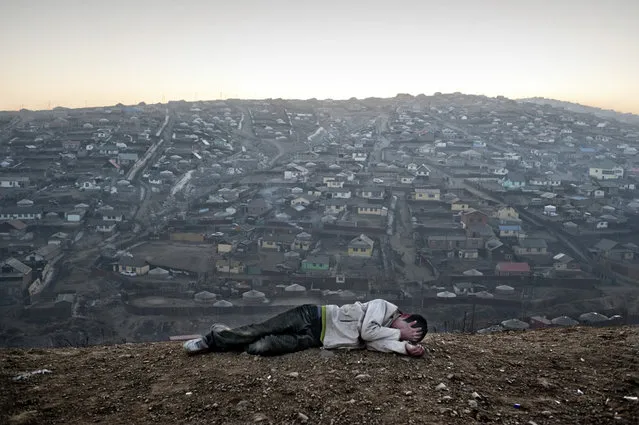
Asia, Mongolia, March 27, 2011. A view of Ulaan Baator over the shoulder of a slumbering drunk. Alcoholism is a huge problem in the city, home to almost half of Mongolia's people. The capital's population has doubled in the past two years, expanding outward in a haphazard sprawl, and many inhabitants live in slums known as the “Gher District”. (Photo by Alessandro Grassani)

“Environmental Migrants: The Last Illusion” by photographer Alessandro Grassani, documents the life of people in Kenya, Mongolia and Bangladesh who migrate to escape environmental stresses to the city of their own countries in hopes for a better life. Here: Asia, Mongolia, March 27, 2011. A view of Ulaan Baator over the shoulder of a slumbering drunk. Alcoholism is a huge problem in the city, home to almost half of Mongolia's people. The capital's population has doubled in the past two years. High levels of unemployment and poverty await herders who abandon rural areas and arrive in the city, illiterate and untrained in any skills necessary for urban jobs. (Photo by Alessandro Grassani)
Details
21 Jul 2015 10:10:00
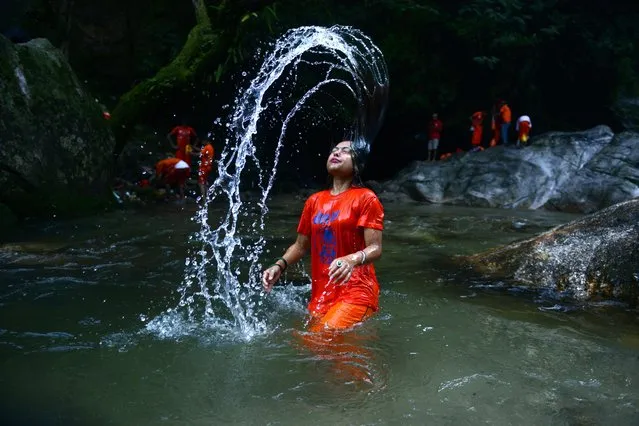
A Nepalese Hindu devotee bathes in the Bagmati River on her way to the Pashupatinath Temple to offer prayers to Lord Shiva, Hindu god of destruction during Shravan festivities in Sundarijal, on the outskirts of Kathmandu on August 3, 2015. According to the Nepali calendar, Shravan is considered the holiest month of the year with each Monday of the month known as Shravan Somvar when worshippers offer prayers for a happy and prosperous life. (Photo by Prakash Mathema/AFP Photo)

A Nepalese Hindu devotee bathes in the Bagmati River on her way to the Pashupatinath Temple to offer prayers to Lord Shiva, Hindu god of destruction during Shravan festivities in Sundarijal, on the outskirts of Kathmandu on August 3, 2015. According to the Nepali calendar, Shravan is considered the holiest month of the year with each Monday of the month known as Shravan Somvar when worshippers offer prayers for a happy and prosperous life. (Photo by Prakash Mathema/AFP Photo)
Details
04 Aug 2015 12:46:00