Loading...
Done
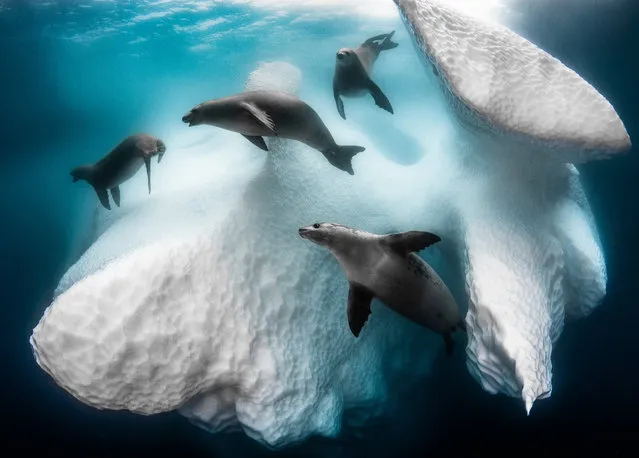
Underwater photographer of the year 2020 and wide angle category winner: Frozen Mobile Home by Greg Lecoeur (France) in the Antarctic peninsula, Antarctica. Crabeater seals swim around an iceberg. These massive and mysterious habitats are dynamic kingdoms that support marine life. As they swing and rotate slowly through polar currents, icebergs fertilise the oceans by carrying nutrients from land that spark blooms of phytoplankton, fundamental to the carbon cycle. (Photo by Greg Lecoeur/Underwater Photographer of the Year 2020)

Underwater photographer of the year 2020 and wide angle category winner: Frozen Mobile Home by Greg Lecoeur (France) in the Antarctic peninsula, Antarctica. Crabeater seals swim around an iceberg. These massive and mysterious habitats are dynamic kingdoms that support marine life. As they swing and rotate slowly through polar currents, icebergs fertilise the oceans by carrying nutrients from land that spark blooms of phytoplankton, fundamental to the carbon cycle. (Photo by Greg Lecoeur/Underwater Photographer of the Year 2020)
Details
28 Feb 2020 00:05:00
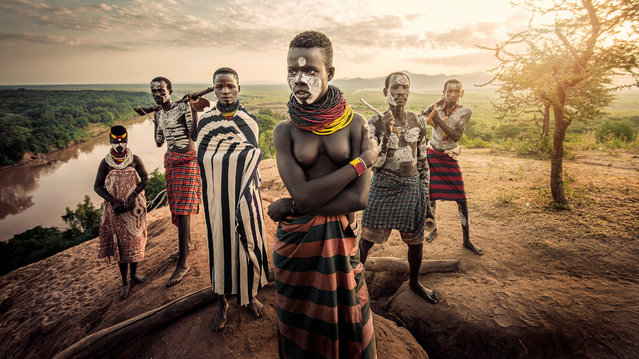
“People of the River”. This is a Karo tribe family; father, mother, two sisters and two brothers. The tribe, who live along the Omo River in east Africa, incorporate rich symbolism into their rituals by using ornate body art, headdresses and body scarification to express beauty and significance. (Photo by Jatenipat Ketpradit/International Portrait Photographer of the Year)

“People of the River”. This is a Karo tribe family; father, mother, two sisters and two brothers. The tribe, who live along the Omo River in east Africa, incorporate rich symbolism into their rituals by using ornate body art, headdresses and body scarification to express beauty and significance. (Photo by Jatenipat Ketpradit/International Portrait Photographer of the Year)
Details
04 Jul 2021 09:39:00
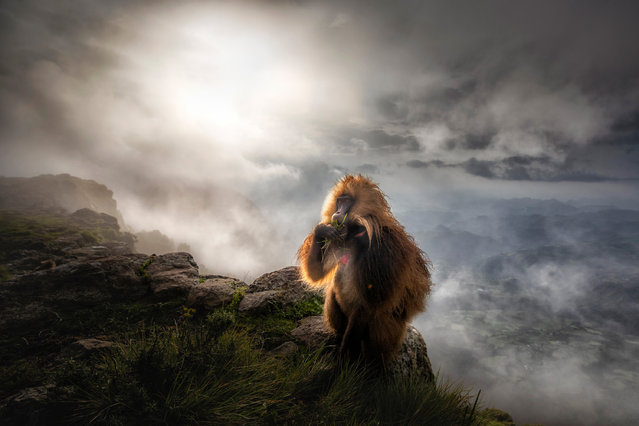
Highly commended, mammals: Gelada after the storm – Marco Gaiotti (Italy). “Gelada baboons are the only monkey species in the world that feed on grasses. They are native to the tableland of Ethiopia. Every morning large family groups wander from their sleeping places in the steep rock face, up to 1,000 metres high, to the feeding grounds at the tablelands. This image clearly depicts their feeding strategy: they pull out bunches of grass, sort the stalks and then lift them to their mouth. This shot was taken towards the end of the rainy season after a heavy storm”. (Photo by Marco Gaiotti/2019 GDT European Wildlife Photographer of the Year)

Highly commended, mammals: Gelada after the storm – Marco Gaiotti (Italy). “Gelada baboons are the only monkey species in the world that feed on grasses. They are native to the tableland of Ethiopia. Every morning large family groups wander from their sleeping places in the steep rock face, up to 1,000 metres high, to the feeding grounds at the tablelands. This image clearly depicts their feeding strategy: they pull out bunches of grass, sort the stalks and then lift them to their mouth. This shot was taken towards the end of the rainy season after a heavy storm”. (Photo by Marco Gaiotti/2019 GDT European Wildlife Photographer of the Year)
Details
31 Oct 2019 00:03:00
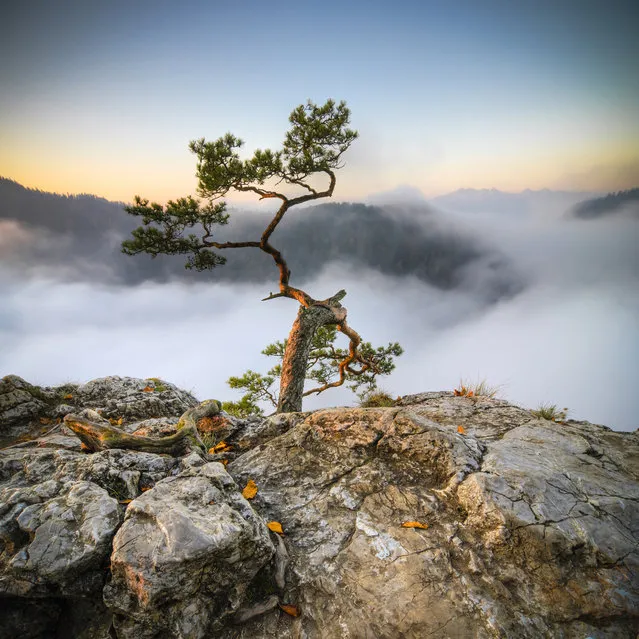
“Sokolica”. Sokolica, Poland. (Photo and caption by Marcin Kęsek/National Geographic Traveler Photo Contest)

“Sokolica”. Sokolica, Poland. (Photo and caption by Marcin Kęsek/National Geographic Traveler Photo Contest)

ATTENTION! All pictures are presented in high resolution. To see Hi-Res images – just TWICE click on any picture. In other words, click small picture – opens the BIG picture. Click BIG picture – opens VERY BIG picture.
Details
25 Jun 2013 09:13:00
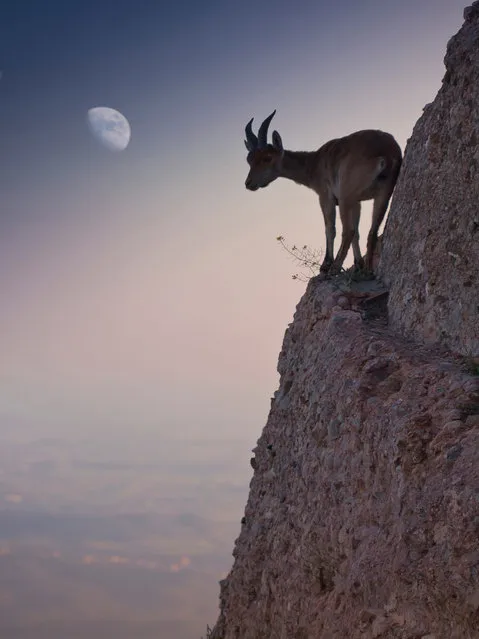
“For a bouquet of flowers”. Photographs made ​​in the last hours of the day. A goat is directed by a dangerous way to eat a small bouquet of flowers. Location: España, Barcelona, Montserrat. (Photo and caption by Renato Lopez Baldo/National Geographic Traveler Photo Contest)

“For a bouquet of flowers”. Photographs made ​​in the last hours of the day. A goat is directed by a dangerous way to eat a small bouquet of flowers. Location: España, Barcelona, Montserrat. (Photo and caption by Renato Lopez Baldo/National Geographic Traveler Photo Contest)

ATTENTION! All pictures are presented in high resolution. To see Hi-Res images – just TWICE click on any picture. In other words, click small picture – opens the BIG picture. Click BIG picture – opens VERY BIG picture.
Details
25 Jun 2013 12:51:00
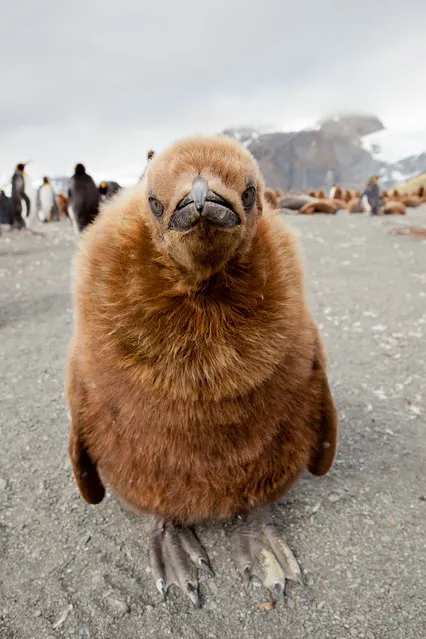
“Cub”. In the colony of penguins in South Georgia. (Photo and caption by Ondrej Zaruba/National Geographic Traveler Photo Contest)

“Cub”. In the colony of penguins in South Georgia. (Photo and caption by Ondrej Zaruba/National Geographic Traveler Photo Contest)

ATTENTION! All pictures are presented in high resolution. To see Hi-Res images – just TWICE click on any picture. In other words, click small picture – opens the BIG picture. Click BIG picture – opens VERY BIG picture.
Details
28 Jun 2013 12:32:00
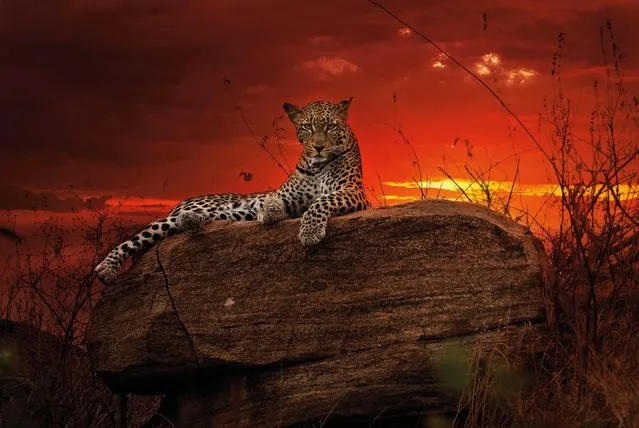
“Wild Africa”. (Photo by Alex Bernasconi)

Award-winning photographer Alex Bernasconi has captured thousands of images – from hiding hippos to wandering zebras – in his travels across Africa. His amazing work features in a new edition of his book Wild Africa. These amazing pictures create a snapshot of the life of some of the planet’s most spectacular animals and natural habitats. Photo: “Wild Africa”. (Photo by Alex Bernasconi)
Details
15 Sep 2013 10:12:00
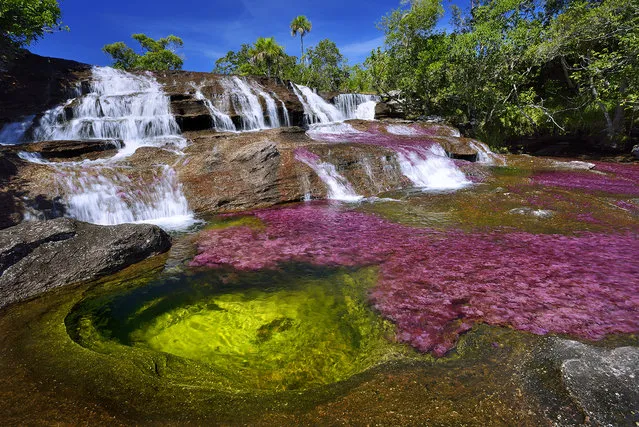
A waterfall is seen at the end of the rainy season, in August, when the water level finally decreases, in the Cano Cristales RIver in the Sierra de la Macarena in Colombia. It has become covered with a bright pink endemic aquatic plant, Macarenia Clavigera. (Photo by Olivier Grunewald)

“El rio mas bonito del Mundo”, the most beautiful river of the world, the “River of five colors”, the “Rainbow River”, or even the “Escaped from Paradise”, are the shimmering appellations that Colombians give to Cano Cristales, a small stream located in the heart of the Macarena National Park, 150 km (93 miles) south of Bogota. Photo: A waterfall is seen at the end of the rainy season, in August, when the water level finally decreases, in the Cano Cristales RIver in the Sierra de la Macarena in Colombia. It has become covered with a bright pink endemic aquatic plant, Macarenia Clavigera. (Photo by Olivier Grunewald)
Details
25 Mar 2014 15:15:00