Loading...
Done
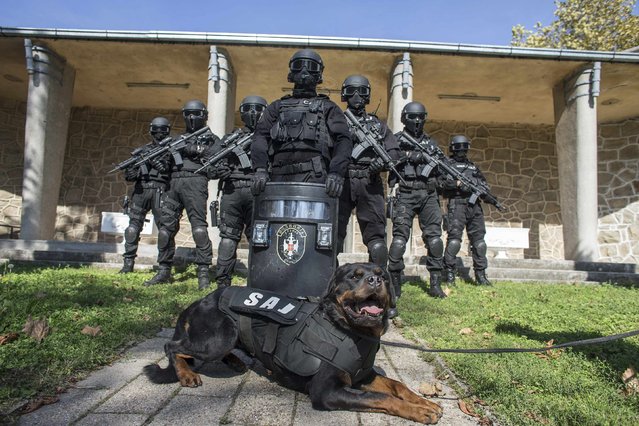
Serbian police officers of the Special Anti-Terrorist Unit pose for a picture in their base outside Belgrade October 8, 2014. (Photo by Marko Djurica/Reuters)

Serbian police officers of the Special Anti-Terrorist Unit pose for a picture in their base outside Belgrade October 8, 2014. When the killing of an unarmed black teenager by a white policeman in Ferguson, Missouri, in August sparked sometimes violent protests, the response of police in camouflage gear and armoured vehicles wielding stun grenades and assault rifles seemed more like a combat operation than a public order measure. Some U.S. police departments have recently acquired U.S. military-surplus hardware from wars abroad, but there are many law enforcers around the world whose rules of engagement also allow the use of lethal force with relatively few restrictions. But for every regulation that gives police wide scope to use firearms, there is another code that sharply limits their use. In Serbia, police may use measures ranging from batons to special vehicles, water cannon and tear gas on groups of people who have gathered illegally and are behaving in a way that is violent or could cause violence, but they may use firearms only when life is endangered. (Photo by Marko Djurica/Reuters)
Details
27 Nov 2014 14:53:00
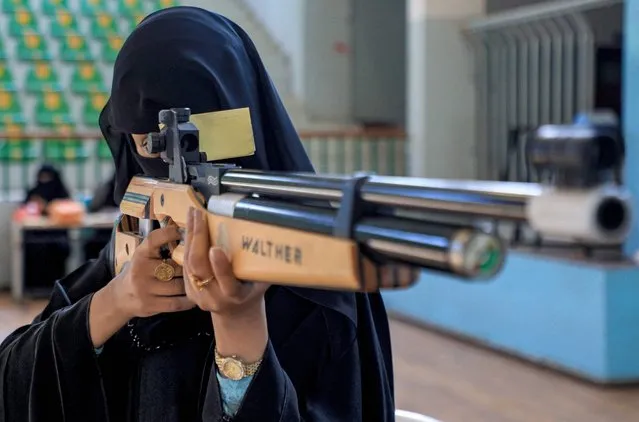
A woman athlete aims an air rifle while competing in a local shooting championship in Yemen's Huthi rebel-held capital Sanaa on January 3, 2023. (Photo by Mohammed Huwais/AFP Photo)

A woman athlete aims an air rifle while competing in a local shooting championship in Yemen's Huthi rebel-held capital Sanaa on January 3, 2023. (Photo by Mohammed Huwais/AFP Photo)
Details
20 Apr 2023 03:27:00
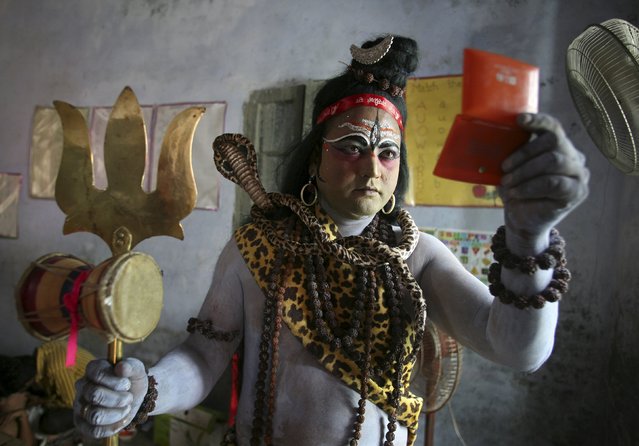
A man dressed as Hindu Lord Shiva looks into the mirror as he gets ready to take part in a religious procession on the eve of Janmashtami festival in Amritsar, India, September 4, 2015. The festival, which marks the birth anniversary of Lord Krishna, will be celebrated across India on Saturday. (Photo by Munish Sharma/Reuters)

A man dressed as Hindu Lord Shiva looks into the mirror as he gets ready to take part in a religious procession on the eve of Janmashtami festival in Amritsar, India, September 4, 2015. The festival, which marks the birth anniversary of Lord Krishna, will be celebrated across India on Saturday. (Photo by Munish Sharma/Reuters)
Details
06 Sep 2015 12:53:00
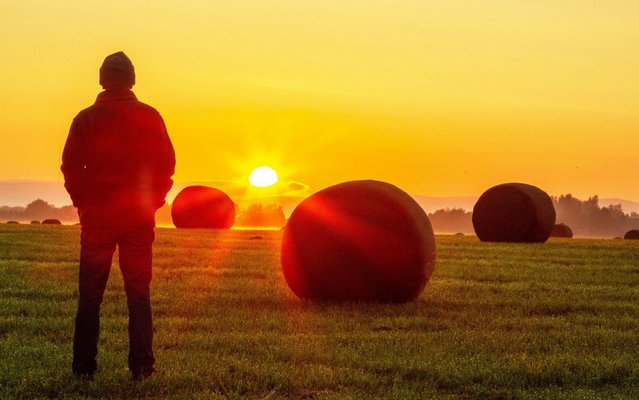
Sunrise over the fields of stemmy grassland in Burscough, Lancashire, UK on September 14, 2020 with wrapped bales of hay prepared for silage, haylage for animal winter feed. (Photo by MediaWorldImages/Alamy Live News)

Sunrise over the fields of stemmy grassland in Burscough, Lancashire, UK on September 14, 2020 with wrapped bales of hay prepared for silage, haylage for animal winter feed. (Photo by MediaWorldImages/Alamy Live News)
Details
21 Oct 2020 00:05:00
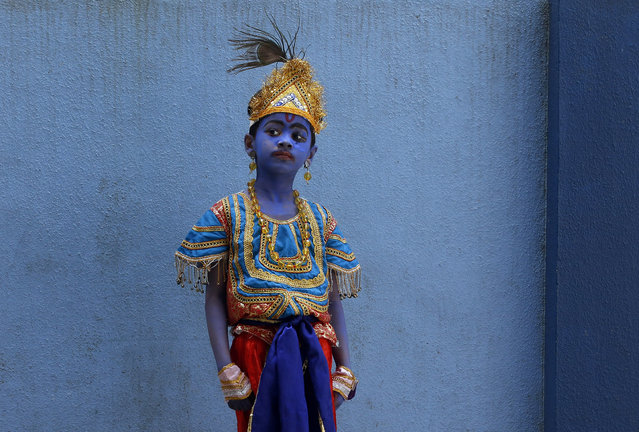
A boy dressed like Hindu Lord Krishna waits to attend celebrations on the eve of Janmashtami at a school in Mumbai, India, Friday, September 4, 2015. The day marks the birth of Krishna. (Photo by Rajanish Kakade/AP Photo)

A boy dressed like Hindu Lord Krishna waits to attend celebrations on the eve of Janmashtami at a school in Mumbai, India, Friday, September 4, 2015. The day marks the birth of Krishna. (Photo by Rajanish Kakade/AP Photo)
Details
05 Sep 2015 12:50:00
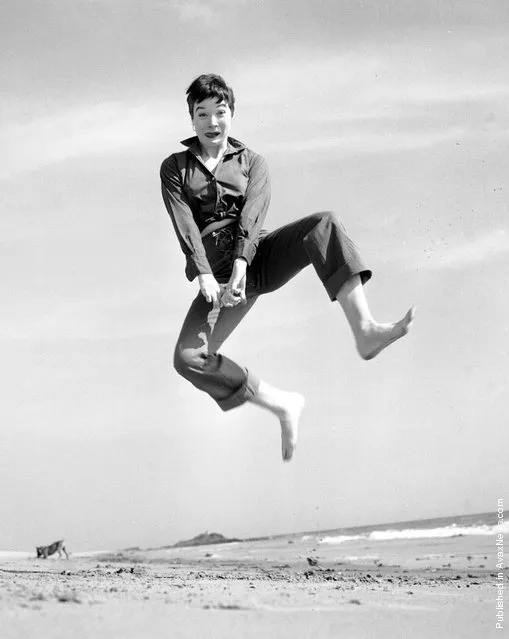
American film and theater actress, singer and dancer Shirley MacLaine. (Photo by Philippe Halsman)

American film and theater actress, singer and dancer Shirley MacLaine. (Photo by Philippe Halsman)
Details
25 Apr 2012 13:28:00
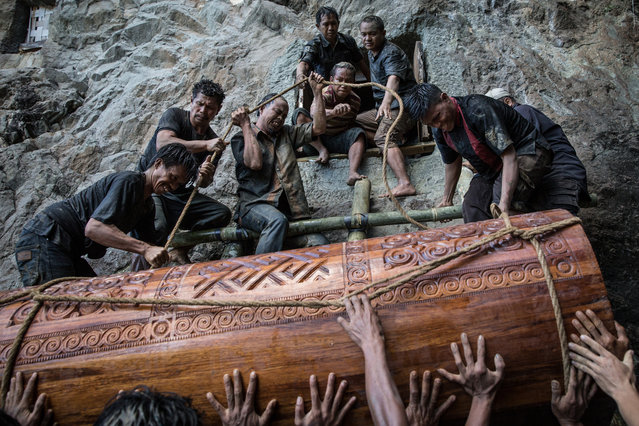
It is said that Torajans are people who “live to die”. For this Indonesian ethnic group, funerals are such extravagant events that they sometimes attract tourists. Families can postpone burials years (and the deceased are considered sick and hosted at home until the funeral) until the family can raise enough money and gather as many relatives as possible. And then it’s a jubilant multiday social event with a parade, dances and animal sacrifices. Agung Parameswara photographed these funerary practices when he traveled to South Sulawesi province, where the Torajans live. But often, their funeral isn’t the last time the dead are seen. In August, crypts are opened, coffins are slid back out and bodies delicately unsheathed. This tender ritual is known as Ma’Nene, which is customarily performed every few years. (Photo by Agung Parameswara/The Washington Post)

It is said that Torajans are people who “live to die”. For this Indonesian ethnic group, funerals are such extravagant events that they sometimes attract tourists. Families can postpone burials years (and the deceased are considered sick and hosted at home until the funeral) until the family can raise enough money and gather as many relatives as possible. And then it’s a jubilant multiday social event with a parade, dances and animal sacrifices. Agung Parameswara photographed these funerary practices when he traveled to South Sulawesi province, where the Torajans live. (Photo by Agung Parameswara/The Washington Post)
Details
06 Oct 2016 09:15:00
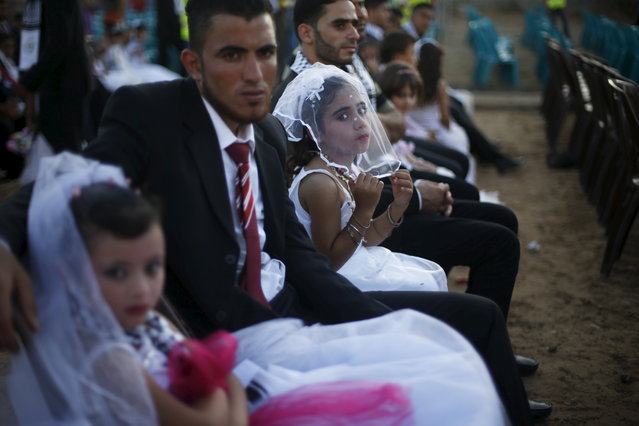
Girls accompany grooms as they sit separate from the brides during a mass wedding for 150 couples in Beit Lahiya town in the northern Gaza Strip July 20, 2015. The wedding was funded by al-Basheer Society for Relief and Development. (Photo by Suhaib Salem/Reuters)

Girls accompany grooms as they sit separate from the brides during a mass wedding for 150 couples in Beit Lahiya town in the northern Gaza Strip July 20, 2015. The wedding was funded by al-Basheer Society for Relief and Development. (Photo by Suhaib Salem/Reuters)
Details
04 Aug 2015 11:36:00