Loading...
Done
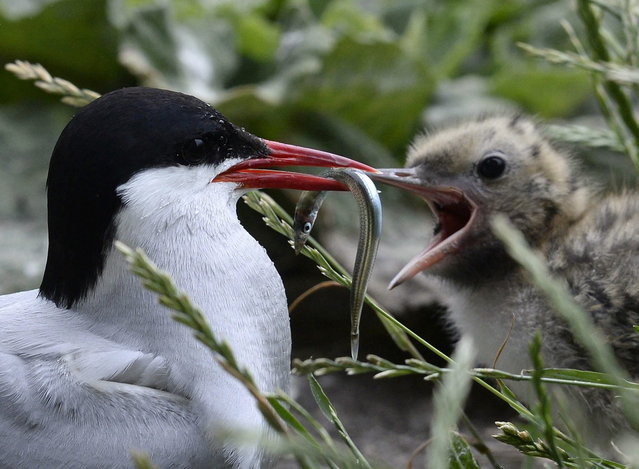
An arctic tern feeds its chick on the Farne Islands off the Northumberland coast, northern England July 8, 2013. (Photo by Nigel Roddis/Reuters)

An arctic tern feeds its chick on the Farne Islands off the Northumberland coast, northern England July 8, 2013. The Farne Islands, which lie off the coast of northeast England, are home to a huge array of wildlife. The islands are owned and protected by the British conservation charity, the National Trust, which says they host some 23 species of seabird, as well as a substantial colony of grey seals, who come to have their pups there in the autumn. Every five years the National Trust carries out a census of the islands' population of puffins, and this year's survey showed there were almost 40,000 nesting pairs on the islands – an 8 percent rise from 2008. (Photo by Nigel Roddis/Reuters)
Details
11 Dec 2013 09:21:00
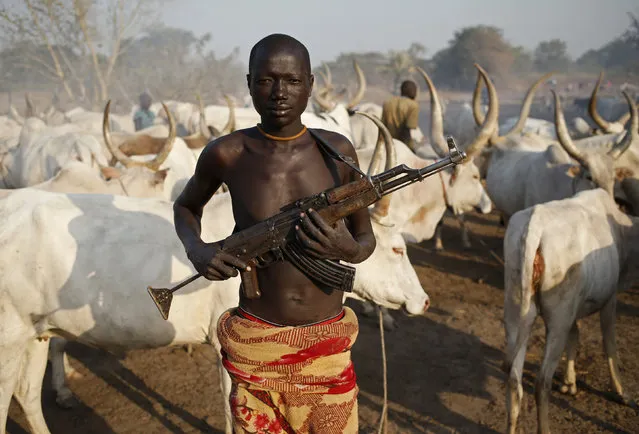
A man from Dinka tribe holds his AK 47 rifle in front of cows in a Dinka cattle herders camp near Rumbek, capital of the Lakes State in central South Sudan December 14, 2013. (Photo by Goran Tomasevic/Reuters)

A man from Dinka tribe holds his AK-47 rifle in front of cows in a Dinka cattle herders camp near Rumbek, capital of the Lakes State in central South Sudan December 14, 2013. (Photo by Goran Tomasevic/Reuters)
Details
02 Jan 2014 12:04:00
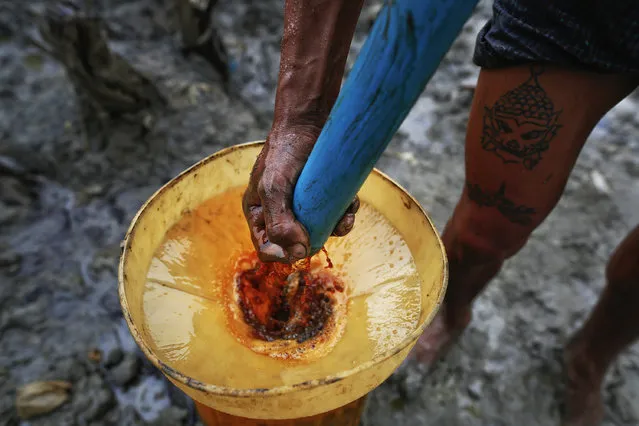
Ko Min, 26, manually extracts oil from one of three 300 feet deep wells he works on in the Minhla township of the Magwe district October 27, 2013. Everyday, Ko Min makes around $30 extracting crude oil from three small wells after he bought rights to use them for close to $1000 from a farmer who owns the land. (Photo by Damir Sagolj/Reuters)

Ko Min, 26, manually extracts oil from one of three 300 feet deep wells he works on in the Minhla township of the Magwe district October 27, 2013. Everyday, Ko Min makes around $30 extracting crude oil from three small wells after he bought rights to use them for close to $1000 from a farmer who owns the land. In Myanmar, an impoverished country rich with natural resources, people from poor communities find ways to supplement their income by exploiting such resources, such as the Minhla township, traditionally rich with oil, often using primitive and dangerous methods. (Photo by Damir Sagolj/Reuters)
Details
21 Apr 2014 10:06:00
Henry Frayne of Australia shows his ability to triple jump the lenghth of more than two Formula 1 cars during a press conference at Albert Park

Henry Frayne of Australia shows his ability to triple jump the lenghth of more than two Formula 1 cars during a press conference at Albert Park on February 29, 2012 in Melbourne, Australia. (Photo by Robert Prezioso/Getty Images)
Details
01 Mar 2012 10:43:00
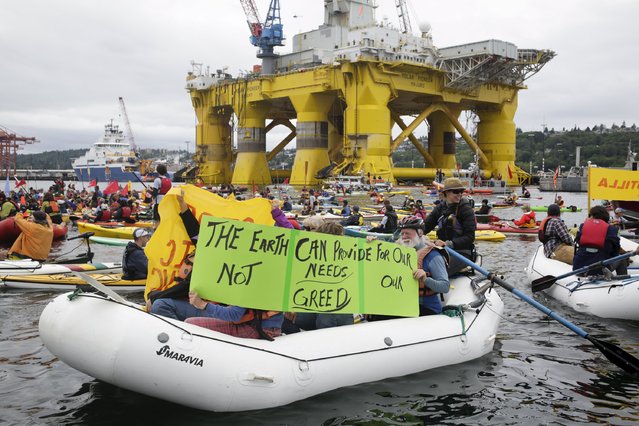
Activists protest the Shell Oil Company's drilling rig Polar Pioneer which is parked at Terminal 5 at the Port of Seattle, Washington May 16, 2015. Hundreds of activists in kayaks and small boats fanned out on a Seattle bay on Saturday to protest plans by Royal Dutch Shell to resume oil exploration in the Arctic and keep two of its drilling rigs stored in the city's port. (Photo by Jason Redmond/Reuters)

Activists protest the Shell Oil Company's drilling rig Polar Pioneer which is parked at Terminal 5 at the Port of Seattle, Washington May 16, 2015. Hundreds of activists in kayaks and small boats fanned out on a Seattle bay on Saturday to protest plans by Royal Dutch Shell to resume oil exploration in the Arctic and keep two of its drilling rigs stored in the city's port. (Photo by Jason Redmond/Reuters)
Details
18 May 2015 12:07:00
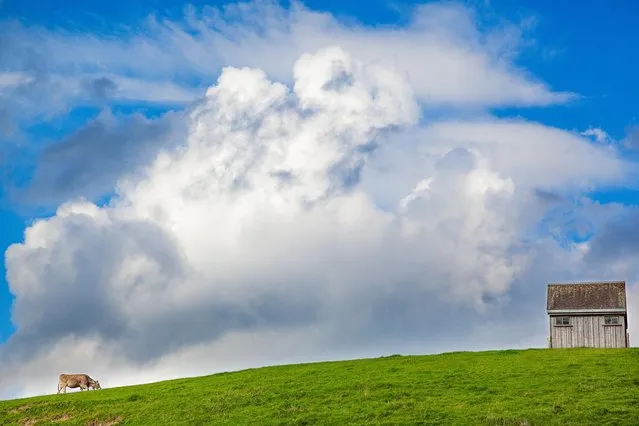
“Sniff out the Appenzell Cheese”. Alexander Hunter, 30, of Greenwich, Conn., took this photo in Appenzell, Switzerland, in September 2014. (Photo by Alexander Hunter)

“Sniff out the Appenzell Cheese”. Alexander Hunter, 30, of Greenwich, Conn., took this photo in Appenzell, Switzerland, in September 2014. (Photo by Alexander Hunter)
Details
25 Aug 2015 11:11:00
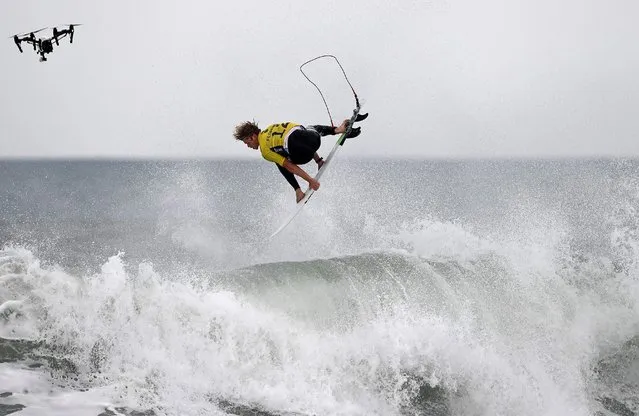
A drone flies above World Surf League World Title winner Hawaian surfer John John Florence during the final heat of the Portuguese stage of the World Surf League championship at Supertubos beach near Peniche, central Portugal, on October 25, 2016. (Photo by Francisco Leong/AFP Photo)

A drone flies above World Surf League World Title winner Hawaian surfer John John Florence during the final heat of the Portuguese stage of the World Surf League championship at Supertubos beach near Peniche, central Portugal, on October 25, 2016. (Photo by Francisco Leong/AFP Photo)
Details
27 Oct 2016 11:41:00
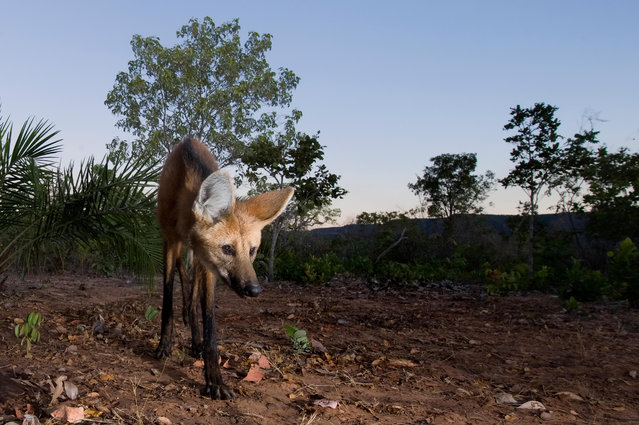
The maned wolf is among the large mammals in the Brazilian Cerrado that are threatened by the increasing conversion of grasslands into farmland for grazing and growing crops. (Photo by Ben Cranke/Nature Picture Library/Alamy Stock Photo)

Global wildlife populations will decline by 67% by 2020 unless urgent action is taken to reduce human impact on species and ecosystems, warns the biennial Living Planet Index report from WWF (World Wide Fund for Nature) and ZSL (Zoological Society of London). From elephants to eels, here are some of the wildlife populations most affected by human activity. Here: The maned wolf is among the large mammals in the Brazilian Cerrado that are threatened by the increasing conversion of grasslands into farmland for grazing and growing crops. (Photo by Ben Cranke/Nature Picture Library/Alamy Stock Photo)
Details
28 Oct 2016 10:47:00