Loading...
Done
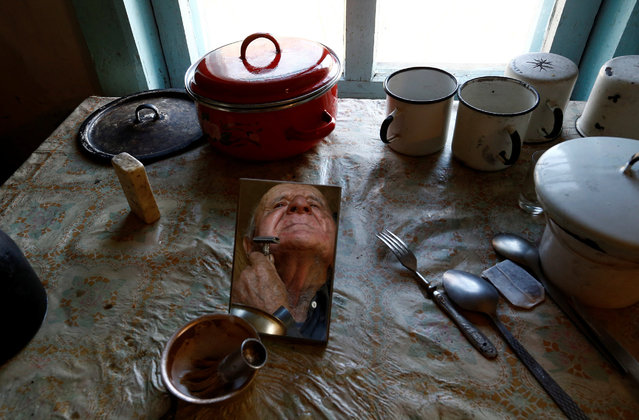
Ivan Shamyanok, 90, shaves in his house in the village of Tulgovichi, near the exclusion zone around the Chernobyl nuclear reactor, Belarus March 15, 2016. “My sister lived here with her husband. They decided to leave and soon enough they were in the ground ... They died from anxiety. I'm not anxious. I sing a little, take a turn in the yard, take things slowly like this and I live”, he said. (Photo by Vasily Fedosenko/Reuters)

Ivan Shamyanok, 90, shaves in his house in the village of Tulgovichi, near the exclusion zone around the Chernobyl nuclear reactor, Belarus March 15, 2016. “My sister lived here with her husband. They decided to leave and soon enough they were in the ground ... They died from anxiety. I'm not anxious. I sing a little, take a turn in the yard, take things slowly like this and I live”, he said. (Photo by Vasily Fedosenko/Reuters)
Details
27 Apr 2016 09:50:00
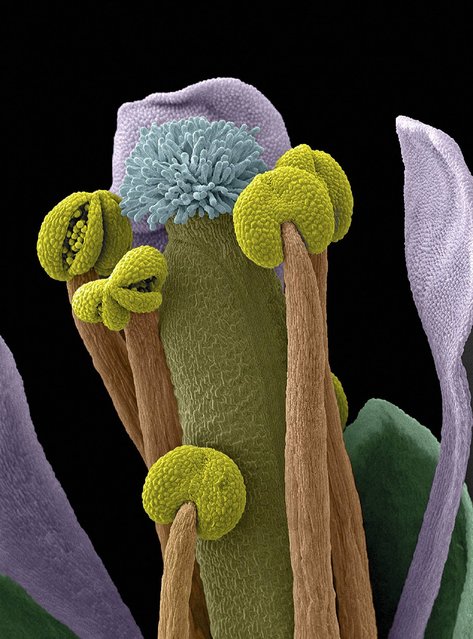
Scanning electron micrograph (SEM) of an Arabidopsis thaliana flower, also commonly known as thale cress. Some of the anthers are open, revealing pollen grains ready for dispersal. Arabidopsis was the first plant to have its entire genome sequenced and is widely used as a model organism in molecular and plant biology. Horizontal width of image is 1200 microns. Magnification 100x. (Photo by Stefan Eberhard/Wellcome Images)

Beautiful, strange and occasionally alarming pictures from the shortlist for this year’s Wellcome image awards – which celebrate the very best in science photography and imaging – from an x-ray of a bat to a micrograph of a kidney stone. The exhibition opens on 12 March at three science centres and the Museum of Science and Industry in Manchester. Photo: Scanning electron micrograph (SEM) of an Arabidopsis thaliana flower, also commonly known as thale cress. Some of the anthers are open, revealing pollen grains ready for dispersal. Arabidopsis was the first plant to have its entire genome sequenced and is widely used as a model organism in molecular and plant biology. Horizontal width of image is 1200 microns. Magnification 100x. (Photo by Stefan Eberhard/Wellcome Images)
Details
11 Mar 2014 05:58:00
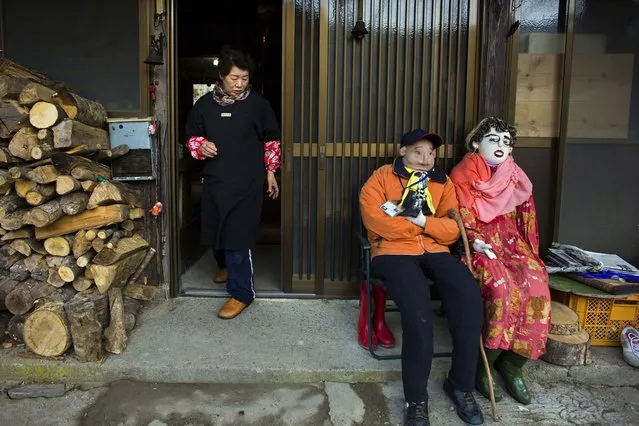
Tsukimi Ayano steps out of her house in the village of Nagoro on Shikoku Island in southern Japan February 24, 2015. (Photo by Thomas Peter/Reuters)

Tsukimi Ayano steps out of her house in the village of Nagoro on Shikoku Island in southern Japan February 24, 2015. Tsukimi Ayano made her first scarecrow 13 years ago to frighten off birds pecking at seeds in her garden. The life-sized straw doll resembled her father, so she made more. Today, the tiny village of Nagoro in southern Japan is teeming with Ayano's hand-sewn creations, frozen in time for a tableau that captures the motions of everyday life. (Photo by Thomas Peter/Reuters)
Details
17 Mar 2015 12:38:00
A novice monk holds a book during an inauguration ceremony at Jogye temple in Seoul, May 11, 2015. Ten children on Monday were given the opportunity to experience life as Buddhist monks by staying at the temple until Buddha's birthday in two weeks. The writing on the book reads, “Novice Monk Prayer”. (Photo by Thomas Peter/Reuters)

A novice monk holds a book during an inauguration ceremony at Jogye temple in Seoul, May 11, 2015. Ten children on Monday were given the opportunity to experience life as Buddhist monks by staying at the temple until Buddha's birthday in two weeks. The writing on the book reads, “Novice Monk Prayer”. (Photo by Thomas Peter/Reuters)
Details
12 May 2015 11:41:00
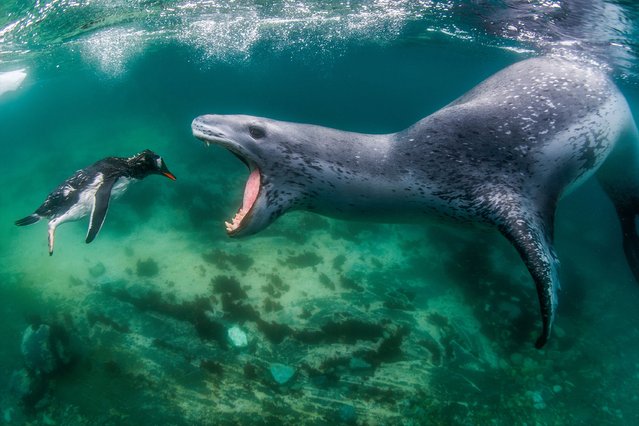
Leopard seal chasing a Gentoo penguin in Antarctica. This image wins the gold prize in the behaviour – mammals category, and the grand prize of World Nature Photographer of the Year. (Photo by Amos Nachoum/World Nature Photography Awards)

Leopard seal chasing a Gentoo penguin in Antarctica. This image wins the gold prize in the behaviour – mammals category, and the grand prize of World Nature Photographer of the Year. (Photo by Amos Nachoum/World Nature Photography Awards)
Details
13 Mar 2022 03:52:00
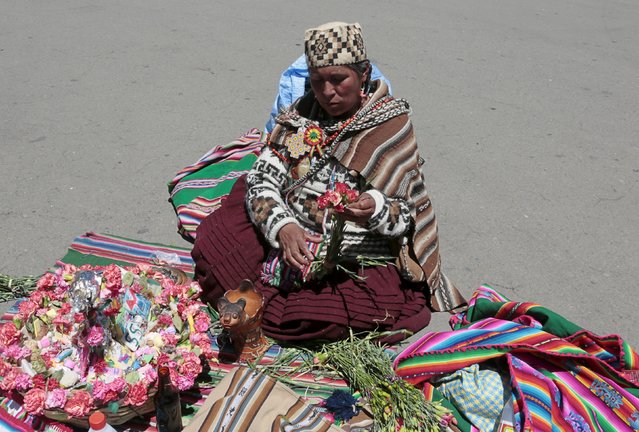
A witch doctor prepares an offering for the inauguration of the World People's Conference on Climate Change and the Defense of Life, prior to the World Climate Change Conference, in Tiquipaya, Bolivia, October 10, 2015. (Photo by David Mercado/Reuters)

A witch doctor prepares an offering for the inauguration of the World People's Conference on Climate Change and the Defense of Life, prior to the World Climate Change Conference, in Tiquipaya, Bolivia, October 10, 2015. Almost 150 nations, including major emitters led by China and the United States, have submitted plans to the United Nations for curbing greenhouse gas emissions blamed by the U.N. for causing more floods, droughts and heat waves. France will host the conference in Le Bourget, near Paris, from November 30 to December 11, 2015. (Photo by David Mercado/Reuters)
Details
14 Oct 2015 08:00:00
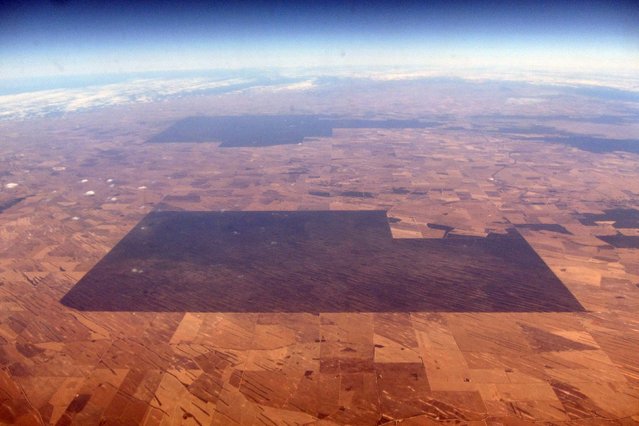
An area of vegetation can be seen amongst drought effected farmland in South Australia, November 12, 2015. (Photo by David Gray/Reuters)

An area of vegetation can be seen amongst drought effected farmland in South Australia, November 12, 2015. A pioneering Australian scheme to improve the management of water in the world's driest inhabited continent is facing its first real test as an intensifying El Nino threatens crops and builds tensions between farmers and environmentalists. An El Nino, a warming of sea-surface temperatures in the Pacific, is already causing drought and other extreme weather, affecting millions of people across parts of the world, and experts warn that the intensifying weather pattern could emerge as one of the strongest on record. (Photo by David Gray/Reuters)
Details
15 Nov 2015 08:01:00
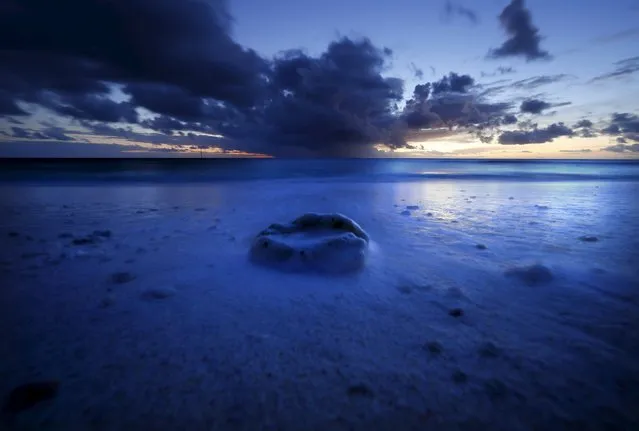
A reef shell lies on a beach as the sun sets on Lady Elliot Island located north-east of the town of Bundaberg in Queensland, Australia, June 10, 2015. (Photo by David Gray/Reuters)

A reef shell lies on a beach as the sun sets on Lady Elliot Island located north-east of the town of Bundaberg in Queensland, Australia, June 10, 2015. UNESCO World Heritage delegates recently snorkelled on Australia’s Great Barrier Reef, thousands of coral reefs, which stretch over 2,000 km off the northeast coast. Surrounded by manta rays, dolphins and reef sharks, their mission was to check the health of the world's largest living ecosystem, which brings in billions of dollars a year in tourism. Some coral has been badly damaged and animal species, including dugong and large green turtles, are threatened. UNESCO will say on Wednesday whether it will place the reef on a list of endangered World Heritage sites, a move the Australian government wants to avoid at all costs, having lobbied hard overseas. Earlier this year, UNESCO said the reef's outlook was “poor”. (Photo by David Gray/Reuters)
Details
30 Jun 2015 12:21:00