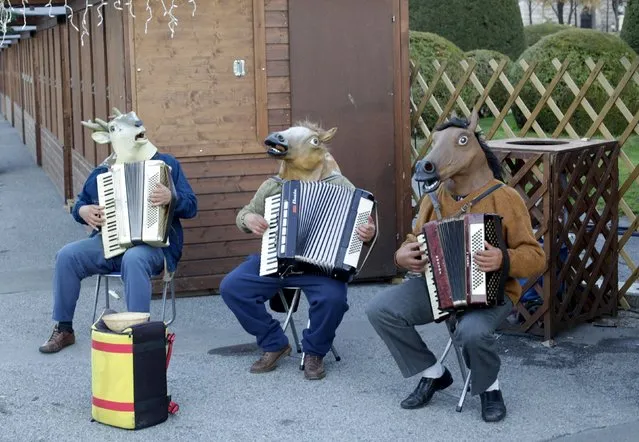
Street musicians with their faces covered with animal masks play to earn some money in central Vienna, Austria, November 8, 2015. (Photo by Vasily Fedosenko/Reuters)
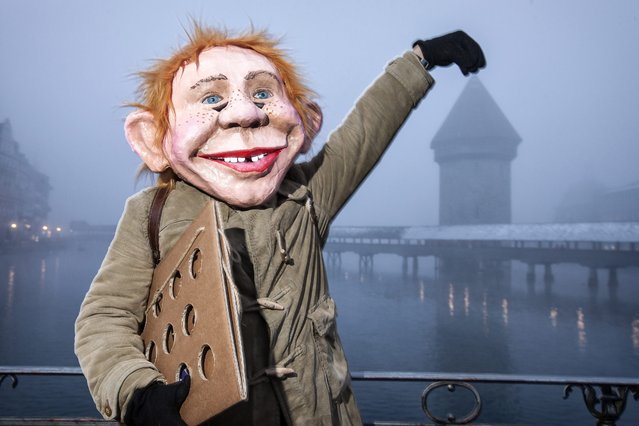
A masked reveller parades through the streets on the first day of the carnival season in Lucerne, Switzerland, 12 February 2015. In the background the well known Kappellbruecke bridge. (Photo by Alexandra Wey/EPA)
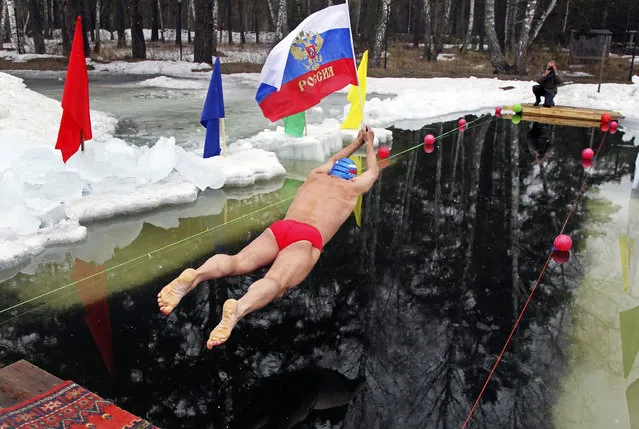
A member of a local swimming club holds a Russian national flag as he dives in at the start of a 24-hour swimming marathon near the western Siberian city of Barnaul March 29, 2014. Thirty members of the club will swim in turn during the event, held to mark Crimea becoming part of Russia, local media reported. (Photo by Andrei Kasprishin/Reuters)
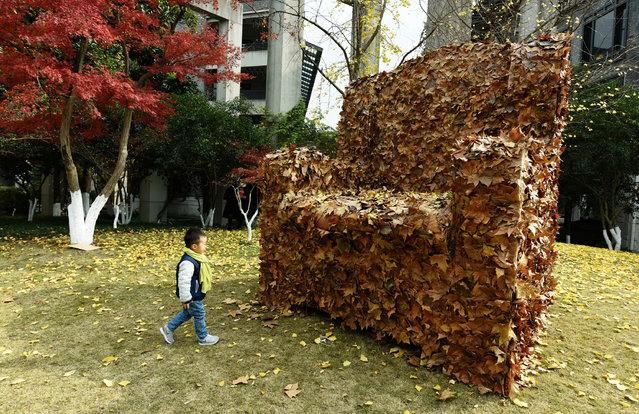
A child walks to an installation made from fallen leaves by college students, in shape of a sofa, to call for people's attention to environment protection, in Hangzhou, Zhejiang province, China, December 6, 2016. (Photo by Reuters/China Daily)
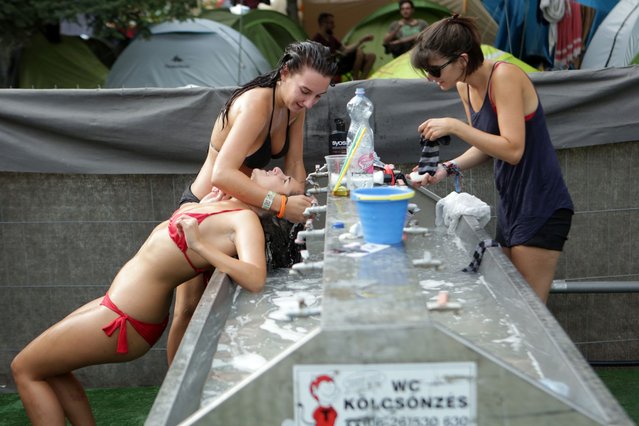
Festival-goers wash on Shipyard Island, the venue of the 24th Sziget (Island) Festival in Northern Budapest, Hungary, 15 August 2016. The venue, one of the biggest cultural events of Europe, offers art exhibitions, theatrical and circus performances and above all music concerts from 10 to 17 August. (Photo by Szabó Gábor/Origo.hu)
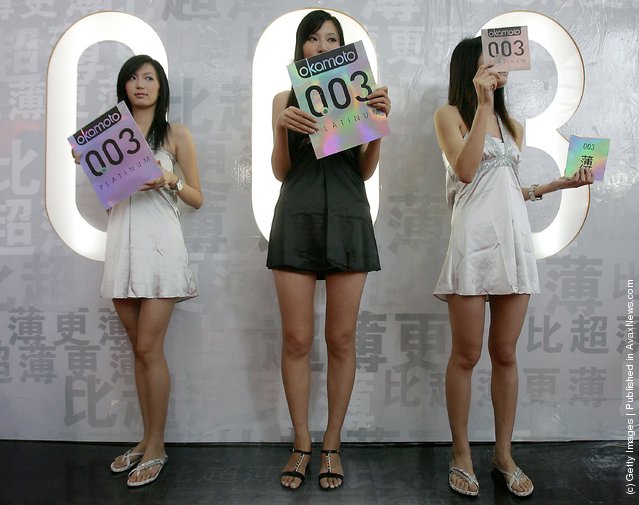
Models promote a condom brand at the first Shenzhen s*x Culture Festival on September 21, 2007 in Shenzhen of Guangdong Province, China. The festival aims to increase awareness about reproductive health and popularise s*x education. (Photo by China Photos/Getty Images)
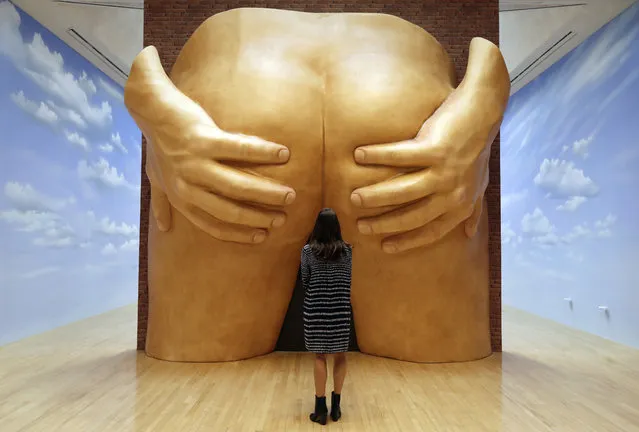
A woman looks towards part of an artwork called “Lichen! Libido! (London!) Chastity!” by Anthea Hamilton, one of the four artists shortlisted for the Turner Prize 2016, as it is displayed at the Tate Britain gallery in London, Monday, September 26, 2016. The Turner Prize aims to promote public debate around new developments in contemporary British art. (Photo by Kirsty Wigglesworth/AP Photo)