General atmosphere on Shipyard Island, the venue of the 24th Sziget (Island) Festival in Northern Budapest, Hungary, 14 August 2016. (Photo by Mohai Balázs/Rockstar Photographers)
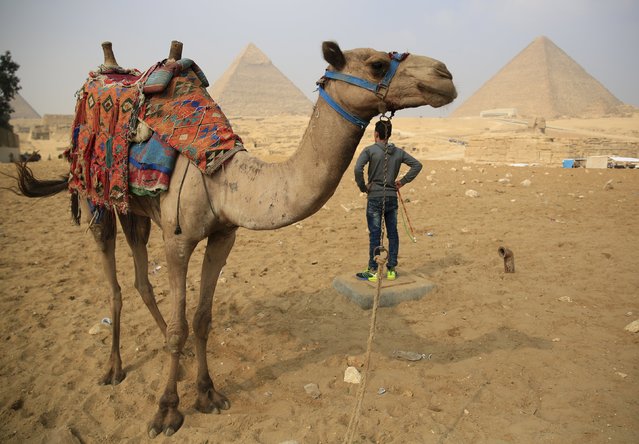
A worker looks on with his camel as he waits for tourists at the Giza Pyramids on the outskirts of Cairo, Egypt, November 8, 2015. Egypt's Tourism Minister Hesham Zaazou said Cairo regretted the suspension of flights and was doing all it could to secure its airports and tourist sites, adding that he would fly to Sharm al-Sheikh to oversee measures to support tourists there. (Photo by Amr Abdallah Dalsh/Reuters)
Kim Anderson photography career, now overseen from his home base in a Swiss mountainside village, began the way of many shutter bugs. His early photos focused on fashion and people, as well as photography for advertising agencies.
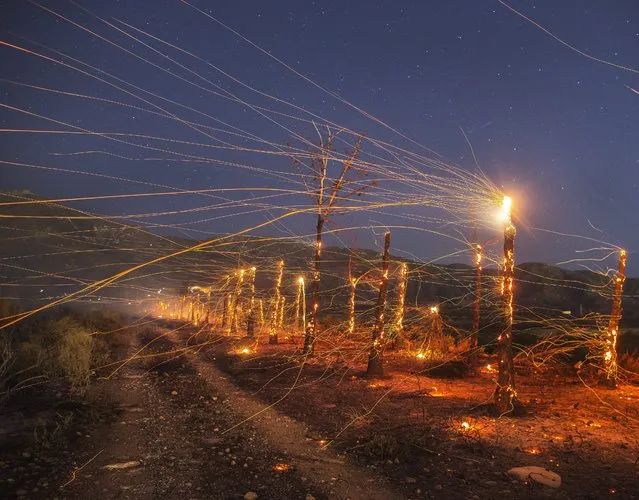
A long exposure image of embers flying off burnt out trees following the wind driven wildfire ranging in the mountain area near Rancho Cucamonga late 30 April 2014. Earlier in the day more than 1,500 homes were evacuated as the Etiwanda fire charred around 1,000 acres in San Barnardino National Forest. (Photo by Stuart Palley/EPA)
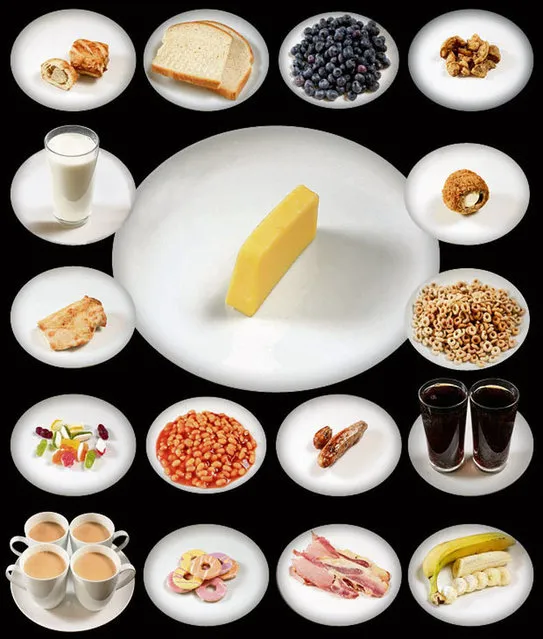
Some foods have significantly more Calories than others but what does the difference actually look like. Each of the photographs below represents 200 Calories of the particular type of food; the images are sorted from low to high calorie density. When you consider that an entire plate of broccoli contains the same number of Calories as a small spoonful of peanut butter, you might think twice the next time you decide what to eat. According to the U.S. Department of Agriculture, the average adult needs to consume about 2000 – 2500 Calories to maintain their weight. In other words, you have a fixed amount of Calories to “spend” each day; based on the following pictures, which would you eat?