Loading...
Done
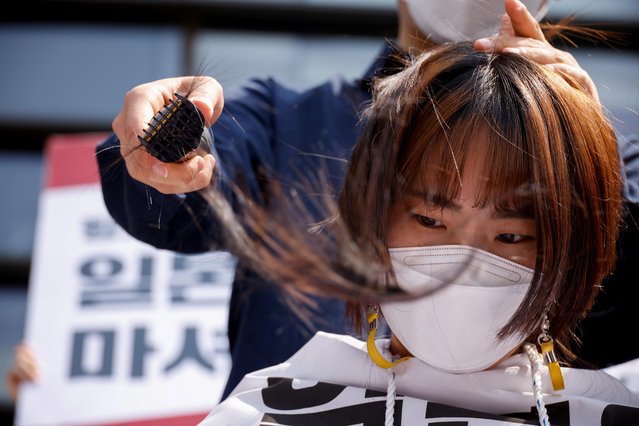
A South Korea university student gets her head shaved during a protest against Japan's decision to release contaminated water from its crippled Fukushima nuclear plant into the sea, in front of the Japanese embassy, in Seoul, South Korea, April 20, 2021. (Photo by Kim Hong-ji/Reuters)

A South Korea university student gets her head shaved during a protest against Japan's decision to release contaminated water from its crippled Fukushima nuclear plant into the sea, in front of the Japanese embassy, in Seoul, South Korea, April 20, 2021. (Photo by Kim Hong-ji/Reuters)
Details
08 May 2021 09:08:00
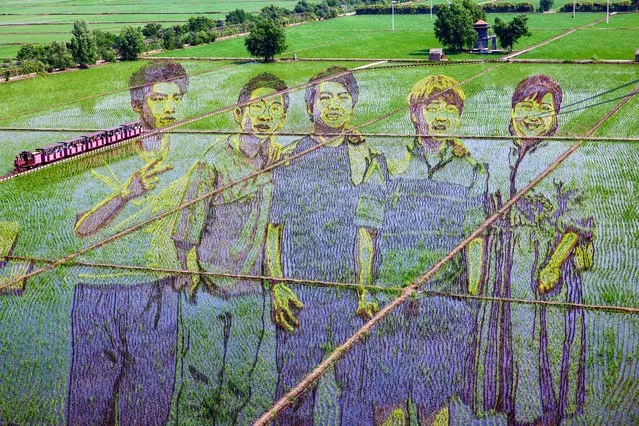
This aerial photo taken on June 13, 2021 shows an image of youths, created by growing different varieties of rice, in a paddy in Shenyang, China's northeastern Liaoning province. (Photo by AFP Photo/China Stringer Network)

This aerial photo taken on June 13, 2021 shows an image of youths, created by growing different varieties of rice, in a paddy in Shenyang, China's northeastern Liaoning province. (Photo by AFP Photo/China Stringer Network)
Details
24 Jun 2021 09:21:00
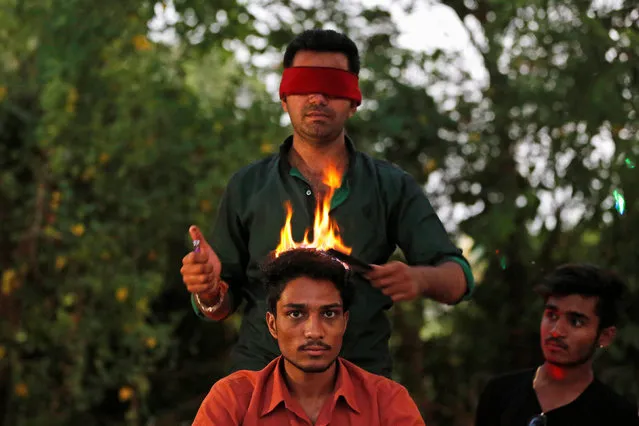
Vishnu Limbachiya, a hair artist, styles the hair of a man while wearing a blindfold at a park in Ahmedabad, India, May 31, 2017. (Photo by Amit Dave/Reuters)

Vishnu Limbachiya, a hair artist, styles the hair of a man while wearing a blindfold at a park in Ahmedabad, India, May 31, 2017. (Photo by Amit Dave/Reuters)
Details
07 Jun 2017 07:32:00
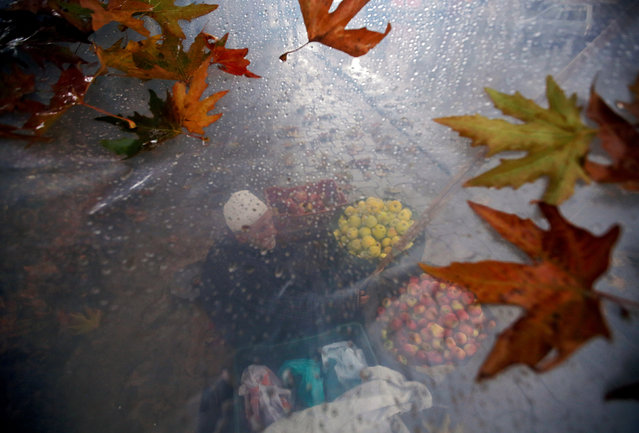
A roadside vendor selling apples is seen through a plastic sheet that he uses to cover himself from rain, in Srinagar November 14, 2018. (Photo by Danish Ismail/Reuters)

A roadside vendor selling apples is seen through a plastic sheet that he uses to cover himself from rain, in Srinagar, Indian state of Jammu and Kashmir on November 14, 2018. (Photo by Danish Ismail/Reuters)
Details
29 Nov 2018 00:05:00
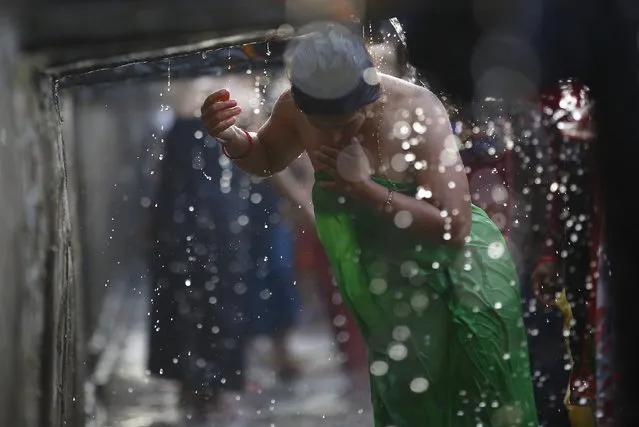
A devotee takes a holy bath at the Balaju Baise Dhara (22 water spouts) during the Baishak Asnan festival in Kathmandu April 4, 2015. Devotees believe that the water from these stone spouts, which is collected from the catchment area of the Nagarjun forest behind the spouts, will cure pains and skin diseases. (Photo by Navesh Chitrakar/Reuters)

A devotee takes a holy bath at the Balaju Baise Dhara (22 water spouts) during the Baishak Asnan festival in Kathmandu April 4, 2015. Devotees believe that the water from these stone spouts, which is collected from the catchment area of the Nagarjun forest behind the spouts, will cure pains and skin diseases. (Photo by Navesh Chitrakar/Reuters)
Details
04 Apr 2015 10:53:00
A protester from the People for the Ethical Treatment of Animals (PETA) displays a placard from a bathtub as a people looks on during a demonstration to call on the public to eat more vegetables to save water, in Sao Paulo on August 2, 2016. (Photo by Cris Faga via ZUMA Wire)

A protester from the People for the Ethical Treatment of Animals (PETA) displays a placard from a bathtub as a people looks on during a demonstration to call on the public to eat more vegetables to save water, in Sao Paulo on August 2, 2016. (Photo by Cris Faga via ZUMA Wire)
Details
03 Aug 2016 12:06:00
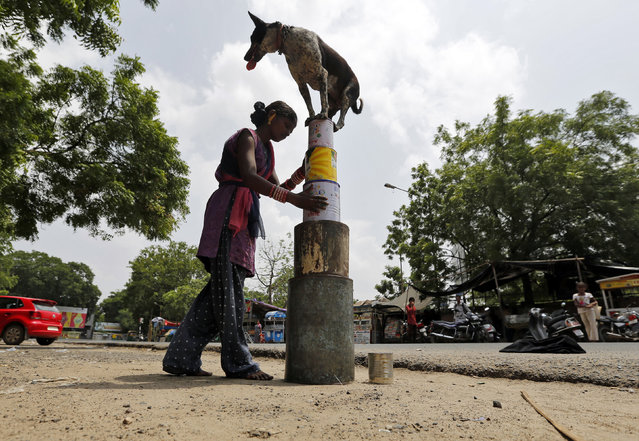
Savita, a street performer, helps her dog to balance on empty tin containers as they perform at a roadside in Ahmedabad September 7, 2014. (Photo by Amit Dave/Reuters)

Savita, a street performer, helps her dog to balance on empty tin containers as they perform at a roadside in Ahmedabad September 7, 2014. (Photo by Amit Dave/Reuters)
Details
31 Mar 2015 13:09:00
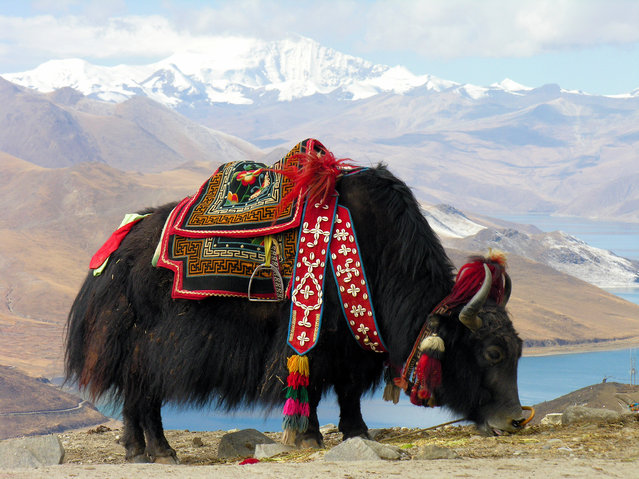
Yak near Yamdrok lake, Tibet. It is a long-haired bovinae found throughout the Himalayan region of south Central Asia, the Tibetan Plateau and as far north as Mongolia and Russia. The Tibetan economy is dominated by subsistence agriculture. Due to limited arable land, the primary occupation of the Tibetan Plateau is raising livestock, such as sheep, cattle, goats, camels, yaks, dzo, and horses. The Tibetan yak is an integral part of Tibetan life. (Photo by Dennis Jarvis)

Yak near Yamdrok lake, Tibet. It is a long-haired bovinae found throughout the Himalayan region of south Central Asia, the Tibetan Plateau and as far north as Mongolia and Russia. The Tibetan economy is dominated by subsistence agriculture. Due to limited arable land, the primary occupation of the Tibetan Plateau is raising livestock, such as sheep, cattle, goats, camels, yaks, dzo, and horses. The Tibetan yak is an integral part of Tibetan life. (Photo by Dennis Jarvis)
Details
10 Jun 2015 10:48:00