Loading...
Done
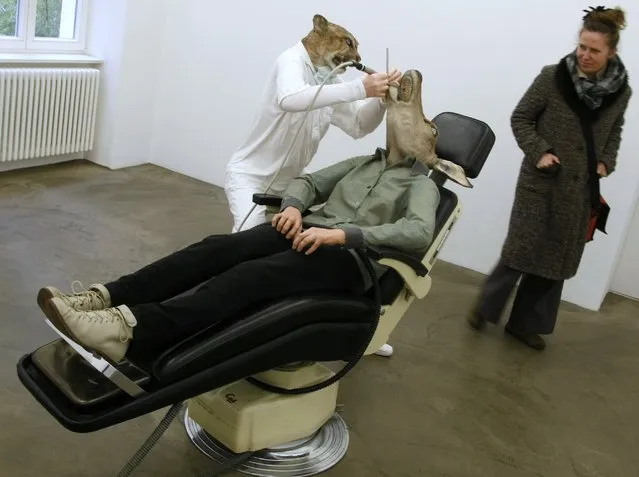
A visitor passes behind the sculpture “Puma-Dentist” made with plastic, wax and original heads of a puma and a hind by Austrian artist Deborah Sengl during an exhibition at the art gallery Deschler in Berlin April 15, 2008. (Photo by Fabrizio Bensch/Reuters)

A visitor passes behind the sculpture “Puma-Dentist” made with plastic, wax and original heads of a puma and a hind by Austrian artist Deborah Sengl during an exhibition at the art gallery Deschler in Berlin April 15, 2008. (Photo by Fabrizio Bensch/Reuters)
Details
11 Mar 2014 07:55:00
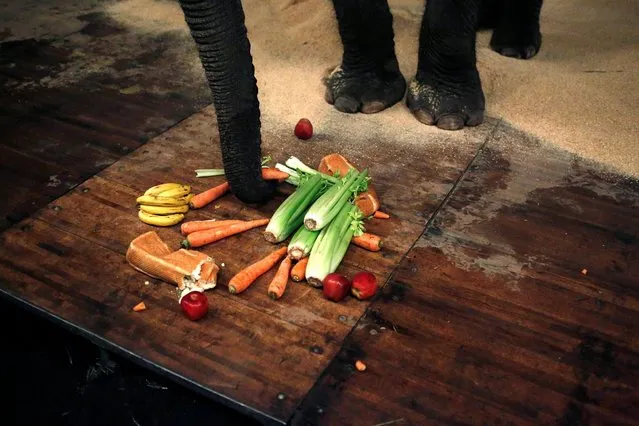
An elephant eats a snack after performing at Ringling Bros and Barnum & Bailey Circus' “Circus Extreme” show at the Mohegan Sun Arena at Casey Plaza in Wilkes-Barre, Pennsylvania, U.S., April 29, 2016. (Photo by Andrew Kelly/Reuters)

An elephant eats a snack after performing at Ringling Bros and Barnum & Bailey Circus' “Circus Extreme” show at the Mohegan Sun Arena at Casey Plaza in Wilkes-Barre, Pennsylvania, U.S., April 29, 2016. Elephants take a final bow at Ringling Bros and Barnum & Bailey Circus on Sunday, ending a 145-year spectacle that delighted fans but enraged animal activists, who say the highly publicized retirement is not enough. (Photo by Andrew Kelly/Reuters)
Details
01 May 2016 11:24:00
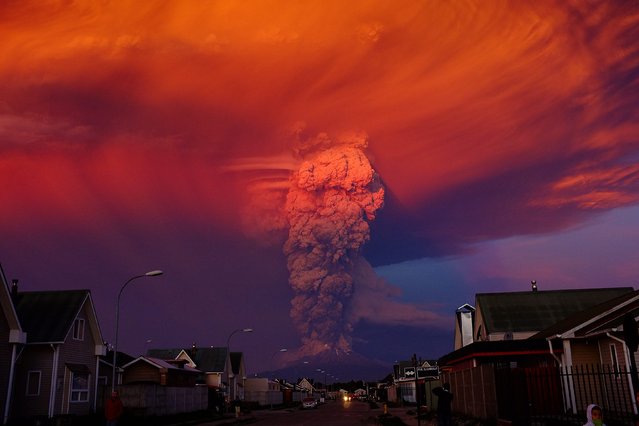
General view of Chilean Calbuco volcano from Puerto Montt, located at 1000 km southern Santiago de Chile, Chile, 22 April 2015. Due to the eruption of the volcano with a smoke column 20 km high, authorities declared a red alert and ordered the evacuation of around 1500 inhabitants of Ensenada, Alerce, Colonia Río Sur and Correntoso towns. (Photo by Alex Vidal Brecas/EPA)

General view of Chilean Calbuco volcano from Puerto Montt, located at 1000 km southern Santiago de Chile, Chile, 22 April 2015. Due to the eruption of the volcano with a smoke column 20 km high, authorities declared a red alert and ordered the evacuation of around 1500 inhabitants of Ensenada, Alerce, Colonia Río Sur and Correntoso towns. (Photo by Alex Vidal Brecas/EPA)
Details
24 Apr 2015 10:25:00
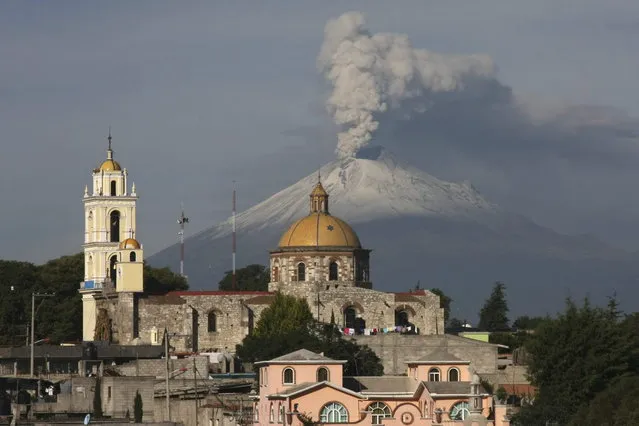
The main church in the town of San Damian Texoloc, Mexico stands in front of the Popocatepetl volcano as is spews ash and vapor early Tuesday, July 9, 2013. Last Saturday, Mexico's National Center for Disaster Prevention raised the volcano alert from Stage 2 Yellow to Stage 3 Yellow, the final step before a Red alert, when possible evacuations could be ordered after the Popocatepetl volcano spit out a cloud of ash and vapor 2 miles (3 kilometers) high over several days of eruptions. (Photo by J. Guadalupe Perez/AP Photo)

The main church in the town of San Damian Texoloc, Mexico stands in front of the Popocatepetl volcano as is spews ash and vapor early Tuesday, July 9, 2013. Last Saturday, Mexico's National Center for Disaster Prevention raised the volcano alert from Stage 2 Yellow to Stage 3 Yellow, the final step before a Red alert, when possible evacuations could be ordered after the Popocatepetl volcano spit out a cloud of ash and vapor 2 miles (3 kilometers) high over several days of eruptions. (Photo by J. Guadalupe Perez/AP Photo)
Details
10 Jul 2013 08:45:00
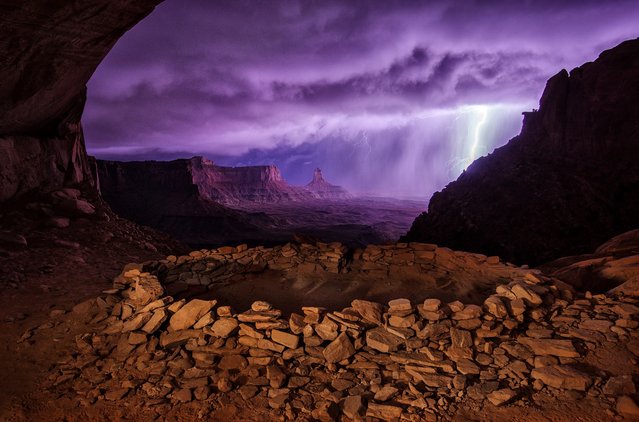
Second Place Winner: “Thunderstorm at False Kiva”. I hiked out to these ruins at night hoping to photograph them with the Milky Way, but instead a thunderstorm rolled through, creating this dramatic image. – Max Seigal. (Photo and caption by Max Seigal/National Geographic Traveler Photo Contest)

Second Place Winner: “Thunderstorm at False Kiva”. I hiked out to these ruins at night hoping to photograph them with the Milky Way, but instead a thunderstorm rolled through, creating this dramatic image. – Max Seigal. National Geographic Traveler Director of Photography Dan Westergren, one of this year's judges, shares his thoughts on the second place winner: “This photo combines two different scenes into one: the small kiva in a cliff dwelling and the grand vista of Canyonlands National Park across the valley. I really like the two different color palettes – warm inside and purple outside. This two-for-one scene was caused by the lightning storm outside the dwelling, which lit up the landscape like it was a huge electronic flash. Looking at this picture I can imagine what a wonderful sight it must have been for the ancient people who lived here. It doesn't seem too amazing now in our modern world, but might have been mind-blowing for the prehistoric residents”. Location: Utah. (Photo and caption by Max Seigal/National Geographic Traveler Photo Contest)
Details
02 Aug 2013 06:16:00
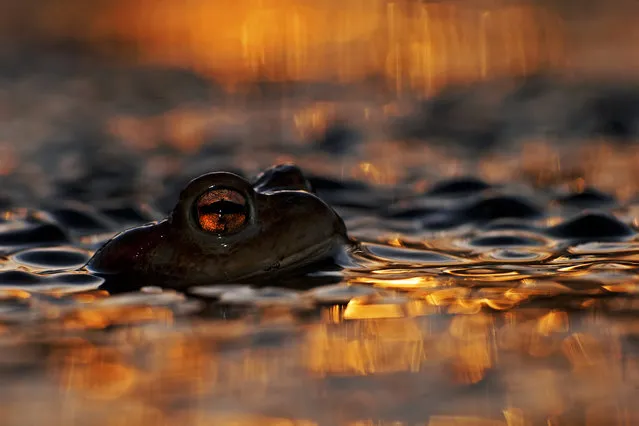
“Eye of a toad”. Animal Portraits, Łukasz Bożycki, Poland.  (Photo by Łukasz Bożycki)

“Eye of a toad”. Animal Portraits, Łukasz Bożycki, Poland. Early spring sees a pond near Łukasz’s home city of Warsaw, Poland, full of mating frogs and a few toads. On this March day, Łukasz shared the pond with them for an evening, sitting in the icy water in his chest-high waders, keeping as still as possible, despite the numbing cold, so that the amphibians could get used to him. “I wanted to find a fresh way of portraying the amphibians”, he says, “at water level”. Using a telephoto lens, he focused on one lone toad and waited for the sun to dip almost below the horizon before pressing the shutter, using flash to bring out the details in the shadow. His prize was “the glorious pool of sunset colour” and fiery glow of the toad’s eye. Nikon D80 + 70-300mm f4.5-5.6 lens + extension tube; 1/125 sec at f9 (-2.3 e/v); ISO 100; built-in flash. (Photo by Łukasz Bożycki)

Details
28 Aug 2013 11:45:00
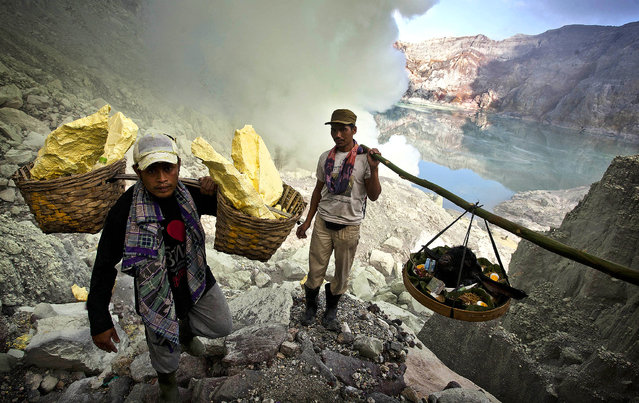
Miners carry a goats head for burial in the crater as part of an annual offering ceremony on the Ijen volcano on December 17, 2013 in Yogyakarta, Indonesia. (Photo by Ulet Ifansasti/Getty Images)

Miners carry a goats head for burial in the crater as part of an annual offering ceremony on the Ijen volcano on December 17, 2013 in Yogyakarta, Indonesia. The ritual is performed by the sulfur miners of Mount Ijen who slaughter a goat and then bury the head in the crater of mount Ijenn. The sacrifice is performed to ward off potential disasters for the next year. (Photo by Ulet Ifansasti/Getty Images)
Details
22 Dec 2013 10:15:00
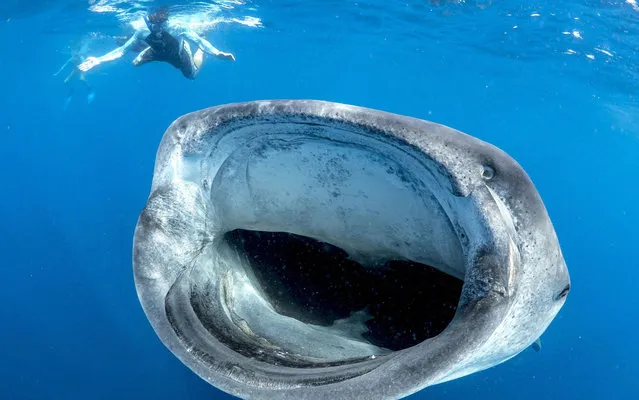
Marine biologist Simon Pierce, who studies whale sharks, happened to be in the right place at the right time to capture amazing photo off Cancun, Mexico. (Photo by Simon Pierce/Mercury Press/Caters News)

Marine biologist Simon Pierce, who studies whale sharks, happened to be in the right place at the right time to capture amazing photo off Cancun, Mexico. (Photo by Simon Pierce/Mercury Press/Caters News)
Details
09 Feb 2014 12:45:00