Loading...
Done
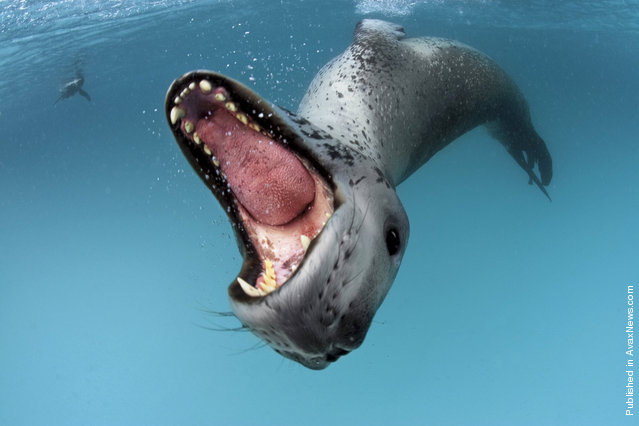
The sea leopard. The Antarctic Peninsula. (Photo by Paul Nicklen)

The sea leopard. The Antarctic Peninsula. (Photo by Paul Nicklen)
Details
12 Apr 2012 13:58:00
A Bull Frog hops around as Carlos Costly #13 of Honduras brings the ball up against the USA at Sun Life Stadium

A Bull Frog hops around as Carlos Costly #13 of Honduras brings the ball up against the USA at Sun Life Stadium on October 8, 2011 in Miami Gardens, Florida. (Photo by Marc Serota/Getty Images)
Details
31 Dec 2011 10:02:00
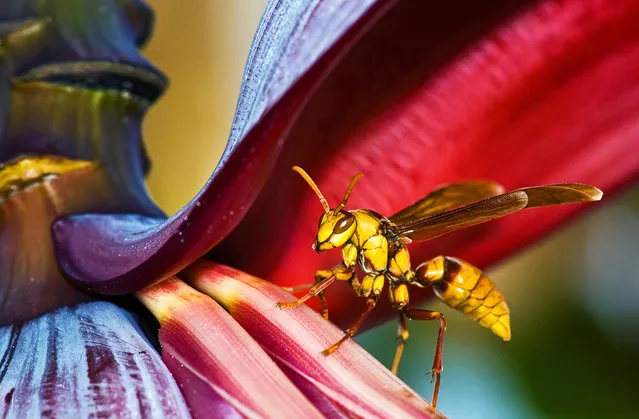
“A huge wasp measuring 2.5 inches in length, visiting the banana tree in my front yard”. (Photo and comment by John Matzick, USA/2013 Sony World Photography Awards

“A huge wasp measuring 2.5 inches in length, visiting the banana tree in my front yard”. (Photo and comment by John Matzick, USA/2013 Sony World Photography Awards via The Atlantic)


Details
07 Feb 2013 14:23:00
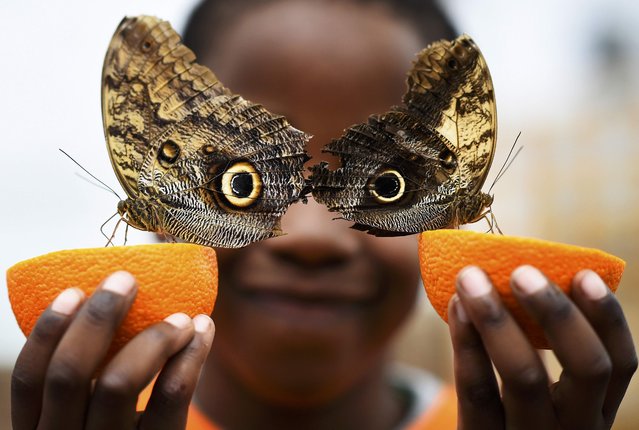
Bjorn, aged 5, smiles as he poses with a Owl butterfly during an event to launch the Sensational Butterflies exhibition at the Natural History Museum in London, Britain March 23, 2016. (Photo by Dylan Martinez/Reuters)

Bjorn, aged 5, smiles as he poses with a Owl butterfly during an event to launch the Sensational Butterflies exhibition at the Natural History Museum in London, Britain March 23, 2016. The exhibition opens to the public on March 24 and runs until September 11. (Photo by Dylan Martinez/Reuters)
Details
24 Mar 2016 12:31:00
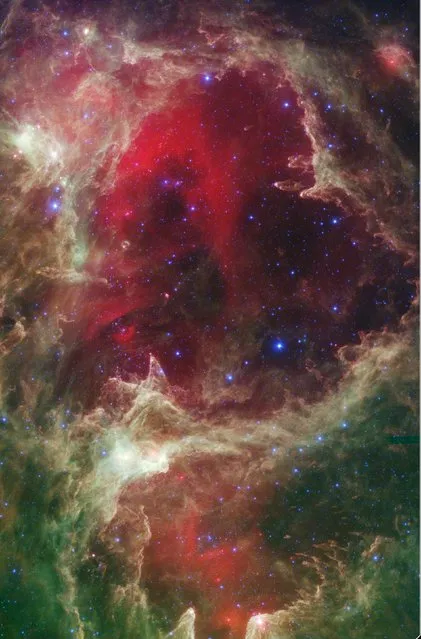
An infrared portrait from NASA's Spitzer Space Telescope which shows generations of stars is seen in this undated NASA handout image released February 14, 2013. In this wispy star-forming region, called W5, the oldest stars can be seen as blue dots in the centers of the two hollow cavities (other blue dots are background and foreground stars not associated with the region). Red shows heated dust that pervades the region's cavities, while green highlights dense clouds. (Photo by NASA/Reuters/JPL-Caltech/Harvard-Smithsonian/Handout)

An infrared portrait from NASA's Spitzer Space Telescope which shows generations of stars is seen in this undated NASA handout image released February 14, 2013. In this wispy star-forming region, called W5, the oldest stars can be seen as blue dots in the centers of the two hollow cavities (other blue dots are background and foreground stars not associated with the region). Red shows heated dust that pervades the region's cavities, while green highlights dense clouds. (Photo by NASA/Reuters/JPL-Caltech/Harvard-Smithsonian/Handout)
Details
03 Mar 2013 08:44:00
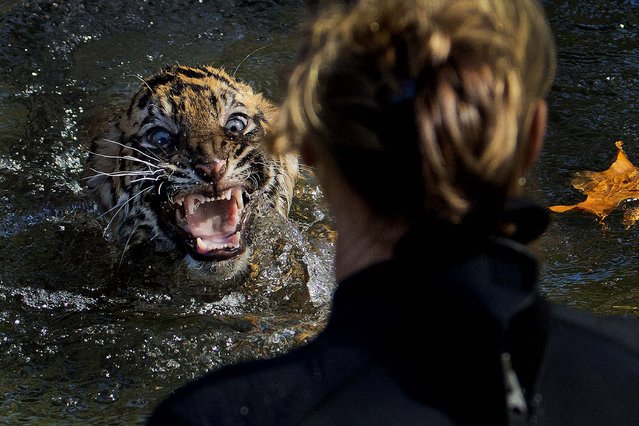
A three-month-old Sumatran tiger cub named “Bandar” shows his displeasure after being dunked in the tiger exhibit moat for a swim reliability test at the National Zoo in Washington, on November 6, 2013. All cubs born at the zoo must take a swim test before being allowed to roam in the exhibit. Bandar passed his test. (Photo by Manuel Balce Ceneta/Associated Press)

A three-month-old Sumatran tiger cub named “Bandar” shows his displeasure after being dunked in the tiger exhibit moat for a swim reliability test at the National Zoo in Washington, on November 6, 2013. All cubs born at the zoo must take a swim test before being allowed to roam in the exhibit. Bandar passed his test. (Photo by Manuel Balce Ceneta/Associated Press)
Details
09 Nov 2013 12:51:00
Image of the Clouds taken in August 2014 by astronauts on board the International Space Station (ISS).  A year from space photographs of hurricanes, typhoons and meteorite craters show an astronauts-eye view of our planet from hundreds of miles above the earth. The illuminating images were taken by astronauts onboard the International Space Station (ISS) over the course of 2014. (Photo by NASA/SPL/Barcroft Media)

Image of the Clouds taken in August 2014 by astronauts on board the International Space Station (ISS). A year from space photographs of hurricanes, typhoons and meteorite craters show an astronauts-eye view of our planet from hundreds of miles above the earth. The illuminating images were taken by astronauts onboard the International Space Station (ISS) over the course of 2014. (Photo by NASA/SPL/Barcroft Media)
Details
31 Dec 2014 14:47:00
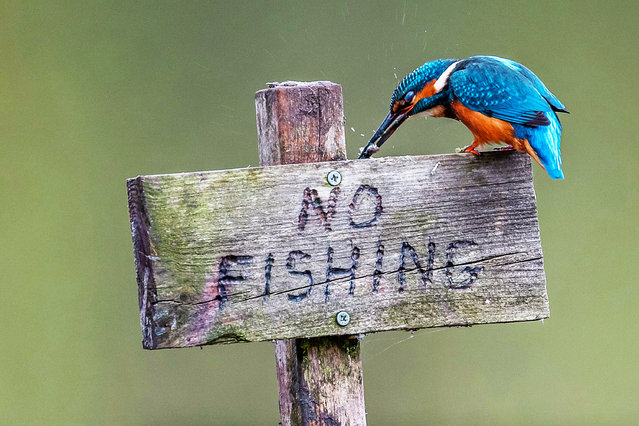
This little kingfisher clearly didn't read the sign when it landed itself a minnow in a no fishing zone. Taxi driver Paul Bird, 52, from Newmarket, Suffolk, UK, captured this amusing moment whilst out looking to photograph kingfishers in Norfolk, an hour drive from his home. Paul explained: “There are a total of six perches the bird was using from which to fish, one of them being the No Fishing sign”. (Photo by Paul Bird/Solent News & Photo Agency)

This little kingfisher clearly didn't read the sign when it landed itself a minnow in a no fishing zone. Taxi driver Paul Bird, 52, from Newmarket, Suffolk, UK, captured this amusing moment whilst out looking to photograph kingfishers in Norfolk, an hour drive from his home. Paul explained: “There are a total of six perches the bird was using from which to fish, one of them being the No Fishing sign”. (Photo by Paul Bird/Solent News & Photo Agency)

Details
02 Dec 2018 00:03:00