Loading...
Done
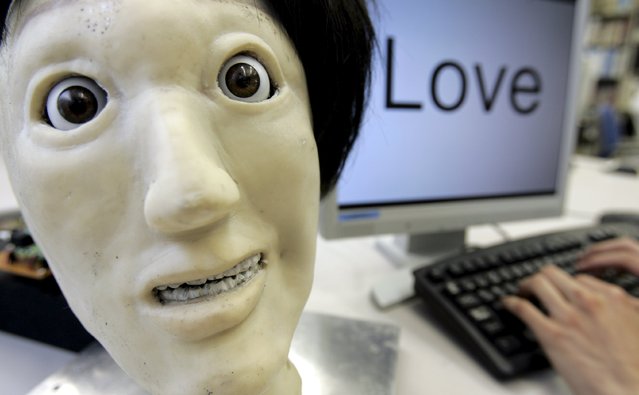
A humanoid robot named Kansei, meaning “sensibility” in Japanese, makes a facial expression depicting “happiness”, next to the word “Love” during a demonstration at a laboratory of Meiji University's Robot and Science Institute in Kawasaki, south of Tokyo in this June 4, 2007 file photo. (Photo by Yuriko Nakao/Reuters)

A humanoid robot named Kansei, meaning “sensibility” in Japanese, makes a facial expression depicting “happiness”, next to the word “Love” during a demonstration at a laboratory of Meiji University's Robot and Science Institute in Kawasaki, south of Tokyo in this June 4, 2007 file photo. Three-fourths of robot installations over the next decade are expected to be concentrated in four areas: transportation equipment, including the automotive sector; computer and electronic products; electrical equipment and machinery. Labor costs have climbed in countries such as China that have been popular for outsourcing production, while technological advances for robots allow them to be more flexible and perform more tasks. (Photo by Yuriko Nakao/Reuters)
Details
17 Apr 2015 09:39:00
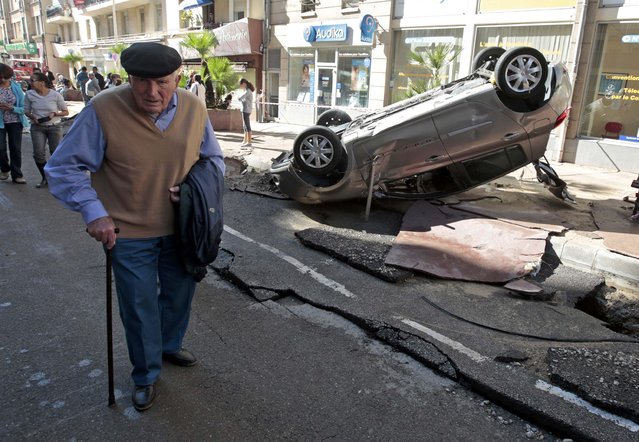
A man walks past an overturned car in the street that was damaged in flooding caused by torrential rain in Cannes, France, October 4, 2015. (Photo by Eric Gaillard/Reuters)

A man walks past an overturned car in the street that was damaged in flooding caused by torrential rain in Cannes, France, October 4, 2015. (Photo by Eric Gaillard/Reuters)
Details
07 Oct 2015 08:00:00
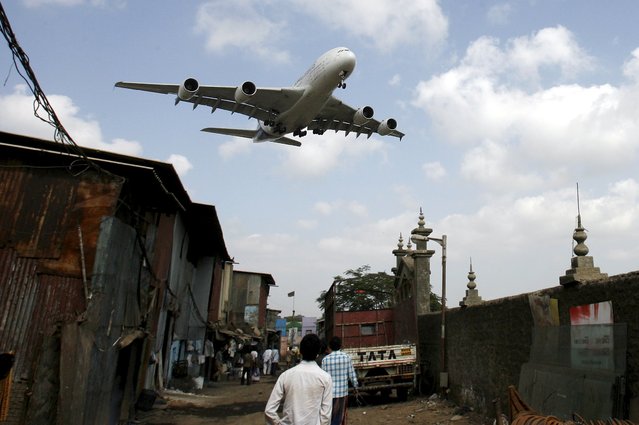
An Airbus A380 aircraft prepares to land at Mumbai airport in this May 8, 2007 file photo. Sentiment at some of Asia's biggest firms deteriorated again in the fourth quarter, falling to a four-year low under the weight of concerns about slowing growth in China, the region's biggest economy, a Thomson Reuters/INSEAD survey showed. (Photo by Arko Datta/Reuters)

An Airbus A380 aircraft prepares to land at Mumbai airport in this May 8, 2007 file photo. Sentiment at some of Asia's biggest firms deteriorated again in the fourth quarter, falling to a four-year low under the weight of concerns about slowing growth in China, the region's biggest economy, a Thomson Reuters/INSEAD survey showed. (Photo by Arko Datta/Reuters)
Details
27 Dec 2015 08:03:00
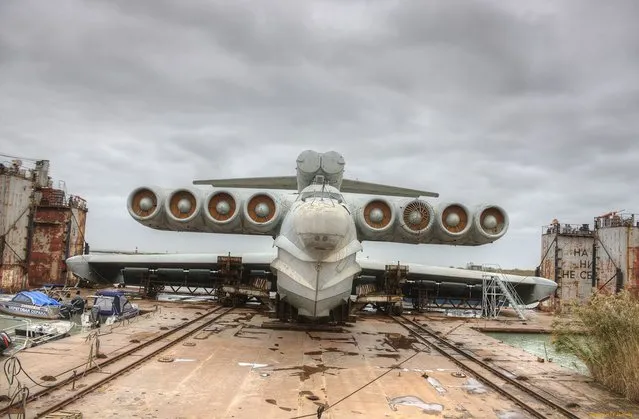
The Lun-class Ekranoplane was used by the Soviet Navy starting in 1987, and wasn't retired until the late 1990s, after the Soviet Union's fall. (Igor113)

“The Lun-class ekranoplan (NATO reporting name Duck) was a ground effect vehicle (GEV) designed by Rostislav Evgenievich Alexeev and used by the Soviet and Russian navies from 1987 until sometime in the late 1990s. It “flew” using the lift generated by the ground effect of its large wings when close to the surface of the water – about four metres or less. Although they might look similar and/or have related technical characteristics, ekranoplans like the Lun are not aircraft, seaplanes, hovercraft, or hydrofoils – ground effect is a separate technology altogether. The International Maritime Organization classifies these vehicles as maritime ships. The name Lun comes from the Russian for harrier”. – Wikipedia (Photo by Igor113)
Details
08 Aug 2014 10:51:00
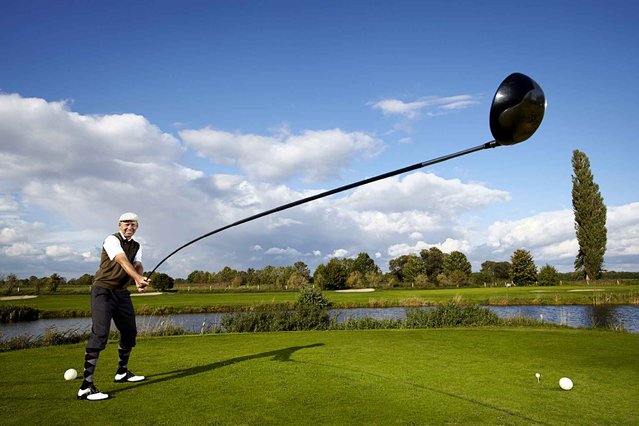
A recent undated handout picture released by the Guinness World Records on September 9, 2014, shows 49-year-old trick golf artist Karsten Maas, from Denmark, who secured his place in the 2015 Guinness World Records book for creating the world’s longest usable golf club. It measures 4.37, (14ft 5in) in length and has been used to drive a ball a distance of 165.46m (542ft 10.16in). (Photo by Ranald Mackechnie/AFP Photo/Guinness World Records)

A recent undated handout picture released by the Guinness World Records on September 9, 2014, shows 49-year-old trick golf artist Karsten Maas, from Denmark, who secured his place in the 2015 Guinness World Records book for creating the world’s longest usable golf club. It measures 4.37, (14ft 5in) in length and has been used to drive a ball a distance of 165.46m (542ft 10.16in). The 60th anniversary edition of the Guinness World Records book will reflect on six decades of record-breaking, whilst also featuring the latest additions to the oddball hall of fame. (Photo by Ranald Mackechnie/AFP Photo/Guinness World Records)
Details
14 Sep 2014 10:21:00
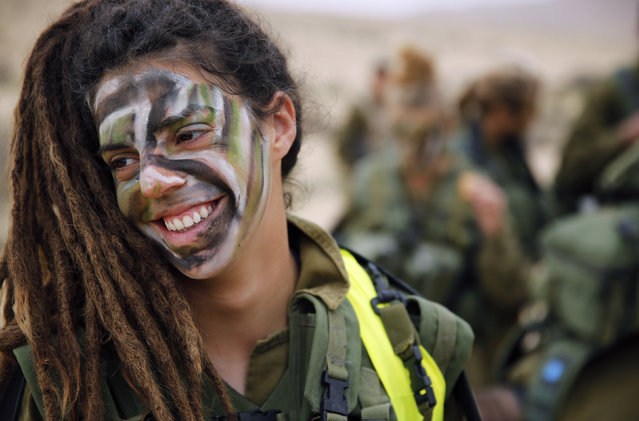
An Israeli soldier of the Caracal battalion smiles during a 23-kilometer march marking the end of their training in Israel's Negev desert, near Kibbutz Sde Boker February 14, 2013. The “Caracal” battalion, two-thirds of whose members are women, was established in 2004 with the purpose of incorporating female soldiers in combat units. The main mission of Caracal is routine patrols on Israel's border with Egypt to intercept infiltrators and smuggling from the Sinai desert. (Photo by Darren Whiteside/Reuters)

An Israeli soldier of the Caracal battalion smiles during a 23-kilometer march marking the end of their training in Israel's Negev desert, near Kibbutz Sde Boker February 14, 2013. The “Caracal” battalion, two-thirds of whose members are women, was established in 2004 with the purpose of incorporating female soldiers in combat units. The main mission of Caracal is routine patrols on Israel's border with Egypt to intercept infiltrators and smuggling from the Sinai desert. (Photo by Darren Whiteside/Reuters)
Details
23 Sep 2014 13:22:00
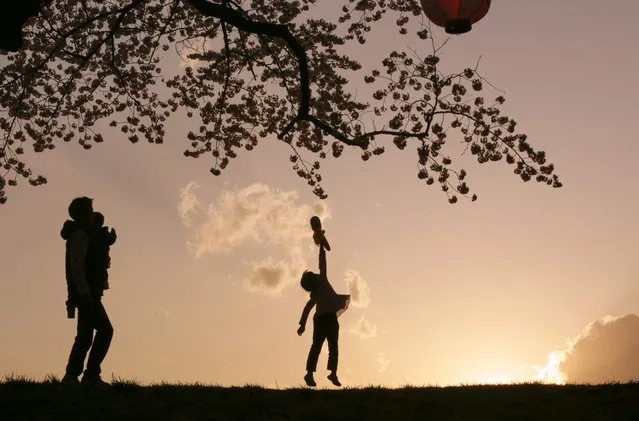
A girl jumps to touch cherry blossoms in full bloom in Fussa, outskirts Tokyo, Japan, 05 April 2014. Temperatures being very constant made blossoms to keep full bloom for holiday makers. (Photo by Kimimasa Mayama/EPA)

A girl jumps to touch cherry blossoms in full bloom in Fussa, outskirts Tokyo, Japan, 05 April 2014. Temperatures being very constant made blossoms to keep full bloom for holiday makers. (Photo by Kimimasa Mayama/EPA)
Details
20 Apr 2014 08:15:00
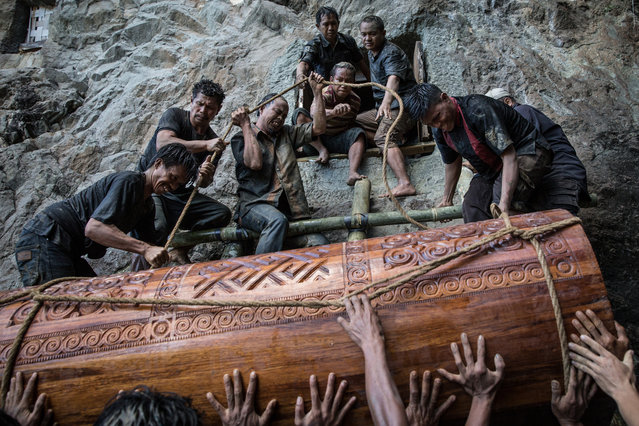
It is said that Torajans are people who “live to die”. For this Indonesian ethnic group, funerals are such extravagant events that they sometimes attract tourists. Families can postpone burials years (and the deceased are considered sick and hosted at home until the funeral) until the family can raise enough money and gather as many relatives as possible. And then it’s a jubilant multiday social event with a parade, dances and animal sacrifices. Agung Parameswara photographed these funerary practices when he traveled to South Sulawesi province, where the Torajans live. But often, their funeral isn’t the last time the dead are seen. In August, crypts are opened, coffins are slid back out and bodies delicately unsheathed. This tender ritual is known as Ma’Nene, which is customarily performed every few years. (Photo by Agung Parameswara/The Washington Post)

It is said that Torajans are people who “live to die”. For this Indonesian ethnic group, funerals are such extravagant events that they sometimes attract tourists. Families can postpone burials years (and the deceased are considered sick and hosted at home until the funeral) until the family can raise enough money and gather as many relatives as possible. And then it’s a jubilant multiday social event with a parade, dances and animal sacrifices. Agung Parameswara photographed these funerary practices when he traveled to South Sulawesi province, where the Torajans live. (Photo by Agung Parameswara/The Washington Post)
Details
06 Oct 2016 09:15:00