A boy looks for scrap metal using an improvised magnetic tool near a construction site in New Delhi, India, March 21, 2016. (Photo by Cathal McNaughton/Reuters)
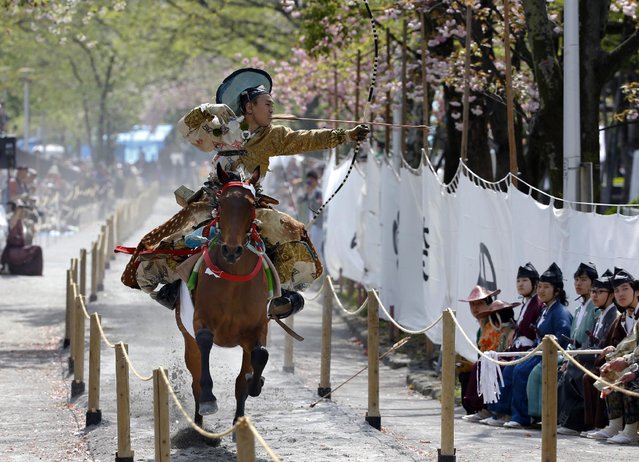
An archer in a samurai warrior costume aims at a target in the Asakusa Yabusame horseback archery event at Sumida Park in Tokyo, Saturday, April 18, 2015. (Photo by Shizuo Kambayashi/AP Photo)
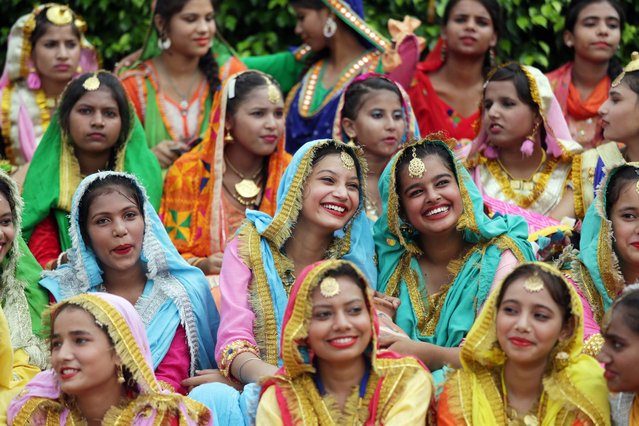
Indian school children wearing traditional Punjabi attire sit as they take part in the full and final dress rehearsal for India's Independence Day parade and celebrations in Amritsar, India, 13 August 2016. India's 70th Independence Day will be celebrated on 15 August, to commemorate its independence from British rule and its birth as a sovereign nation on that day in 1947. (Photo by Raminder Pal Singh/EPA)
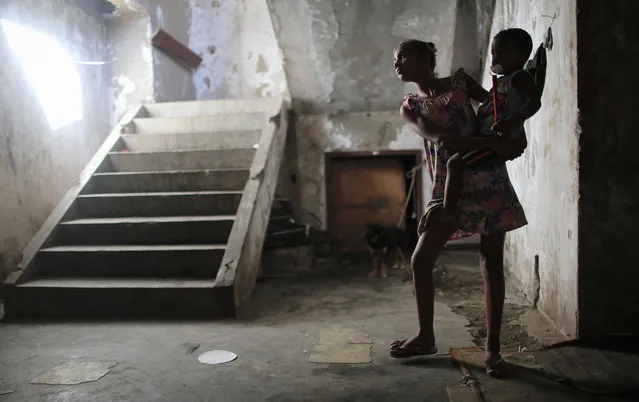
Resident Taina holds her brother Ysaque in the hallway outside their apartment in an occupied building in the Mangueira “favela” community on August 13, 2016 in Rio de Janeiro, Brazil. (Photo by Mario Tama/Getty Images)
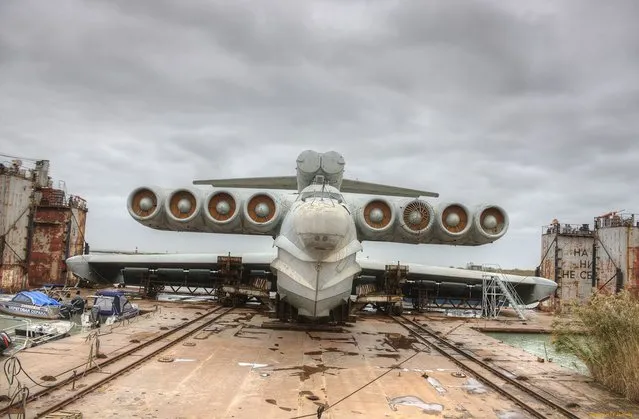
“The Lun-class ekranoplan (NATO reporting name Duck) was a ground effect vehicle (GEV) designed by Rostislav Evgenievich Alexeev and used by the Soviet and Russian navies from 1987 until sometime in the late 1990s. It “flew” using the lift generated by the ground effect of its large wings when close to the surface of the water – about four metres or less. Although they might look similar and/or have related technical characteristics, ekranoplans like the Lun are not aircraft, seaplanes, hovercraft, or hydrofoils – ground effect is a separate technology altogether. The International Maritime Organization classifies these vehicles as maritime ships. The name Lun comes from the Russian for harrier”. – Wikipedia (Photo by Igor113)
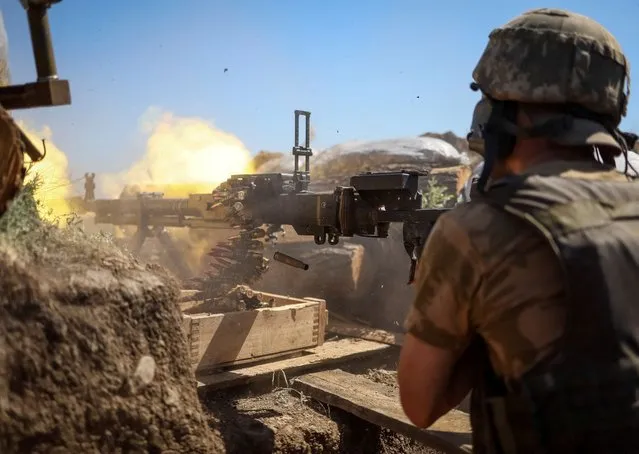
A Ukrainian service member shoots from a machine gun at a position on the front line, amid Russia's attack on Ukraine, near the town of New York, Donetsk region, Ukraine on June 9, 2022. (Photo by Gleb Garanich/Reuters)