Loading...
Done
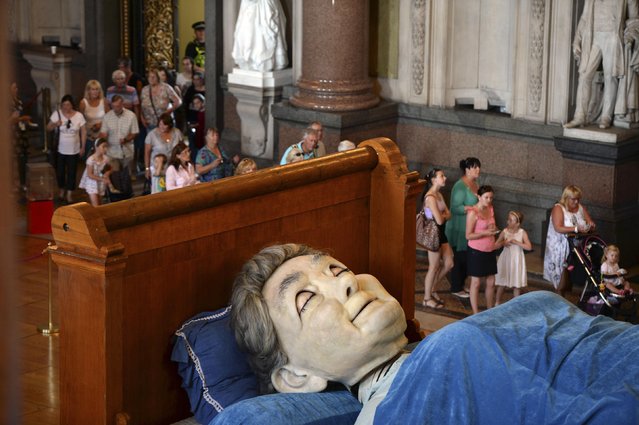
Visitors look at a giant puppet of a grandmother sleeping on a bed inside St George's Hall in Liverpool, northern England July 23, 2014. (Photo by Nigel Roddis/Reuters)

Visitors look at a giant puppet of a grandmother sleeping on a bed inside St George's Hall in Liverpool, northern England July 23, 2014. The grandmother is one of two giant models made for a World War I commemorative event. (Photo by Nigel Roddis/Reuters)
Details
26 Jul 2014 11:39:00
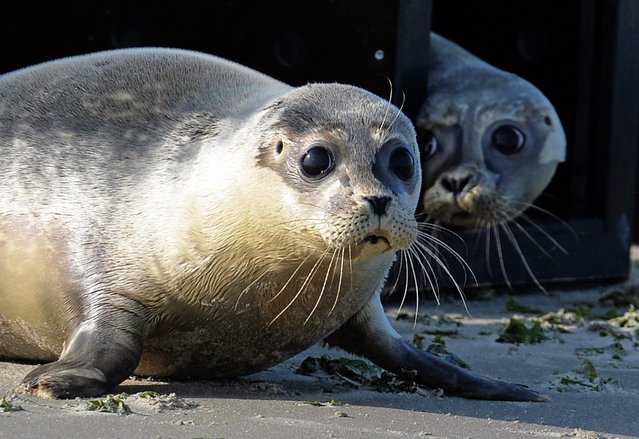
Common seals are reintroduced to the wild on the beach of the island Juist, Germany, 28 July 2014. It is the first reintroduction to the wild drive of the seal breading station Norddeich this year. (Photo by Carmen Jaspersen/EPA)

Common seals are reintroduced to the wild on the beach of the island Juist, Germany, 28 July 2014. It is the first reintroduction to the wild drive of the seal breading station Norddeich this year. (Photo by Carmen Jaspersen/EPA)
Details
02 Aug 2014 14:50:00
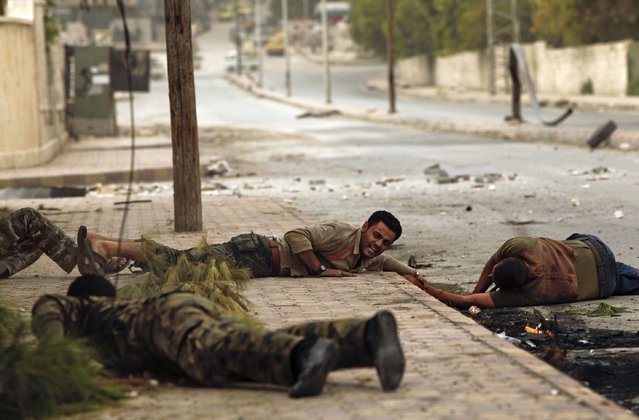
Members of the Al-Baraa bin Malek batallion, part of the Free Syria Army's Al-Fatah brigade, duck to the ground as they pull a man (R) who was shot by a sniper twice in the Bustan al-Basha district of the northern city of Aleppo on October 20, 2012. (Photo by Javier Manzano/AFP Photo)

Members of the Al-Baraa bin Malek batallion, part of the Free Syria Army's Al-Fatah brigade, duck to the ground as they pull a man (R) who was shot by a sniper twice in the Bustan al-Basha district of the northern city of Aleppo on October 20, 2012. (Photo by Javier Manzano/AFP Photo)
Details
23 Jan 2014 11:55:00
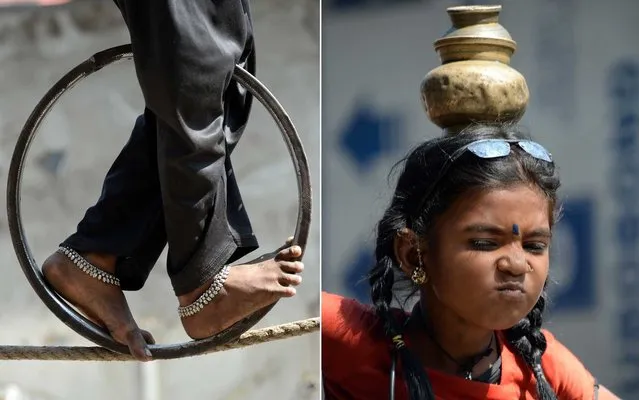
Nine year old girl Barsati reacts while walking on a tightrope in Mumbai on February 11, 2014. Barsati, and her younger brother Rajababu, (4) earn an average of around 2000 rupees (32 dollars) per day from pedestrians and tourists performing various acts on the tightrope near the city's iconic landmark Gateway of India. (Photo by Indranil Mukherjee/AFP Photo)

Nine year old girl Barsati reacts while walking on a tightrope in Mumbai on February 11, 2014. Barsati, and her younger brother Rajababu, (4) earn an average of around 2000 rupees (32 dollars) per day from pedestrians and tourists performing various acts on the tightrope near the city's iconic landmark Gateway of India. (Photo by Indranil Mukherjee/AFP Photo)
Details
15 Feb 2014 12:02:00
A model presents a creation by Maltese hairstylist Marielle Calleja of Prive at the Malta Fashion Awards 2015 at the Marsa Shipbuilding warehouse in Marsa, outside Valletta in Malta, May 16, 2015. (Photo by Darrin Zammit Lupi/Reuters)

A model presents a creation by Maltese hairstylist Marielle Calleja of Prive at the Malta Fashion Awards 2015 at the Marsa Shipbuilding warehouse in Marsa, outside Valletta in Malta, May 16, 2015. (Photo by Darrin Zammit Lupi/Reuters)
Details
18 May 2015 12:39:00
Surviving The Northeast Heatwave Part1

The northeastern United States sweltered this week in a scorching summer heat wave, complete with stagnant, sticky air and no winds for relief, forecasters said. Even in a summer already filled with stretches of very hot weather, this week will be stubbornly brutal, with no relief in sight until the weekend brings thunderstorms to the region, they said. "Plain and simple, this week may feel the worst of any week for this summer in the Northeast," said Accuweather.com meteorologist Alex Sosnowski. (Reuters)
Details
22 Aug 2013 10:28:00
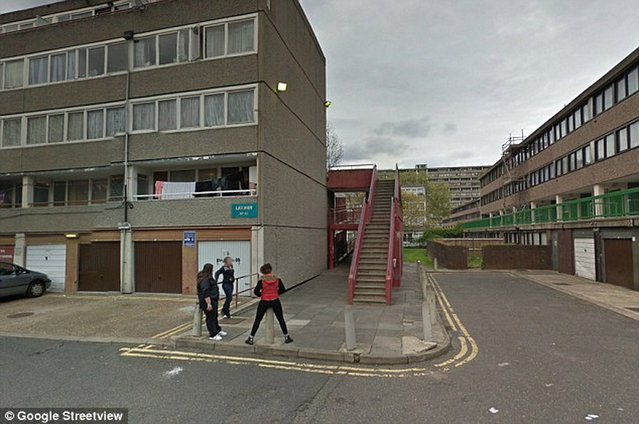
Bad Part of Town By Google Street View

Take a walk on the wild side around some of the most down right dangerous places in the world - and all without leaving your desk, courtesy of Google Street View. Since 2007, Google's amazing technology has given people the chance to visit the Eiffel Tower, peer out over San Francisco's Golden Gate Bridge or walk along a beach in the Bahamas. But as well as mapping the tourist-friendly hotspots, Google also ventured into places you really wouldn't want to find yourself. Here is a collection of some the most notorious areas captured by the infamous roaming camera cars from around the UK and the world.
Details
03 Oct 2013 11:05:00
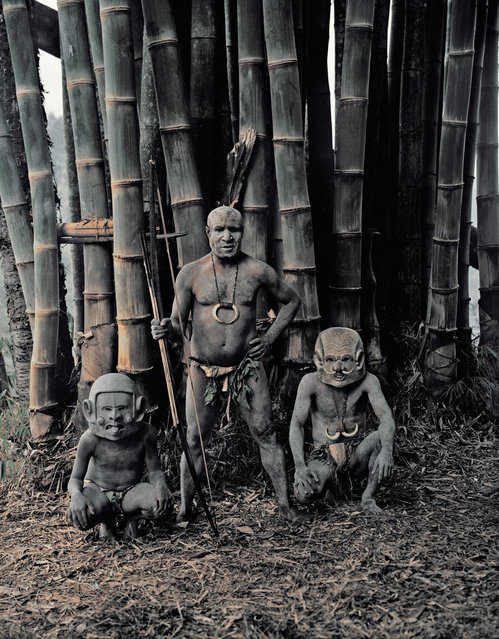
“Asaro from the Eastern Highlands”. The mudmen could not cover their faces with mud because the people of Papua New Guinea thought that the mud from the Asaro river was poisonous. So instead of covering their faces with this alleged poison, they made masks from pebbles that they heated and water from the waterfall, with unusual designs such as long or very short ears either going down to the chin or sticking up at the top, long joined eyebrows attached to the top of the ears, horns and sideways mouths. (Jimmy Nelson)

“Asaro from the Eastern Highlands”. The mudmen could not cover their faces with mud because the people of Papua New Guinea thought that the mud from the Asaro river was poisonous. So instead of covering their faces with this alleged poison, they made masks from pebbles that they heated and water from the waterfall, with unusual designs such as long or very short ears either going down to the chin or sticking up at the top, long joined eyebrows attached to the top of the ears, horns and sideways mouths. (Photo and caption by Jimmy Nelson)
Details
20 Oct 2013 08:54:00