Loading...
Done
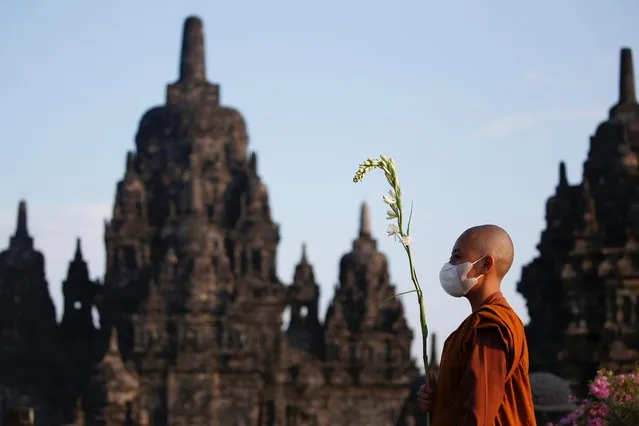
A Buddhist monk wearing a protective mask walks around the Sewu temple during the celebrations of Vesak Day, marking the birth, enlightenment and death of Buddha, amid the coronavirus disease (COVID-19) pandemic in Sleman, Yogyakarta, Indonesia, May 26, 2021. (Photo by Willy Kurniawan/Reuters)

A Buddhist monk wearing a protective mask walks around the Sewu temple during the celebrations of Vesak Day, marking the birth, enlightenment and death of Buddha, amid the coronavirus disease (COVID-19) pandemic in Sleman, Yogyakarta, Indonesia, May 26, 2021. (Photo by Willy Kurniawan/Reuters)
Details
09 Jun 2021 10:40:00
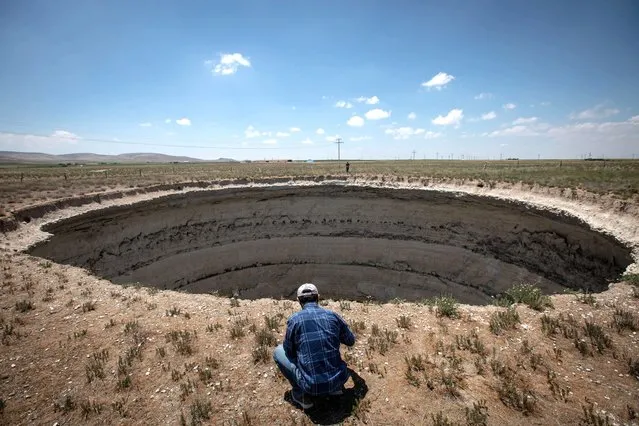
Geology Professor Fetullah Arik takes measurements next to a large sinkhole on June 03, 2021, in Karapinar, Turkey. (Photo by Chris McGrath/Getty Images)

Geology Professor Fetullah Arik takes measurements next to a large sinkhole on June 03, 2021, in Karapinar, Turkey. In Turkey’s Konya province, the heart of the country's agriculture sector, extreme drought conditions over the past two years are taking a heavy toll on farmers and the land. (Photo by Chris McGrath/Getty Images)
Details
15 Jun 2021 08:35:00
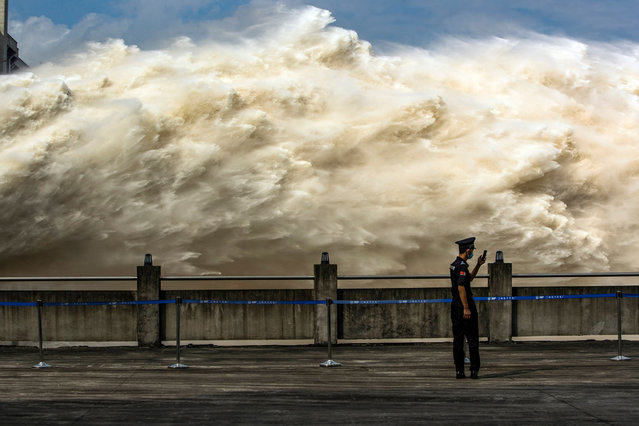
This photo taken on July 19, 2020 shows a security guard looking at his smartphone while water is released from the Three Gorges Dam, a gigantic hydropower project on the Yangtze river, to relieve flood pressure in Yichang, central China's Hubei province. Rising waters across central and eastern China have left over 140 people dead or missing, and floods have affected almost 24 million since the start of July, according to the ministry of emergency management. (Photo by AFP Photo/China Stringer Network)

This photo taken on July 19, 2020 shows a security guard looking at his smartphone while water is released from the Three Gorges Dam, a gigantic hydropower project on the Yangtze river, to relieve flood pressure in Yichang, central China's Hubei province. Rising waters across central and eastern China have left over 140 people dead or missing, and floods have affected almost 24 million since the start of July, according to the ministry of emergency management. (Photo by AFP Photo/China Stringer Network)
Details
29 Jul 2020 00:05:00
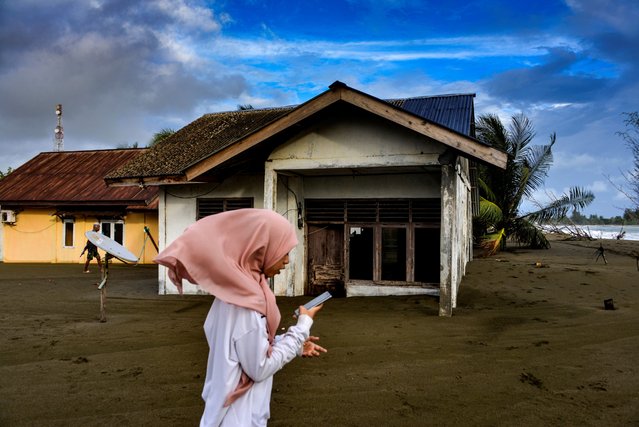
A girl walks past outside a house damaged by tidal waves at Meulaboh beach in Aceh province on July 12, 2020. (Photo by Chaideer Mahyuddin/AFP Photo)

A girl walks past outside a house damaged by tidal waves at Meulaboh beach in Aceh province on July 12, 2020. (Photo by Chaideer Mahyuddin/AFP Photo)
Details
05 Aug 2020 00:03:00
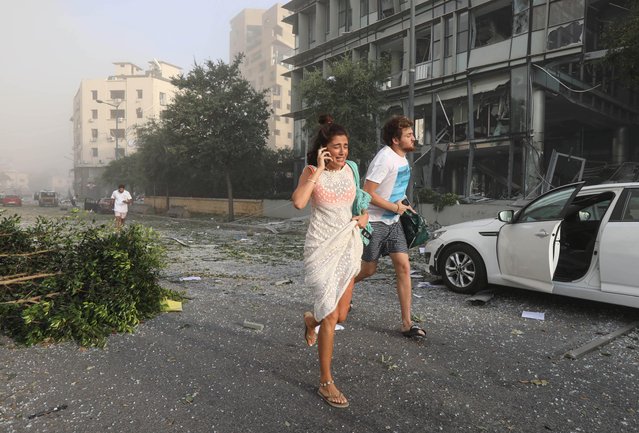
People run for cover following an explosion in Beirut's port area, Lebanon on August 4, 2020. (Photo by Mohamed Azakir/Reuters)

People run for cover following an explosion in Beirut's port area, Lebanon on August 4, 2020. A mega-blast tore through the harbour in the heart of the Lebanese capital with the force of an earthquake, killing more than 100 people and injuring over 4,000. (Photo by Mohamed Azakir/Reuters)
Details
07 Aug 2020 00:01:00
A woman wears false flag eyelashes during the St Patrick's day parade through Dublin city centre on St Patrick's day, on March 17, 2013. (Photo by Julien Behal/PA Wire)

A woman wears false flag eyelashes during the St Patrick's day parade through Dublin city centre on St Patrick's day, on March 17, 2013. (Photo by Julien Behal/PA Wire)
Details
17 Mar 2013 08:16:00
Synalpheus iocasta; Singapore Marine. (Arthur Anker)

Synalpheus iocasta; Singapore Marine. (Photo by Arthur Anker)
Details
26 Apr 2013 09:27:00
The eruption of Cordon Caulle began on June 4, 2011, located in the Region of Los Rios in Chile. For about 12 months, people and animals became accustomed to living with the daily fall of ash, which also caused problems in the air traffic in South America. The explosions and lightning during first days of the eruption could be seen from hundreds of miles around. This photograph was taken on the second night of eruption from the town of Lago Ranco. (Photo and caption by Francisco Negroni/National Geographic Traveler Photo Contest)

The eruption of Cordon Caulle began on June 4, 2011, located in the Region of Los Rios in Chile. For about 12 months, people and animals became accustomed to living with the daily fall of ash, which also caused problems in the air traffic in South America. The explosions and lightning during first days of the eruption could be seen from hundreds of miles around. This photograph was taken on the second night of eruption from the town of Lago Ranco. (Photo and caption by Francisco Negroni/National Geographic Traveler Photo Contest)

ATTENTION! All pictures are presented in high resolution. To see Hi-Res images – just TWICE click on any picture. In other words, click small picture – opens the BIG picture. Click BIG picture – opens VERY BIG picture.
Details
23 Jun 2013 11:24:00