Loading...
Done
s*xy singer Donni Rai

Singer Donni Rai arrives at the 48th Annual Grammy Awards at the Staples Center on February 8, 2006 in Los Angeles, California. (Photo by Stephen Shugerman/Getty Images)
Details
03 Aug 2011 11:22:00
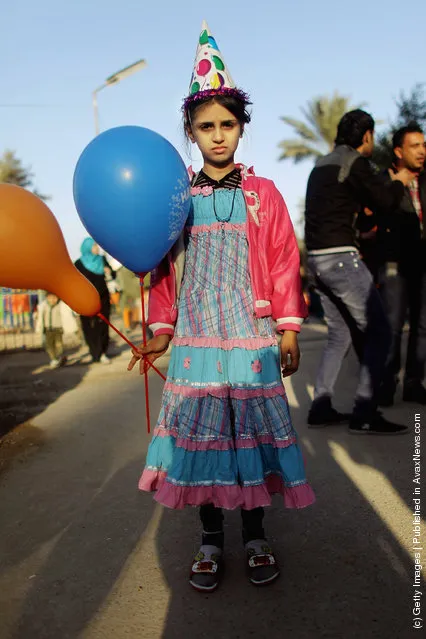
Nora Muaid stands in Zawraa Park

Nora Muaid stands in Zawraa Park on December 2, 2011 in Baghdad, Iraq. The park's 180-foot tall Ferris wheel opened earlier this year and is the second largest in the Middle East. (Photo by Mario Tama/Getty Images)
Details
04 Dec 2011 11:49:00
Devils Parade In Krampus Procession

Members of the Koatlacker devil's association (Koatlacker Tuifl) dressed as demonic creatures take part in a Krampus procession on December 4, 2011 in Prad near Merano, Italy. (Photo by Johannes Simon/Getty Images)
Details
05 Dec 2011 13:17:00


Orange Caramel (오렌지 캬라멜) – 까탈레나 (Catallena) – Korean. Is it worth eating live beings? This is a philosophical question: the history of our species and the ontology of being are saying that it's more likely yes, and on the other hand your mind and empathy are more likely to be against this idea. Or at least like in this Korean clip – eat, but with tears in your eyes.
Details
12 Sep 2017 09:18:00
s*xy brunet striptease dancer dancing lap dance in front of man. (Photo by Blue SkyImages/Getty Images)

Sеxy brunet striptease dancer dancing lap dance in front of man. (Photo by Blue SkyImages/Getty Images)
Details
01 Dec 2017 05:01:00
s*xy women kissing in bed. (Photo by Sakkmesterke/Getty Images)

Sеxy women kissing in bed. (Photo by Sakkmesterke/Getty Images)
Details
27 Dec 2017 07:13:00
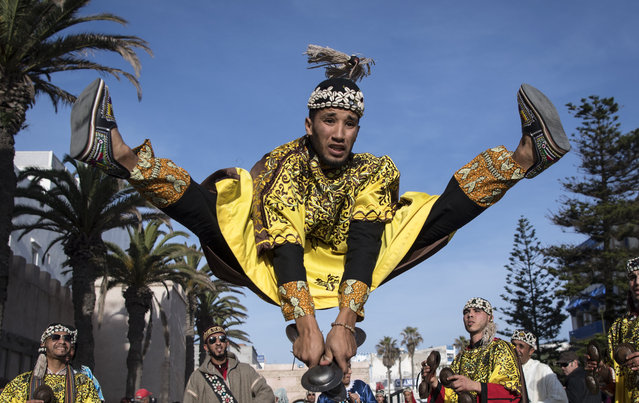
A Gnawa traditional group performs in the city of Essaouira on December 14, 2019, to celebrate the decision of adding the Gnawa culture to UNESCO's list of Intangible Cultural Heritage of Humanity. Gnawa culture, a centuries-old Moroccan practice rooted in music, African rituals and Sufi traditions, was added to UNESCO's list of Intangible Cultural Heritage of Humanity earlier in the week. Gnawa refers to a “set of musical productions, fraternal practices and therapeutic rituals where the secular mixes with the sacred”, according to the nomination submitted by Morocco. Often dressed in colourful outfits, Gnawa musicians play the guenbri, a type of lute with three strings, accompanied by steel castanets called krakebs. (Photo by Fadel Senna/AFP Photo)


A Gnawa traditional group performs in the city of Essaouira on December 14, 2019, to celebrate the decision of adding the Gnawa culture to UNESCO's list of Intangible Cultural Heritage of Humanity. Gnawa culture, a centuries-old Moroccan practice rooted in music, African rituals and Sufi traditions, was added to UNESCO's list of Intangible Cultural Heritage of Humanity earlier in the week. Gnawa refers to a “set of musical productions, fraternal practices and therapeutic rituals where the secular mixes with the sacred”, according to the nomination submitted by Morocco. Often dressed in colourful outfits, Gnawa musicians play the guenbri, a type of lute with three strings, accompanied by steel castanets called krakebs. (Photo by Fadel Senna/AFP Photo)
Details
18 Dec 2019 00:05:00
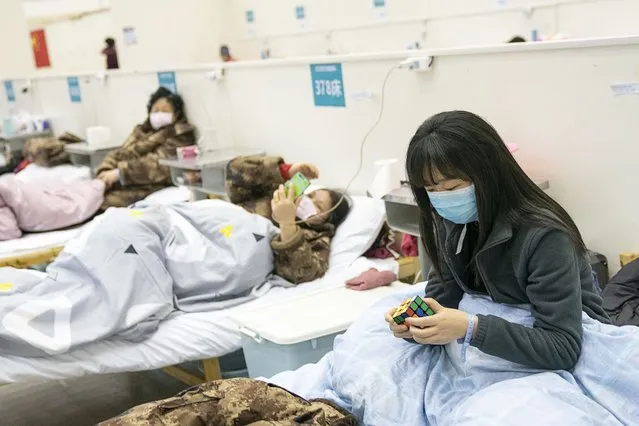
A patient solves a rubik's cube at a temporary hospital converted from “Wuhan Livingroom” in central China's Hubei Province on February 10, 2020. In face of the outbreak of the novel coronavirus pneumonia epidemic, Wuhan authorities have transformed public venues such as exhibition centers and gymnasiums into temporary hospitals. The hospitals have a large capacity of treating patients with mild symptoms and play an important role in isolating the source of infection and cutting off the routes of infection during epidemic prevention. The first batch of patients was hospitalized on Feb. 5. (Photo by Chine Nouvelle/SIPA Press/Rex Features/Shutterstock)

A patient solves a rubik's cube at a temporary hospital converted from “Wuhan Livingroom” in central China's Hubei Province on February 10, 2020. In face of the outbreak of the novel coronavirus pneumonia epidemic, Wuhan authorities have transformed public venues such as exhibition centers and gymnasiums into temporary hospitals. The hospitals have a large capacity of treating patients with mild symptoms and play an important role in isolating the source of infection and cutting off the routes of infection during epidemic prevention. The first batch of patients was hospitalized on Feb. 5. (Photo by Chine Nouvelle/SIPA Press/Rex Features/Shutterstock)
Details
17 Feb 2020 00:07:00