Loading...
Done
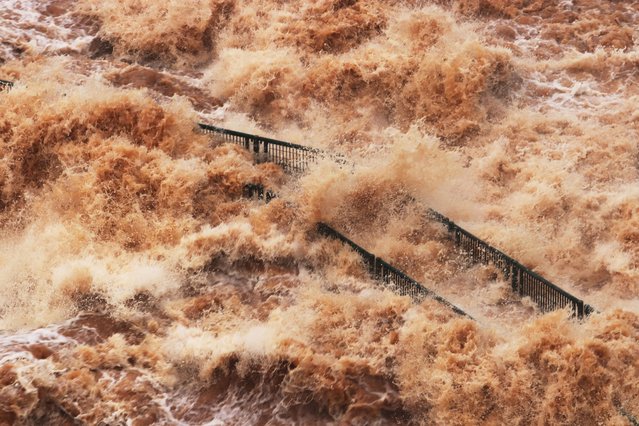
View of the visitor walkway at the Iguazu Falls, which was destroyed by the strong current of the river on the triple border between Brazil, Argentina and Paraguay, on October 30, 2023. The Falls are flowing at over 24 million liters of water per second, according to hydrological monitoring by Companhia Paranaense de Energia (Copel). This is the second highest flow since 1997, when monitoring became automatic and was measured hourly. (Photo by Christian Rizzi/AFP Photo)

View of the visitor walkway at the Iguazu Falls, which was destroyed by the strong current of the river on the triple border between Brazil, Argentina and Paraguay, on October 30, 2023. The Falls are flowing at over 24 million liters of water per second, according to hydrological monitoring by Companhia Paranaense de Energia (Copel). This is the second highest flow since 1997, when monitoring became automatic and was measured hourly. (Photo by Christian Rizzi/AFP Photo)
Details
21 Dec 2024 03:30:00
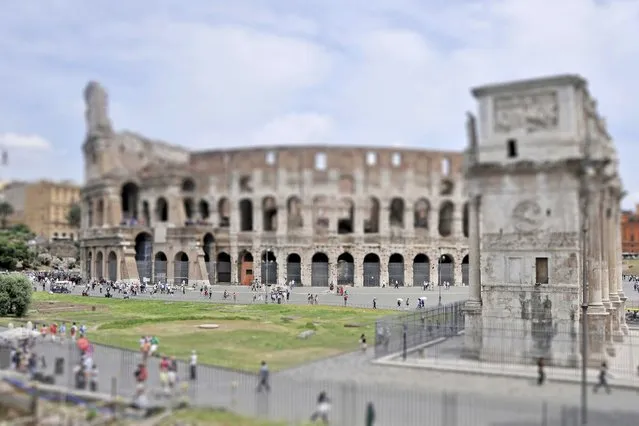
Coliseum, Rome. (Photo by Richard Silver)

Richard Silver's photographs show us the world's biggest sights like Machu Picchu in Peru or Copacabana in Brazil. His photos, however, are not simply depictions of the landmarks but planned, artistic visual constructions that, with their playful combinations of sharpness and blur, create new worlds of experience. Photo: Coliseum, Rome. (Photo by Richard Silver)
Details
04 May 2013 11:19:00
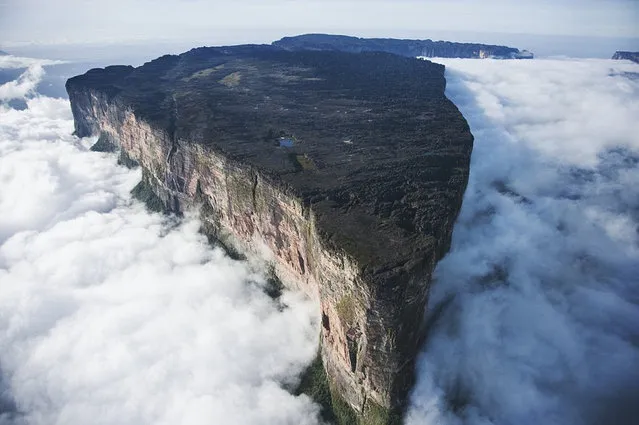
Mount Roraima

Mount Roraima (Spanish: Monte Roraima, also known as Tepuy Roraima and Cerro Roraima; Portuguese: Monte Roraima [ˈmõtʃi ʁoˈɾajmɐ]) is the highest of the Pakaraima chain of tepui plateau in South America. First described by the English explorer Sir Walter Raleigh in 1596, its 31 km2 summit area is defended by 400-metre-tall cliffs on all sides. The mountain includes the triple border point of Venezuela, Brazil and Guyana.
Details
11 Sep 2012 08:04:00
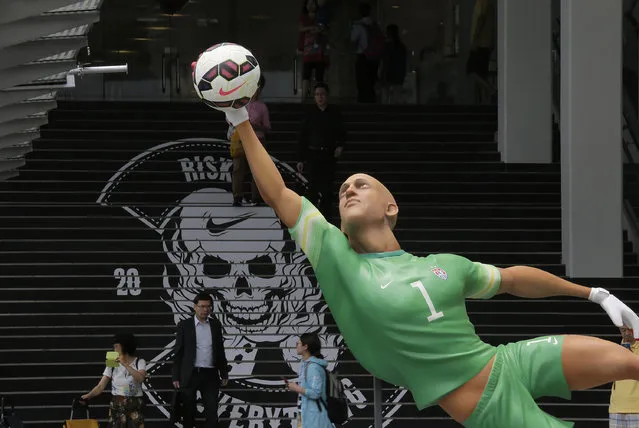
A giant size figure of the United States' goalkeeper Tim Howard is displayed outside a shopping mall in Hong Kong, Thursday, June 12, 2014, to promote the upcoming 2014 World Cup in Brazil. A total of seven 3.5 meters to 4 meters (11 feet 6 inch to 13 feet one inch) tall figures of famous players attract many soccer fans. (Photo by Vincent Yu/AP Photo)

A giant size figure of the United States' goalkeeper Tim Howard is displayed outside a shopping mall in Hong Kong, Thursday, June 12, 2014, to promote the upcoming 2014 World Cup in Brazil. A total of seven 3.5 meters to 4 meters (11 feet 6 inch to 13 feet one inch) tall figures of famous players attract many soccer fans. (Photo by Vincent Yu/AP Photo)
Details
13 Jun 2014 11:31:00
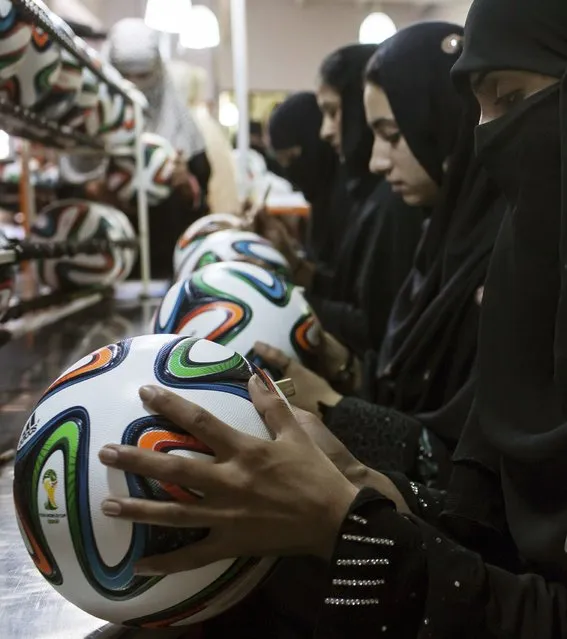
Employees conduct a final check to fix any cavities in the seams of balls inside the soccer ball factory that produces official match balls for the 2014 World Cup in Brazil, in Sialkot, Punjab province May 16, 2014. (Photo by Sara Farid/Reuters)

Employees conduct a final check to fix any cavities in the seams of balls inside the soccer ball factory that produces official match balls for the 2014 World Cup in Brazil, in Sialkot, Punjab province May 16, 2014. It was when he felt the roar of the crowd at the 2006 World Cup in Germany that Pakistani factory owner Khawaja Akhtar first dreamt up a goal of his own: to manufacture the ball for the biggest soccer tournament on the planet. Last year he finally got his chance – but only 33 days to make it happen. (Photo by Sara Farid/Reuters)
Details
26 May 2014 13:59:00
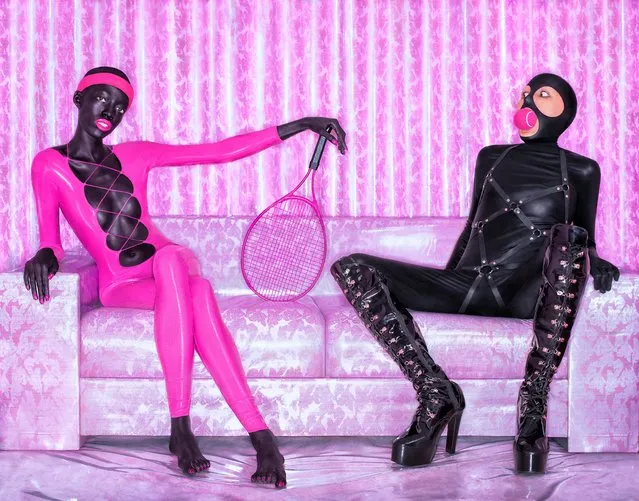
Black women in Brazil sit at the intersection of racism and misogyny, and have in recent years been at the forefront of a movement that challenges issues ranging from sexual and domestic violence to police brutality and stereotyping. Kolor Collective considers itself to be a part of this movement and questions expectations imposed on black women with satirical and subversive images, as seen here. (Photo by Kolor Art Collective/The Guardian)

Photographer Pol Kurucz’s vivid collection of photos explores issues faced by black Brazilian women, from political misrepresentation to unrealistic beauty standards. Kolor Collective is a Rio de Janeiro-based creative group that challenges the struggle faced by black women in Brazil through theatrical and provocative art. It was founded in 2015 by Franco-Hungarian photographer Pol Kurucz, who often touches on his own experiences of discrimination to call out sensitive social problems. (Photo by Kolor Art Collective/The Guardian)
Details
28 Dec 2016 07:24:00
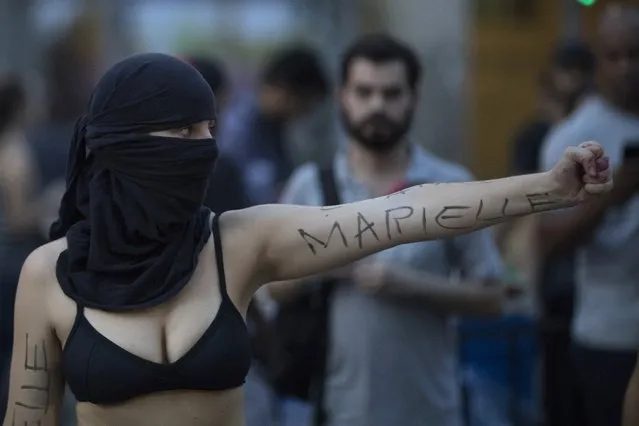
A demonstrator shows her arm with the name "Marielle" written on it, as she performs during a protest against the murder of councilwoman Marielle Franco in Rio de Janeiro, Brazil, Tuesday, March 20, 2018. Franco's murder came just a month after the government put the military in charge of security in Rio, which is experiencing a sharp spike in violence less than two years after hosting the 2016 Summer Olympics. (AP Photo/Leo Correa)

A demonstrator shows her arm with the name “Marielle” written on it, as she performs during a protest against the murder of councilwoman Marielle Franco in Rio de Janeiro, Brazil, Tuesday, March 20, 2018. Franco's murder came just a month after the government put the military in charge of security in Rio, which is experiencing a sharp spike in violence less than two years after hosting the 2016 Summer Olympics. (Photo by Leo Correa/AP Photo)
Details
21 Mar 2018 09:12:00
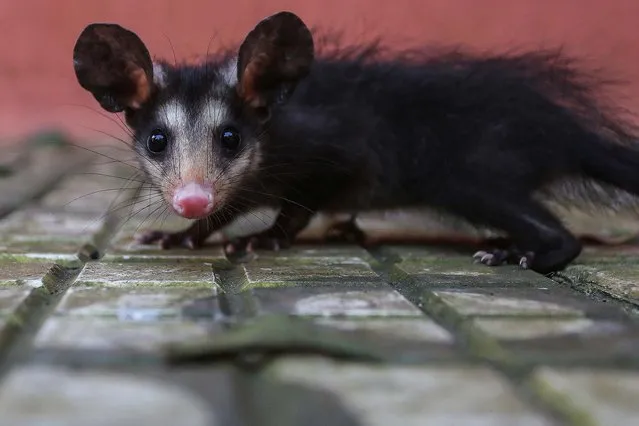
Photo taken on September 19, 2015 shows a baby Brazilian opossum at the “Parque Estoril” zoo in Sao Bernardo do Campo of Sao Paulo, Brazil. According to local press, the “Parque Estoril” zoo houses currently 23 orphan cubs of wild animals rescued in the south region of Sao Paulo, victims of illegal wildlife trade or problems caused by urban growth. (Photo by Rahel Patrasso/Xinhua via ZUMA Wire)

Photo taken on September 19, 2015 shows a baby Brazilian opossum at the “Parque Estoril” zoo in Sao Bernardo do Campo of Sao Paulo, Brazil. According to local press, the “Parque Estoril” zoo houses currently 23 orphan cubs of wild animals rescued in the south region of Sao Paulo, victims of illegal wildlife trade or problems caused by urban growth. According to the zoo, all the animals arrived in the last three months, and many of them, not being able to be reintroduced to their natural habitat, will be used as examples in environmental education classes. (Photo by Rahel Patrasso/Xinhua via ZUMA Wire)
Details
26 Sep 2015 08:00:00