A fisherman throws a net for catching fish with his wife in Yanhu fisherman village near Yangzhou, Jiangsu province, China, 18 October 2018. (Photo by Aleksandar Plavevski/EPA/EFE)
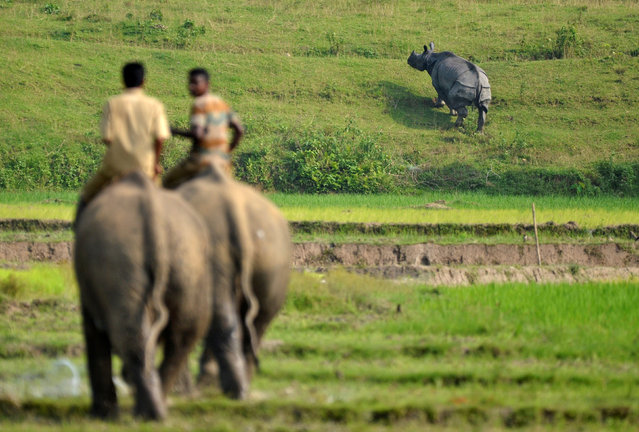
Forest guards chase away a rhino that strayed into a residential area after floods forced animals to escape the Kaziranga National park in Nagaon district, in the northeastern state of Assam, August 15, 2017. (Photo by Anuwar Hazarika/Reuters)
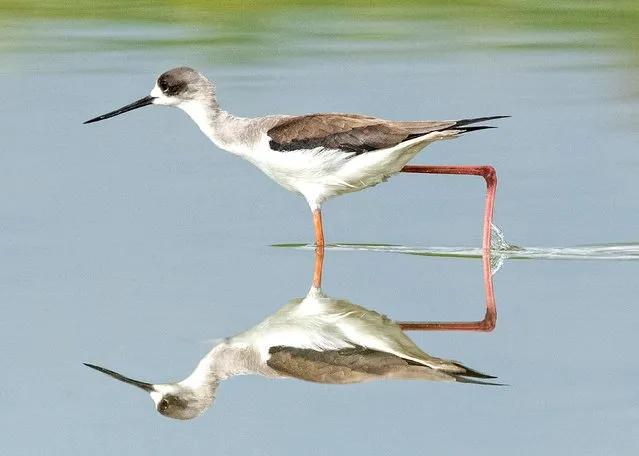
A black-winged stilt patrols a reservoir in Jezreel Valley in Israel early April 2023. Their eggs are a golden colour mottled with brown. (Photo by Itamar Procaccia/Solent News)
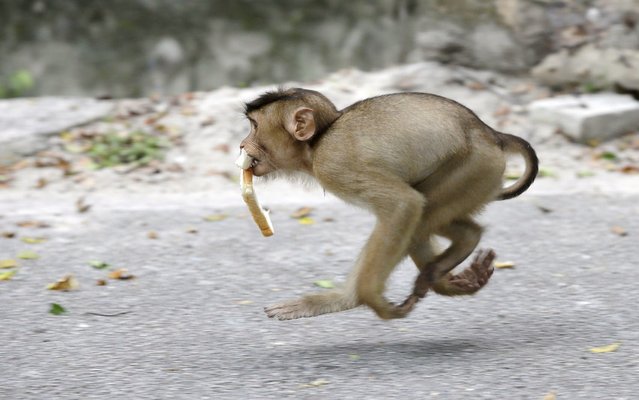
A monkey runs away with a piece of bread in it's mouth at a park in a suburb of Kuala Lumpur, Malaysia, Monday, March 4, 2013. (Photo by Mark Baker/AP Photo)
P.S. All pictures are presented in high resolution. To see Hi-Res images – just TWICE click on any picture. In other words, click small picture – opens the BIG picture. Click BIG picture – opens VERY BIG picture (if available; this principle works anywhere on the site AvaxNews).
A woman returns home carrying vegetable on her back (foreground) while other farmer works on vegetable field (background) during the 43rd day of the lockdown imposed by the government as a preventive measure against the spread of COVID-19 coronavirus, in Kathmandu, Nepal on Tuesday, May 5, 2020. (Photo by Rojan Shrestha/NurPhoto via Getty Images)
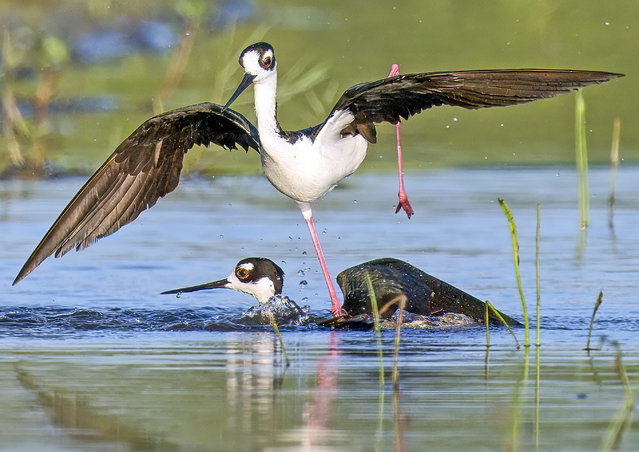
A pair of black-necked stilts fight over their marshland territory in Orlando, Florida in the last decade of July 2024. (Photo by Jake Landing/Solent News)
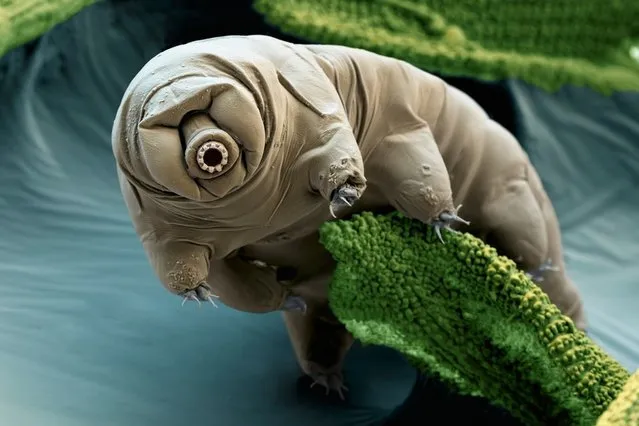
“Tardigrades (commonly known as waterbears or moss piglets) are small, water-dwelling, segmented animals with eight legs. Tardigrades were first discovered in 1773 by Johann August Ephraim Goeze, who called them kleiner Wasserbär, meaning “little water bear” in German. The name Tardigrada means “slow walker” and was given by Lazzaro Spallanzani in 1777. The name water bear comes from the way they walk, reminiscent of a bear's gait. The biggest adults may reach a body length of 1.5 millimetres (0.059 in), the smallest below 0.1 mm. Freshly hatched tardigrades may be smaller than 0.05 mm”. – Wikipedia. Photo: Tardigrades. (Photo by SPL/East News)
Ivan Shamyanok, 90, shaves in his house in the village of Tulgovichi, near the exclusion zone around the Chernobyl nuclear reactor, Belarus March 15, 2016. “My sister lived here with her husband. They decided to leave and soon enough they were in the ground ... They died from anxiety. I'm not anxious. I sing a little, take a turn in the yard, take things slowly like this and I live”, he said. (Photo by Vasily Fedosenko/Reuters)