Loading...
Done
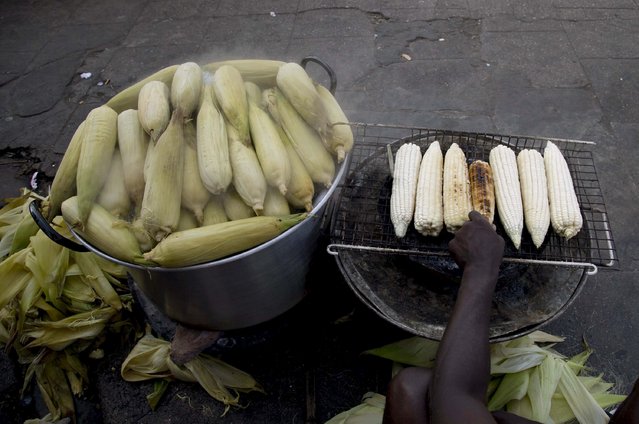
A trader sells mealies to commuter in Durban, South Africa, April19, 2016, as food prices continue to rise due to drought conditions. (Photo by Rogan Ward/Reuters)

A trader sells mealies to commuter in Durban, South Africa, April19, 2016, as food prices continue to rise due to drought conditions. (Photo by Rogan Ward/Reuters)
Details
20 Apr 2016 12:53:00
Singer Paulina Rubio performs during the Latin Billboard Awards, Thursday, April 28, 2016 in Coral Gables, Fla. (Photo by Wilfredo Lee/AP Photo)

Singer Paulina Rubio performs during the Latin Billboard Awards, Thursday, April 28, 2016 in Coral Gables, Fla. (Photo by Wilfredo Lee/AP Photo)
Details
30 Apr 2016 09:50:00
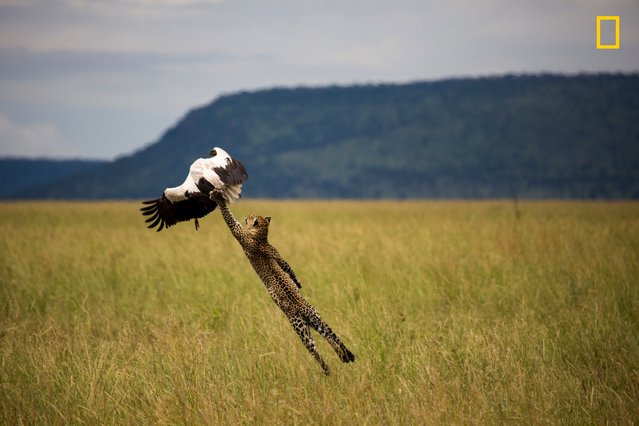
“Leopard Hunting a Stork”. “One-shot capture. I watched the leopard stalking the stork, I only had time to focus at 400mm, no time to change to high speed, I watched the stork, and as soon as it flapped its wings, I shot one shot”. (Photo by Paul Rifkin/National Geographic Travel Photographer of the Year Contest)

“Leopard Hunting a Stork”. “One-shot capture. I watched the leopard stalking the stork, I only had time to focus at 400mm, no time to change to high speed, I watched the stork, and as soon as it flapped its wings, I shot one shot”. (Photo by Paul Rifkin/National Geographic Travel Photographer of the Year Contest)
Details
04 Jun 2018 00:03:00
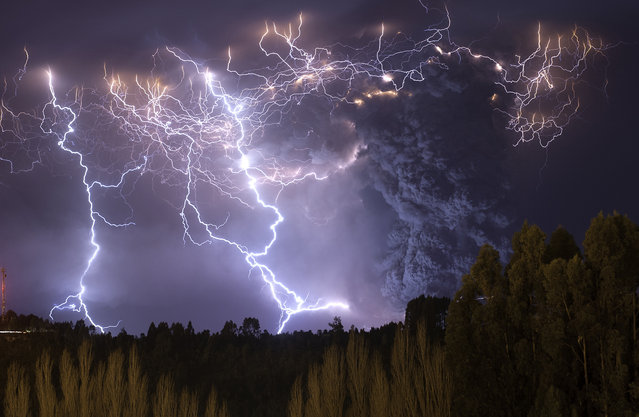
The eruption of Cordon Caulle began on June 4, 2011, located in the Region of Los Rios in Chile. For about 12 months, people and animals became accustomed to living with the daily fall of ash, which also caused problems in the air traffic in South America. The explosions and lightning during first days of the eruption could be seen from hundreds of miles around. This photograph was taken on the second night of eruption from the town of Lago Ranco. (Photo and caption by Francisco Negroni/National Geographic Traveler Photo Contest)

The eruption of Cordon Caulle began on June 4, 2011, located in the Region of Los Rios in Chile. For about 12 months, people and animals became accustomed to living with the daily fall of ash, which also caused problems in the air traffic in South America. The explosions and lightning during first days of the eruption could be seen from hundreds of miles around. This photograph was taken on the second night of eruption from the town of Lago Ranco. (Photo and caption by Francisco Negroni/National Geographic Traveler Photo Contest)

ATTENTION! All pictures are presented in high resolution. To see Hi-Res images – just TWICE click on any picture. In other words, click small picture – opens the BIG picture. Click BIG picture – opens VERY BIG picture.
Details
23 Jun 2013 11:24:00
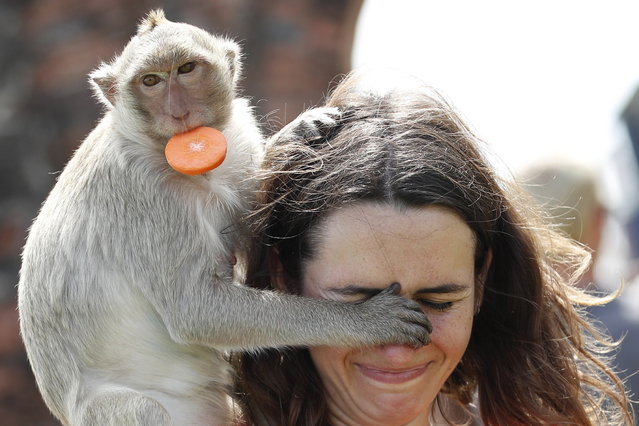
A monkey is being fed by a foreign tourist during the annual Monkey Banquet at Phra Prang Sam Yod ancient temple in Lopburi, some 180km from Bangkok, central Thailand, 24 November 2024. The annual gala has been organized since 1989 by Lopburi's entrepreneur Yongyuth Kitwatananusont, offering all-you-can-eat fruits, vegetables, and desserts for monkeys to honor the long-tailed macaques to attract tourists to visit the town to promote tourism. According to the Wildlife Department, more than 2,000 urban monkeys were captured in 2024 by authorities to control the monkey population after the growing complaints of residents that the macaques maraud food, frequently confront residents, causing accidents as well as their properties, assets, and the ancient city to be overrun and damaged by the monkeys. (Photo by Rungroj Yongrit/EPA)

A monkey is being fed by a foreign tourist during the annual Monkey Banquet at Phra Prang Sam Yod ancient temple in Lopburi, some 180km from Bangkok, central Thailand, 24 November 2024. The annual gala has been organized since 1989 by Lopburi's entrepreneur Yongyuth Kitwatananusont, offering all-you-can-eat fruits, vegetables, and desserts for monkeys to honor the long-tailed macaques to attract tourists to visit the town to promote tourism. (Photo by Rungroj Yongrit/EPA)
Details
08 Dec 2024 04:22:00
Kawakanih Yawalapiti, 9, Upper Xingu region of Mato Grosso, Brazil, 2018: Kawakanih lives with her tribe, the Yawalapiti, in Xingu national park, a preserve in the Amazon basin of Brazil. The Yawalapiti collect seeds to preserve species unique to their ecosystem, which lies between the rain forest and savannah. Kawakanih’s diet is simple, consisting mainly of fish, cassava, porridge, fruit and nuts. “It takes five minutes to catch dinner”, says Kawakanih. “When you’re hungry, you just go to the river with your net”. (Photo by Gregg Segal/The Guardian)

Photographer Gregg Segal travelled the world to document children and the food they eat in a week. Partly inspired by the increasing problems of childhood obesity, he tracked traditional regional diets as yet unaffected by globalisation, and ironically, found that the healthiest diets were often eaten by the least well off. (Photo by Gregg Segal/The Guardian)
Details
03 Jul 2019 00:03:00
Mystical Forest. Tracey Jennings photographed this seven-gill shark in a kelp forest just off the shore of Simon's Town near Cape Town, South Africa. You don't need to travel far from cities to visit Narnia. This 7 gill shark was photographed in a kelp forest just off the shore of Simonstown near Cape Town, South Africa. (Photo by Tracey Jennings/National Geographic Travel Photographer of the Year Contest)

Mystical Forest. Tracey Jennings photographed this seven-gill shark in a kelp forest just off the shore of Simon's Town near Cape Town, South Africa. You don't need to travel far from cities to visit Narnia. This 7 gill shark was photographed in a kelp forest just off the shore of Simonstown near Cape Town, South Africa. (Photo by Tracey Jennings/National Geographic Travel Photographer of the Year Contest)
Details
24 May 2016 09:32:00
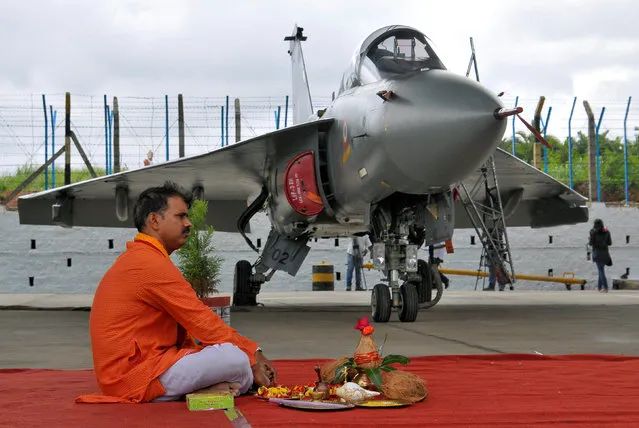
A Hindu priest waits to perform prayers next to Tejas, India's first locally-built Light Combat Aircraft (LCA), before its induction into the Indian Air Force at the Hindustan Aeronautics Limited (HAL) Airport in Bengaluru, India, July 1, 2016. (Photo by Abhishek N. Chinnappa/Reuters)

A Hindu priest waits to perform prayers next to Tejas, India's first locally-built Light Combat Aircraft (LCA), before its induction into the Indian Air Force at the Hindustan Aeronautics Limited (HAL) Airport in Bengaluru, India, July 1, 2016. (Photo by Abhishek N. Chinnappa/Reuters)
Details
02 Jul 2016 13:01:00