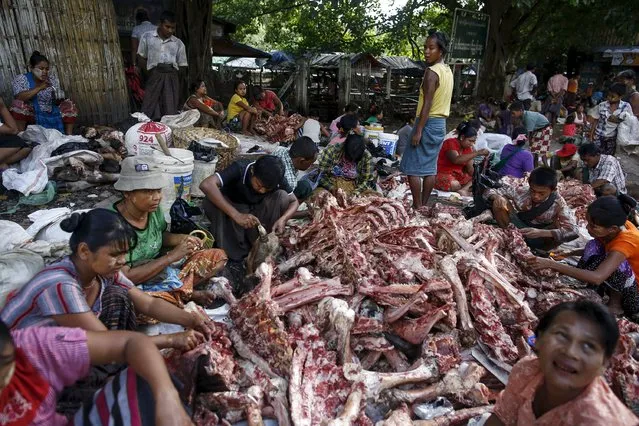
People remove meat from the bones of animals slaughtered for Eid al-Adha after they have been discarded at a garbage dump in Yangon, Myanmar, September 25, 2015. (Photo by Soe Zeya Tun/Reuters)
Police women ride Segways as they patrol at Guangzhou South Railway Station on Jaunary 4, 2012 in Guangzhou, China. (Photo by ChinaFotoPress/ChinaFotoPress via Getty Images)
A bomb squad member wearing heavy equipment leaves the explosion site at the Yasukuni shrine precints in Tokyo, Japan, 23 November 2015. More than 100 police, firefighters and officials gathered at the site after an explosion was heard in the toilets of the Yasukuni Shrine, a controversial war shrine in the capital Tokyo. Local media reports said police found possible traces of an explosion, as well as batteries and wires at the shrine. There were no reports of injuries. (Photo by Franck Robichon/EPA)
Getting her tongue pierced was “exciting and scary” says a teen who succumbed to pressure from her best friend in Austin, Texas, February 22, 2008. This image is featured in National Geographic's exhibition “Women of Vision: National Geographic Photographers on Assignment”, on view at the Palm Beach Photographic Centre, Jan. 22 - Mar. 22, 2015. (Photo by Kitra Cahana/National Geographic)
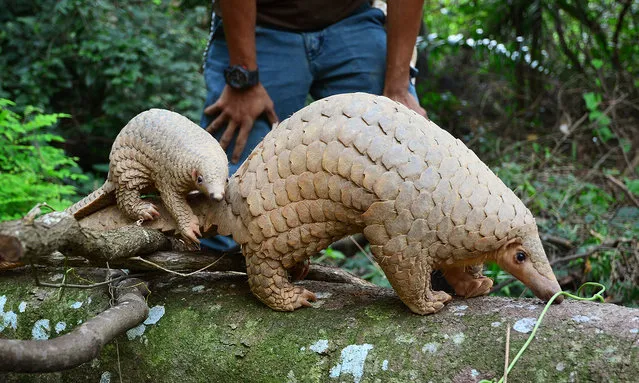
Radin the Sunda pangolin hitches a ride on Nita as their keeper looks on. The elusive and nocturnal Sunda pangolin produces only one or two offspring a year and Radin is the third pangolin baby born in Night Safari since 2011. (Photo by Wildlife Reserves Singapore)
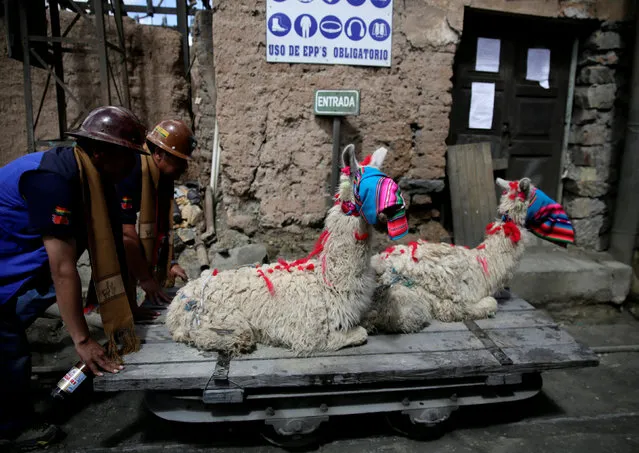
Independent miners transport llamas to sacrifice them for good fortune during the year as part of Andean carnival celebrations, outside the Mina Itos on the outskirts of Oruro, Bolivia February 24, 2017. (Photo by David Mercado/Reuters)
“Patricia Piccinini (born in 1965 in Freetown, Sierra Leone) is an Australian artist and hyperrealist sculptor. Her art work came to prominence in Australia in the late 1990s. Her major artworks often reflect her interests in issues such as bioethics, biotechnologies and the environment”. – Wikipedia
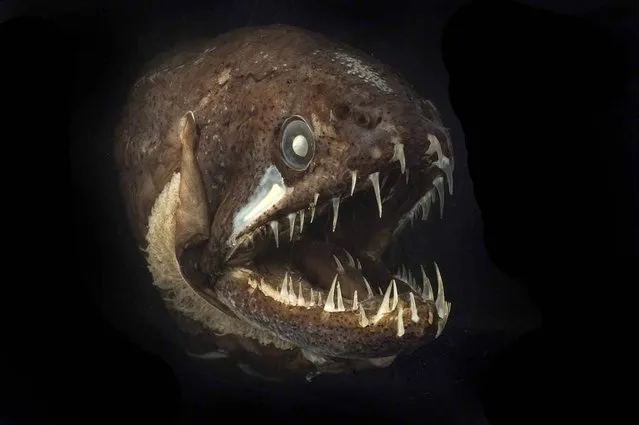
Imagine living in the sea where it is permanently dark, cold, and food is hard to find. For many animals at depth, it may be weeks to months between meals. If you find something to eat, you have to hang on to it. This is why so many deep-sea fishes have lots of big teeth. This dragonfish, spotted off the coast of Australia, even has teeth on its tongue. They would be terrifying animals ... if they weren’t the size of a banana. (Photo by Julian Finn/Museum Victoria)