Loading...
Done
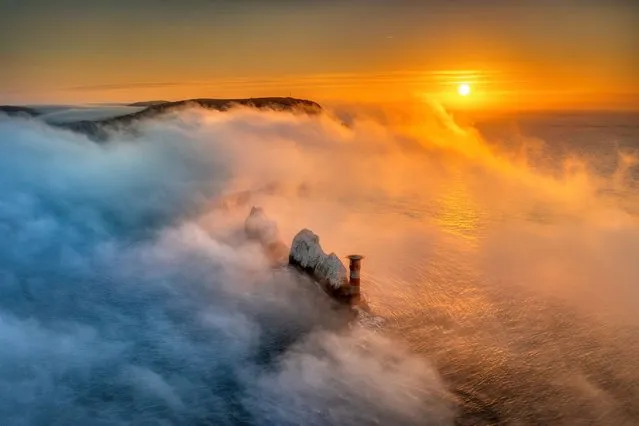
A landscape photographer has captured a stunning picture of the Isle of Wight's iconic Needles emerging from the sea mist early February 2023. Jamie Russell captured this moment on the most western part of the island. (Photo by Jamie Russell/IslandVisionss/Bournemouth News)

A landscape photographer has captured a stunning picture of the Isle of Wight's iconic Needles emerging from the sea mist early February 2023. Jamie Russell captured this moment on the most western part of the island. (Photo by Jamie Russell/IslandVisionss/Bournemouth News)
Details
09 Mar 2023 03:49:00
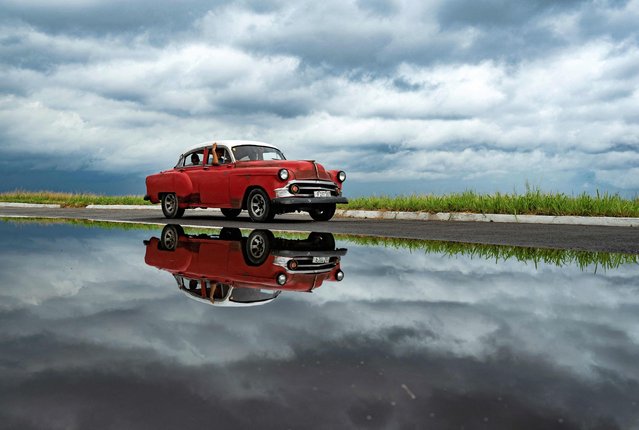
An old car passes by while dark clouds are seen due to the tropical storm Idalia in Havana, on August 28, 2023. (Photo by Yamil Lage/AFP Photo)

An old car passes by while dark clouds are seen due to the tropical storm Idalia in Havana, on August 28, 2023. (Photo by Yamil Lage/AFP Photo)
Details
01 Oct 2023 04:58:00
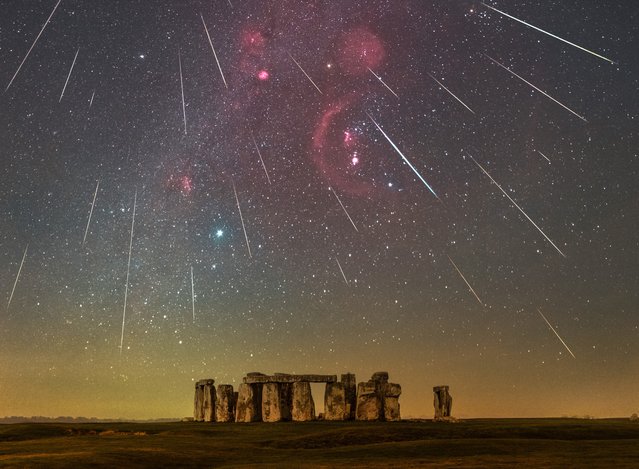
Nick Bull captured the Geminid meteor shower above Stonehenge in Wiltshire, UK on December 14, 2023. (Photo by Nick Bull/Picture Eexclusive)

Nick Bull captured the Geminid meteor shower above Stonehenge in Wiltshire, UK on December 14, 2023. (Photo by Nick Bull/Picture Eexclusive)
Details
19 Aug 2024 04:00:00
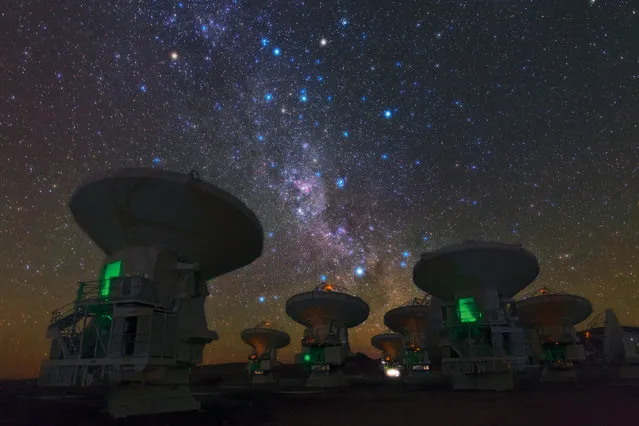
The antennas of the European Southern Observatory's Atacama Large Millimeter/Submillimeter Array, also known as ALMA, are set against the splendor of the Milky Way in this picture by Babak Tafreshi

The antennas of the European Southern Observatory's Atacama Large Millimeter/Submillimeter Array, also known as ALMA, are set against the splendor of the Milky Way in this picture by Babak Tafreshi. Construction of the full ALMA array is due to be completed in Chile's Atacama Desert in 2013, but the facility is already making scientific observations with a partial array of antennas. (Photo by ESO/B. Tafreshi/TWAN)
Details
03 Jun 2012 11:57:00
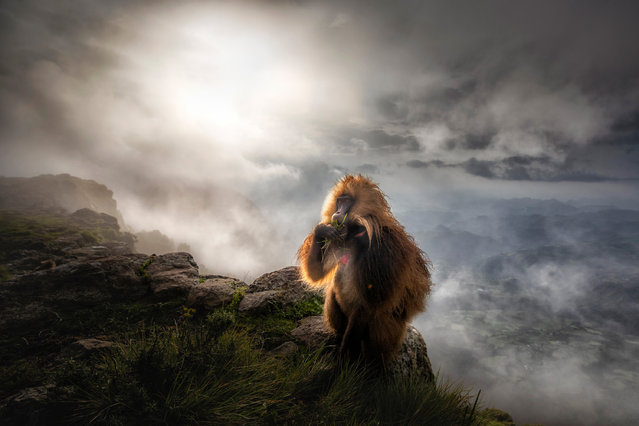
Highly commended, mammals: Gelada after the storm – Marco Gaiotti (Italy). “Gelada baboons are the only monkey species in the world that feed on grasses. They are native to the tableland of Ethiopia. Every morning large family groups wander from their sleeping places in the steep rock face, up to 1,000 metres high, to the feeding grounds at the tablelands. This image clearly depicts their feeding strategy: they pull out bunches of grass, sort the stalks and then lift them to their mouth. This shot was taken towards the end of the rainy season after a heavy storm”. (Photo by Marco Gaiotti/2019 GDT European Wildlife Photographer of the Year)

Highly commended, mammals: Gelada after the storm – Marco Gaiotti (Italy). “Gelada baboons are the only monkey species in the world that feed on grasses. They are native to the tableland of Ethiopia. Every morning large family groups wander from their sleeping places in the steep rock face, up to 1,000 metres high, to the feeding grounds at the tablelands. This image clearly depicts their feeding strategy: they pull out bunches of grass, sort the stalks and then lift them to their mouth. This shot was taken towards the end of the rainy season after a heavy storm”. (Photo by Marco Gaiotti/2019 GDT European Wildlife Photographer of the Year)
Details
31 Oct 2019 00:03:00
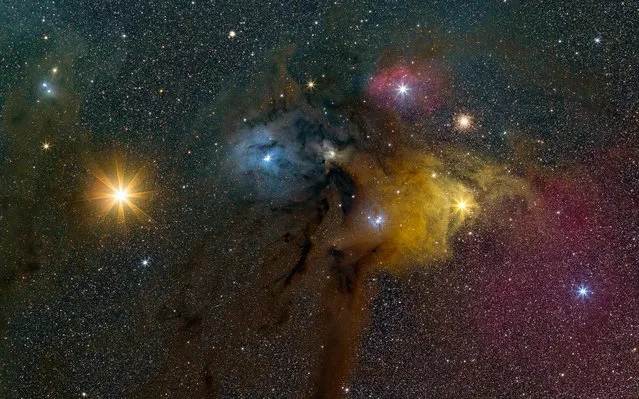
Mars and its Rival Antares and the Rho Ophiuchi cloud complex. (Photo by Phil Hart/CWAS/The Guardian)

These spectacular images of the universe are the finalists in the 2016 CWAS “David Malin” awards. The annual competition, which celebrates the best astronomy images taken by Australian photographers, is part of AstroFest 2016. The winners will be announced on 16 July. An associated exhibition opens the following day at the CSIRO Parkes Observatory visitors centre, and a second exhibition will also travel to selected venues around Australia. Here: Mars and its Rival Antares and the Rho Ophiuchi cloud complex. (Photo by Phil Hart/CWAS/The Guardian)
Details
12 Jul 2016 12:08:00
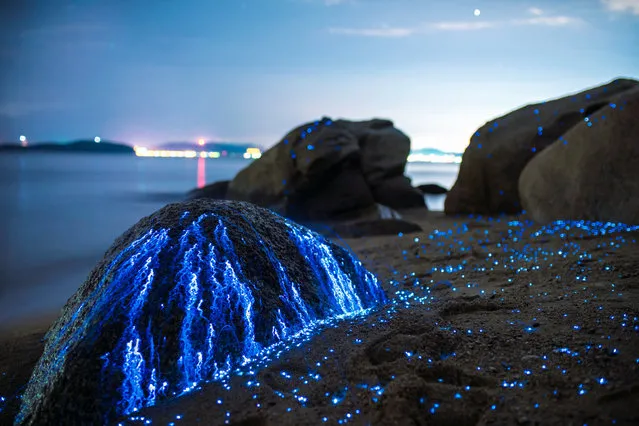
Bioluminescent sea fireflies glittering like diamonds on the rocks and sand. Okayama, Japan. July 2016. (Photo by Trevor Williams/Jonathan Galione/Getty Images)

Those lights are actually bioluminescent shrimp, better known as sea fireflies, or, in Japan, as “umibotaru”. Visible every year from May until the end of October, they live in the sand around very shallow sea water and are often seen floating between the extremes of high and low tides. Here: Bioluminescent sea fireflies glittering like diamonds on the rocks and sand. Okayama, Japan. July 2016. (Photo by Trevor Williams/Jonathan Galione/Getty Images)
Details
23 Aug 2016 10:13:00
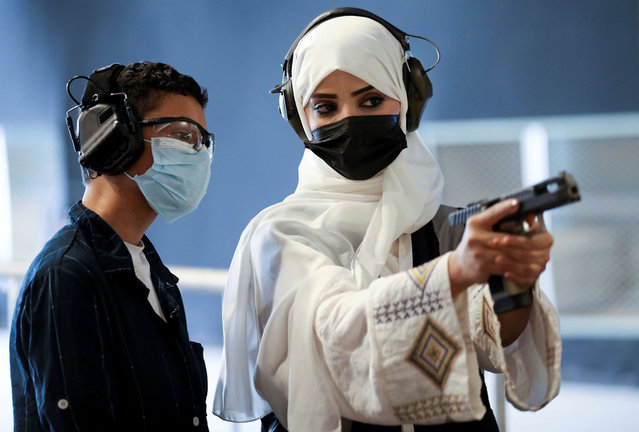
Saudi female firearm trainer, Mona Al Khurais, teaches a Saudi boy on safe usage of weapons at the Top-Gun shooting range in Riyadh, Saudi Arabia, October 28, 2021. (Photo by Ahmed Yosri/Reuters)

Saudi female firearm trainer, Mona Al Khurais, teaches a Saudi boy on safe usage of weapons at the Top-Gun shooting range in Riyadh, Saudi Arabia, October 28, 2021. (Photo by Ahmed Yosri/Reuters)
Details
02 Nov 2021 08:23:00